Neuroscience and Mental Health Research Institute, Cardiff University, Cardiff, UK.
Cardiff University Brain Research Imaging Centre (CUBRIC), School of Psychology, Cardiff University, Cardiff, UK.
Schizophr Bull. 2019 Mar 7;45(2):405-414. doi: 10.1093/schbul/sby037.
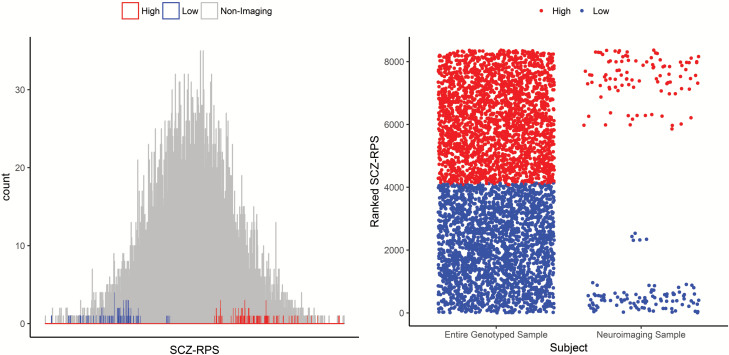
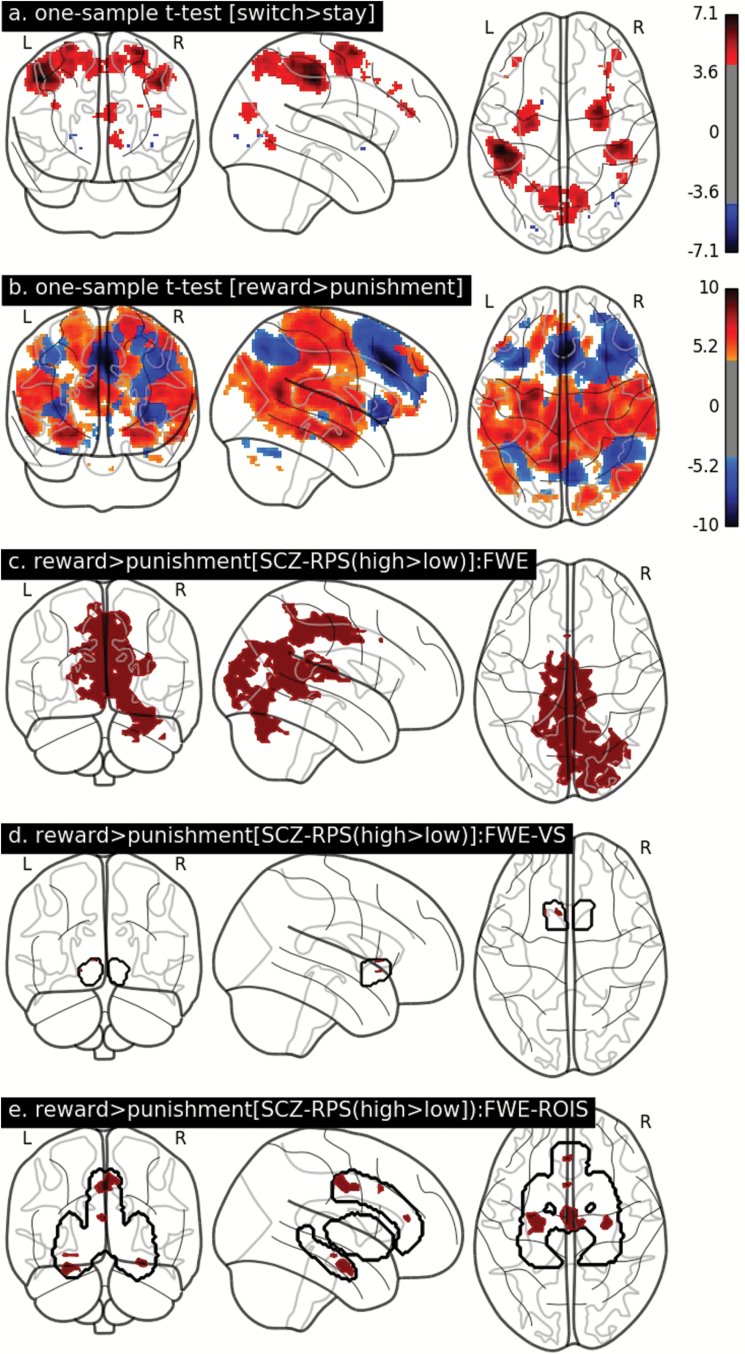
Risk profile scores (RPS) derived from genome-wide association studies (GWAS) explain a considerable amount of susceptibility for schizophrenia (SCZ). However, little is known about how common genetic risk factors for SCZ influence the structure and function of the human brain, largely due to the constraints of imaging sample sizes. In the current study, we use a novel recall-by-genotype (RbG) methodological approach, where we sample young adults from a population cohort (Avon Longitudinal Study of Parents and Children: N genotyped = 8365) based on their SCZ-RPS. We compared 197 healthy individuals at extremes of low (N = 99) or high (N = 98) SCZ-RPS with behavioral tests, and structural and functional magnetic resonance imaging (fMRI). We first provide methodological details that will inform the design of future RbG studies for common SCZ genetic risk. We further provide an between group analysis of the RbG individuals (low vs high SCZ-RPS) who underwent structural neuroimaging data (T1-weighted scans) and fMRI data during a reversal learning task. While we found little evidence for morphometric differences between the low and high SCZ-RPS groups, we observed an impact of SCZ-RPS on blood oxygen level-dependent (BOLD) signal during reward processing in the ventral striatum (PFWE-VS-CORRECTED = .037), a previously investigated broader reward-related network (PFWE-ROIS-CORRECTED = .008), and across the whole brain (PFWE-WHOLE-BRAIN-CORRECTED = .013). We also describe the study strategy and discuss specific challenges of RbG for SCZ risk (such as SCZ-RPS related homoscedasticity). This study will help to elucidate the behavioral and imaging phenotypes that are associated with SCZ genetic risk.
风险评分(RPS)来源于全基因组关联研究(GWAS),可解释精神分裂症(SCZ)的大量易感性。然而,对于 SCZ 的常见遗传风险因素如何影响人类大脑的结构和功能,我们知之甚少,这主要是由于成像样本量的限制。在本研究中,我们使用一种新的基于基因型召回(RbG)的方法,根据 SCZ-RPS 从人群队列(阿冯纵向研究父母和孩子:N 基因分型=8365)中抽取年轻成年人。我们比较了 197 名健康个体在低(N=99)或高(N=98)SCZ-RPS 极端的行为测试,以及结构和功能磁共振成像(fMRI)。我们首先提供了方法学细节,这将为未来常见 SCZ 遗传风险的 RbG 研究设计提供信息。我们进一步对接受结构神经影像学数据(T1 加权扫描)和 fMRI 数据的 RbG 个体(低 vs 高 SCZ-RPS)进行了组间分析,这些个体在反转学习任务期间接受了 fMRI 数据。虽然我们发现低和高 SCZ-RPS 组之间的形态差异证据很少,但我们观察到 SCZ-RPS 对腹侧纹状体(PFWE-VS-CORRECTED=0.037)、先前研究的更广泛的奖励相关网络(PFWE-ROIS-CORRECTED=0.008)和整个大脑(PFWE-WHOLE-BRAIN-CORRECTED=0.013)中奖励处理过程中血氧水平依赖(BOLD)信号的影响。我们还描述了研究策略,并讨论了 RbG 用于 SCZ 风险的具体挑战(例如与 SCZ-RPS 相关的同方差性)。这项研究将有助于阐明与 SCZ 遗传风险相关的行为和影像学表型。