Murakami Takami, Enjoji Munechika, Koyama Susumu
Department of Clinical Pharmacology, Faculty of Pharmaceutical Sciences, Fukuoka University, Fukuoka, Japan.
Department of Advanced Pharmacology, Daiichi University of Pharmacy, Fukuoka, Japan.
Physiol Rep. 2018 Apr;6(7):e13631. doi: 10.14814/phy2.13631.
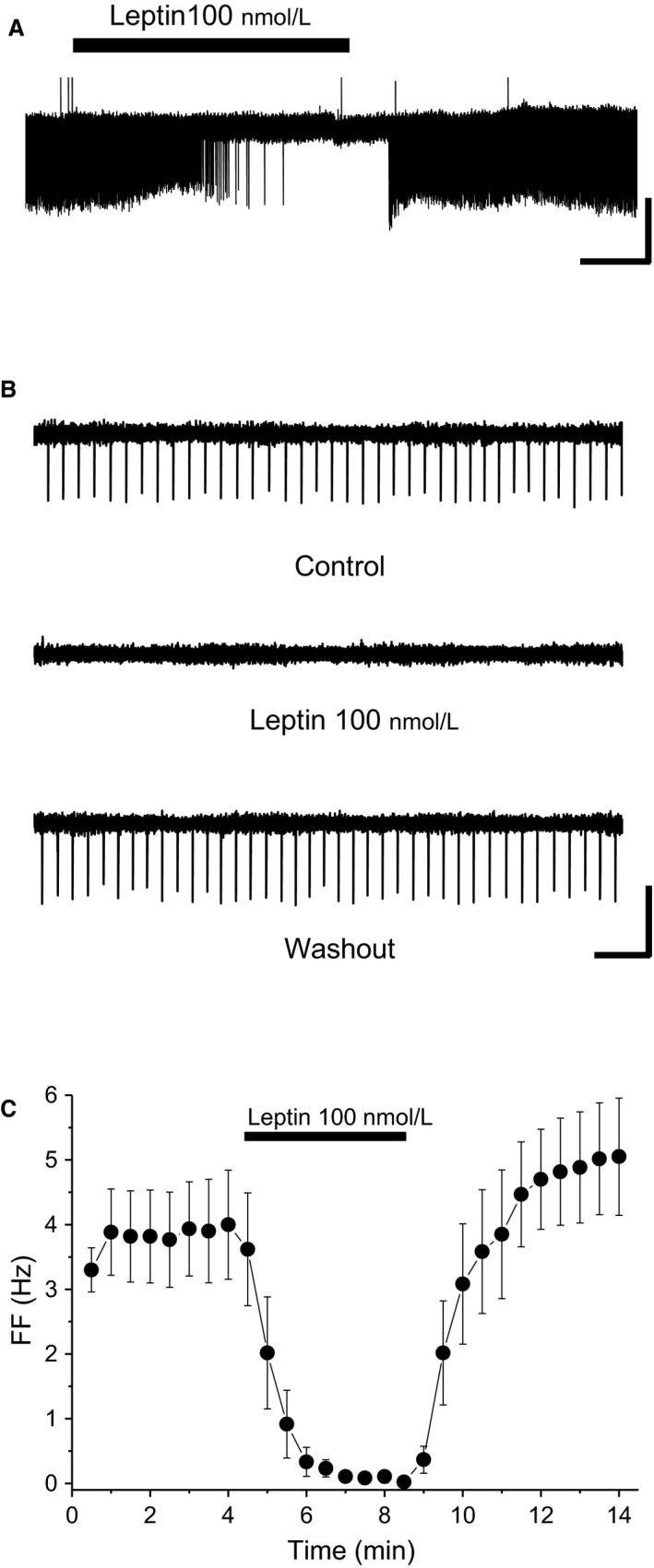
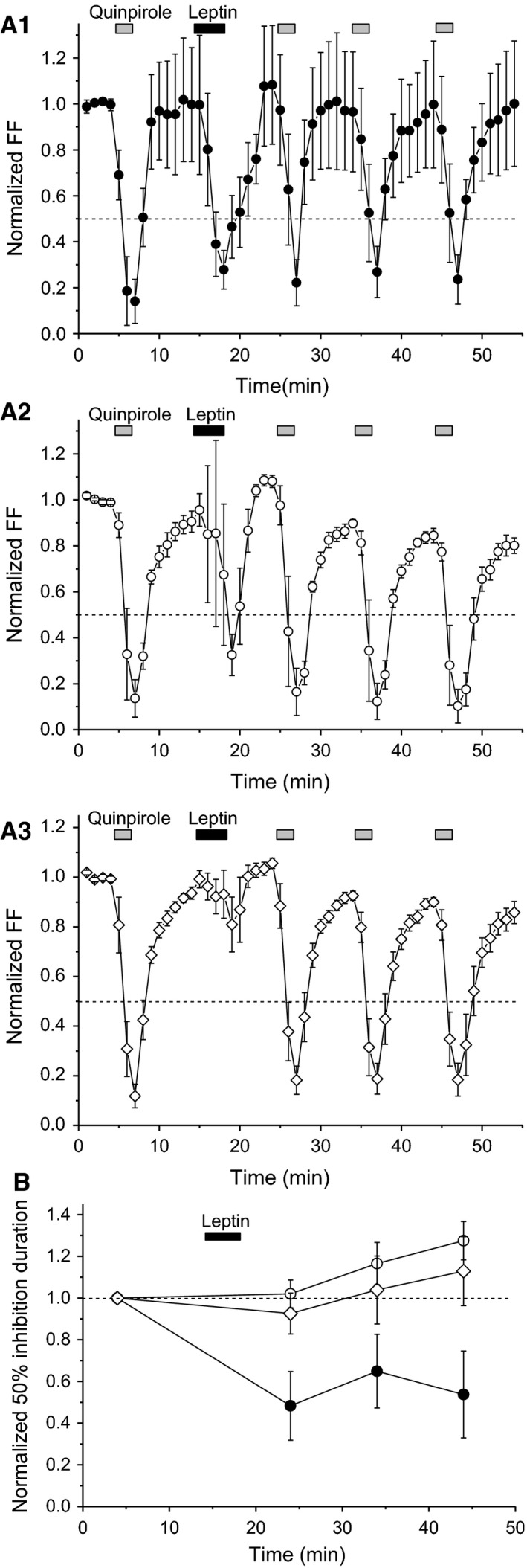
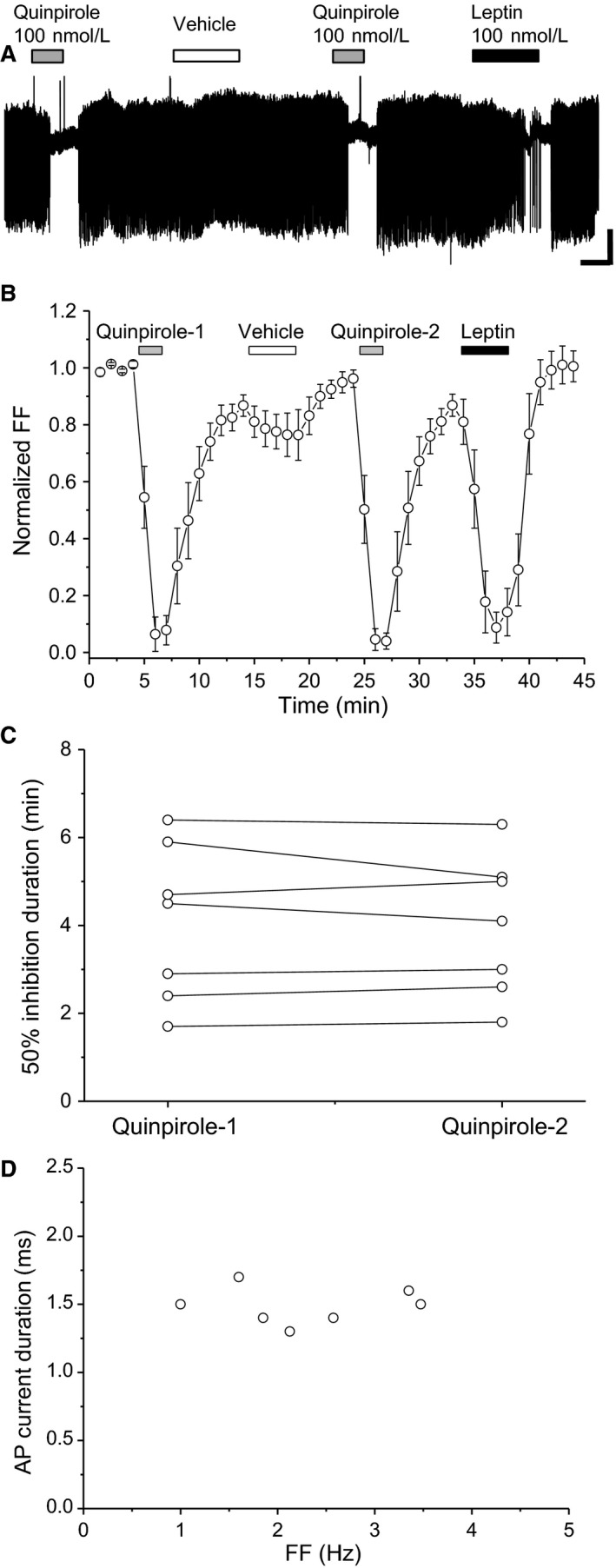
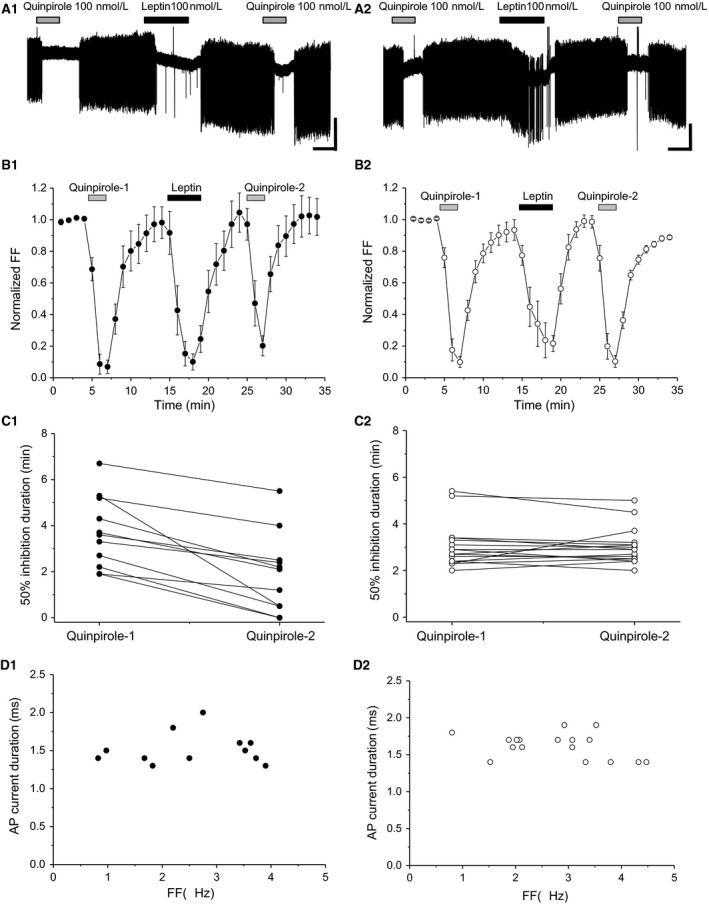
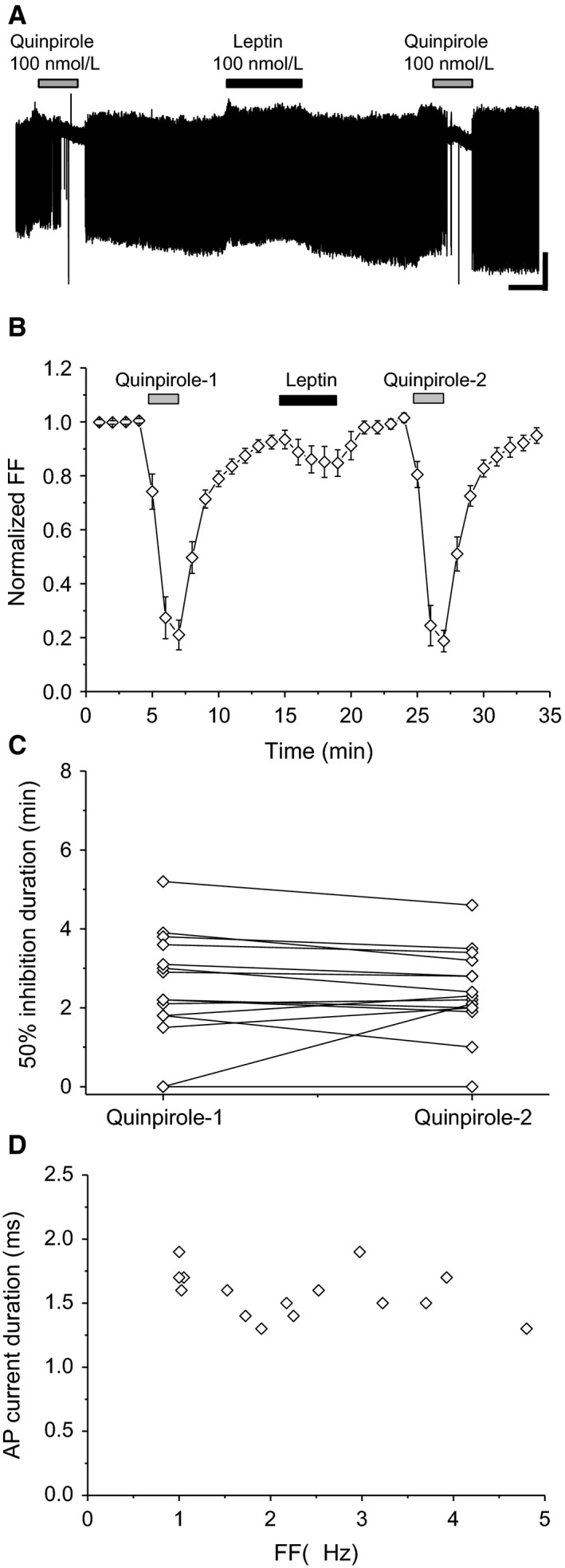
Obesity causes hyperleptinemia. We have previously shown that D receptor-mediated inhibition of ventral tegmental area (VTA) dopaminergic neurons is attenuated in diet-induced mice with obesity. Consequently, we hypothesized that high concentrations of serum leptin during obesity might modulate D receptor-mediated effects on VTA dopaminergic neurons. To investigate our hypothesis, we examined leptin effects on D receptor-mediated inhibition of putative VTA dopaminergic neurons from lean mice using electrophysiological techniques. Leptin (100 nmol/L) directly inhibited spontaneous firing in 71% of putative VTA dopaminergic neurons (leptin-responsive), whereas the remaining 29% of neurons were leptin-nonresponsive. In 41% of leptin-responsive neurons, leptin attenuated the reduced firing rate produced by quinpirole (100 nmol/L), whereas the remaining 59% of neurons exhibited no effect of leptin. In leptin-nonresponsive neurons, no significant leptin-induced effect was observed on reduced firing rate produced by quinpirole. In leptin-responsive neurons with positive leptin-induced attenuation of quinpirole effects, leptin-induced attenuation persisted for >20 min, whereas no such persistent attenuation was observed in other types of neurons. In conclusion, leptin attenuates D receptor-mediated inhibition in a subpopulation of putative VTA dopaminergic neurons. We suggest that leptin directly decreases, and indirectly increases, excitability of VTA dopaminergic neurons. In turn, this may contribute to a change in feeding behavior through the mesolimbic dopaminergic system during the development of obesity.
肥胖会导致高瘦素血症。我们之前已经表明,在饮食诱导的肥胖小鼠中,D受体介导的腹侧被盖区(VTA)多巴胺能神经元的抑制作用减弱。因此,我们推测肥胖期间血清瘦素的高浓度可能会调节D受体对VTA多巴胺能神经元的介导作用。为了验证我们的假设,我们使用电生理技术研究了瘦素对来自瘦小鼠的假定VTA多巴胺能神经元的D受体介导的抑制作用的影响。瘦素(100 nmol/L)直接抑制了71%的假定VTA多巴胺能神经元(瘦素反应性神经元)的自发放电,而其余29%的神经元对瘦素无反应。在41%的瘦素反应性神经元中,瘦素减弱了喹吡罗(100 nmol/L)引起的放电频率降低,而其余59%的神经元未表现出瘦素的作用。在瘦素无反应性神经元中,未观察到瘦素对喹吡罗引起的放电频率降低有显著影响。在瘦素诱导的喹吡罗作用减弱呈阳性的瘦素反应性神经元中,瘦素诱导的减弱持续超过20分钟,而在其他类型的神经元中未观察到这种持续的减弱。总之,瘦素减弱了假定VTA多巴胺能神经元亚群中D受体介导的抑制作用。我们认为瘦素直接降低并间接增加了VTA多巴胺能神经元的兴奋性。反过来,这可能在肥胖发展过程中通过中脑边缘多巴胺能系统导致进食行为的改变。