Ecology & Biodiversity Group, Institute of Environmental Biology, Utrecht University, Utrecht, The Netherlands.
Department of Animal Ecology, Netherlands Institute of Ecology (NIOO-KNAW), Wageningen, The Netherlands.
PLoS One. 2018 Apr 3;13(4):e0195026. doi: 10.1371/journal.pone.0195026. eCollection 2018.
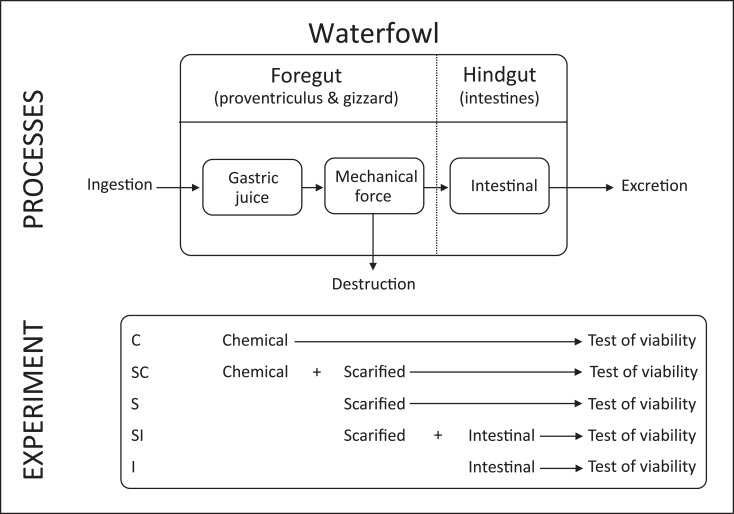
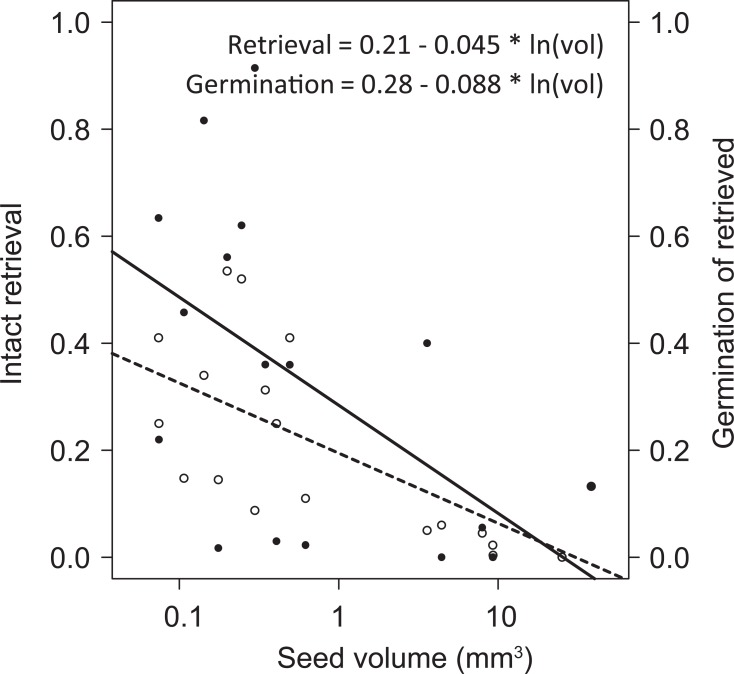
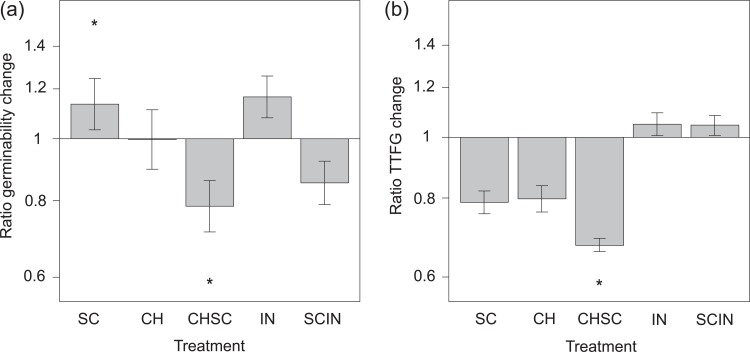
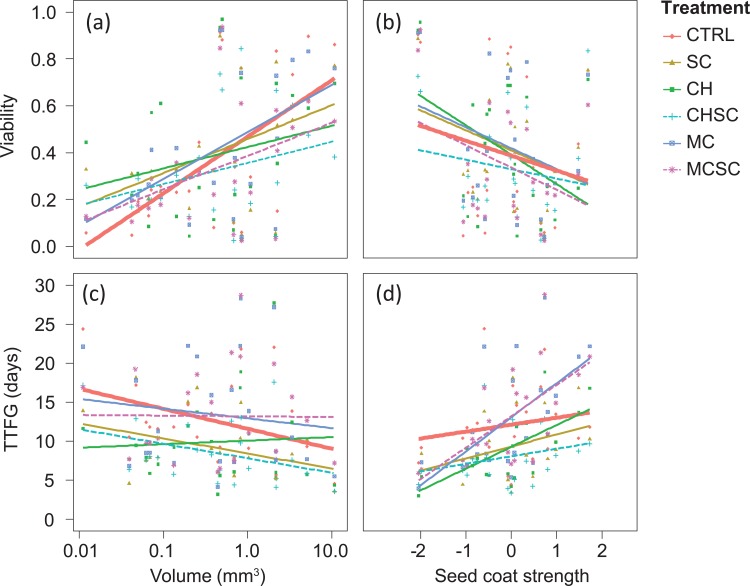
Waterbirds disperse a wide range of plant seeds via their guts, promoting biotic connectivity between isolated habitat patches. However, the intensity of digestive forces encountered by seeds, and therefore their potential to survive digestive tract passage, varies within and between waterbird species. Here, we investigate under controlled conditions how the interaction between seed traits and digestive strategies affect the germinability of seeds following waterbird-mediated dispersal. We exposed seeds of 30 wetland plant species to the main digestive processes in the dabbling duck digestive system: mechanical, chemical and intestinal digestion. These were simulated by 1) a pressure test and scarification treatment, 2) incubation in simulated gastric juice, and 3) incubation in intestinal contents of culled mallards (Anas platyrhynchos). We evaluated their separate and combined effects on seed germination, and identified the role of seed size and seed coat traits in resisting the digestive forces. Seeds were generally resistant to separate digestive processes, but highly sensitive to a combination. Resistance to mechanical break-down was reduced by up to 80% by chemical pre-treatment, especially for seeds with permeable coats. Scarified seeds were 12-17% more vulnerable to chemical and intestinal digestive processes than undamaged seeds. Large seeds and seeds with thin, permeable coats were particularly sensitive to chemical and intestinal digestion. These results indicate that efficient digestion of seeds requires multiple digestive processes. The gizzard, responsible for mechanical digestion, plays a key role in seed survival. Omnivorous birds, which have relatively light gizzards compared to pure herbivores or granivores, are thus most likely to disperse seeds successfully. Regardless of digestive strategy, small seeds with tough seed coats are most resistant to digestion and may be adapted to endozoochorous dispersal by waterbirds.
水鸟通过其肠道分散广泛的植物种子,促进孤立栖息地斑块之间的生物连通性。然而,种子在消化过程中所遇到的消化力的强度,以及它们在消化道中通过的潜在能力,在水鸟物种内部和之间都有所不同。在这里,我们在受控条件下研究了种子特性和消化策略之间的相互作用如何影响经水鸟介导传播后的种子发芽能力。我们将 30 种湿地植物的种子暴露于鸭类消化系统中的主要消化过程中:机械消化、化学消化和肠道消化。通过以下方式模拟这些过程:1)压力测试和刻痕处理,2)在模拟胃液中孵育,和 3)在被扑杀的野鸭(Anas platyrhynchos)的肠道内容物中孵育。我们评估了它们对种子发芽的单独和组合影响,并确定了种子大小和种皮特性在抵抗消化力方面的作用。种子通常对单独的消化过程具有抗性,但对组合过程非常敏感。化学预处理可将机械破坏的抵抗力降低多达 80%,尤其是对于具有可渗透种皮的种子。刻痕种子比未受损种子对化学和肠道消化过程的敏感性高 12-17%。大种子和具有薄而可渗透种皮的种子对化学和肠道消化特别敏感。这些结果表明,种子的有效消化需要多个消化过程。负责机械消化的砂囊在种子生存中起着关键作用。与纯食草动物或食谷动物相比,杂食性鸟类的砂囊相对较轻,因此最有可能成功地传播种子。无论消化策略如何,具有坚硬种皮的小种子最能抵抗消化,并且可能适应水鸟的内动物传播。