Research Center, Scripps Korea Antibody Institute, Chuncheon 200-701, Korea.
Int J Mol Sci. 2018 Apr 2;19(4):1057. doi: 10.3390/ijms19041057.
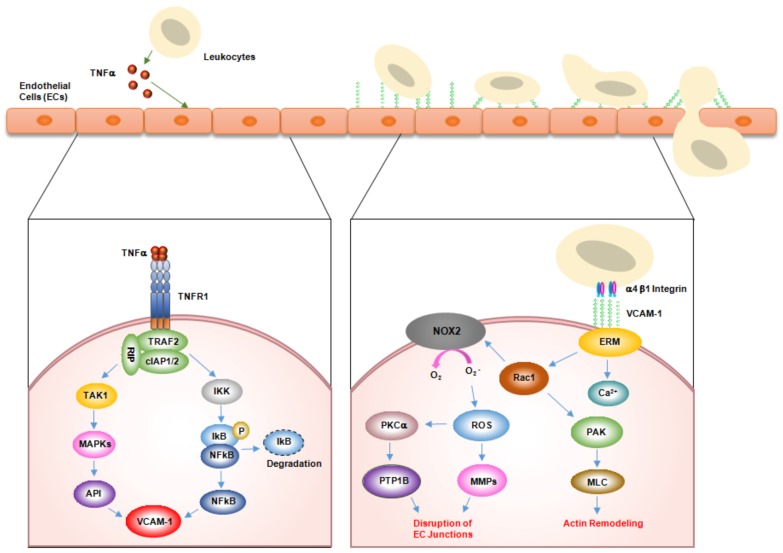
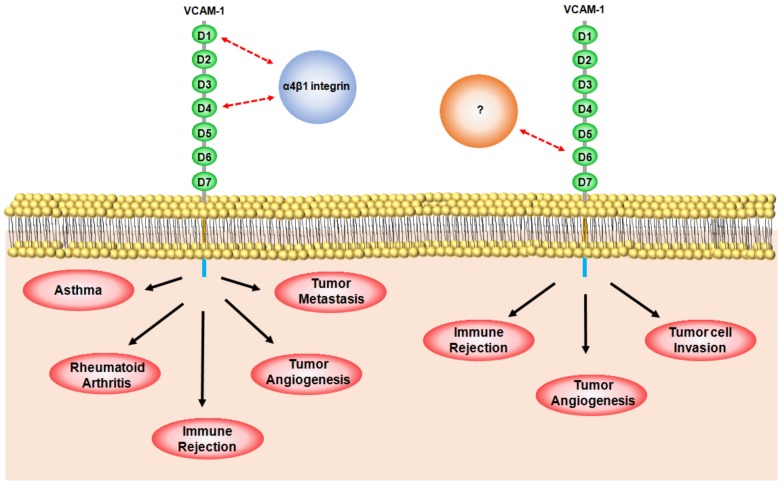
Tumor necrosis factor alpha (TNFα) is a pro-inflammatory cytokine that triggers the expression of inflammatory molecules, including other cytokines and cell adhesion molecules. TNFα induces the expression of intercellular cell adhesion molecule-1 and vascular cell adhesion molecule-1 (VCAM-1). VCAM-1 was originally identified as a cell adhesion molecule that helps regulate inflammation-associated vascular adhesion and the transendothelial migration of leukocytes, such as macrophages and T cells. Recent evidence suggests that VCAM-1 is closely associated with the progression of various immunological disorders, including rheumatoid arthritis, asthma, transplant rejection, and cancer. This review covers the role and relevance of VCAM-1 in inflammation, and also highlights the emerging potential of VCAM-1 as a novel therapeutic target in immunological disorders and cancer.
肿瘤坏死因子-α(TNFα)是一种促炎细胞因子,可触发炎症分子的表达,包括其他细胞因子和细胞黏附分子。TNFα 诱导细胞间黏附分子-1 和血管细胞黏附分子-1(VCAM-1)的表达。VCAM-1 最初被鉴定为一种细胞黏附分子,有助于调节炎症相关的血管黏附和白细胞(如巨噬细胞和 T 细胞)的跨内皮迁移。最近的证据表明,VCAM-1 与各种免疫性疾病的进展密切相关,包括类风湿关节炎、哮喘、移植排斥和癌症。本综述涵盖了 VCAM-1 在炎症中的作用和相关性,并强调了 VCAM-1 作为免疫性疾病和癌症新型治疗靶点的新兴潜力。