Qingdao University, Qingdao, P.R. China.
Department of Laboratory Medicine, Qingdao Women and Children's Hospital, Qingdao, P.R. China.
Oncol Res. 2019 Feb 21;27(3):389-397. doi: 10.3727/096504018X15223159811838. Epub 2018 Apr 3.
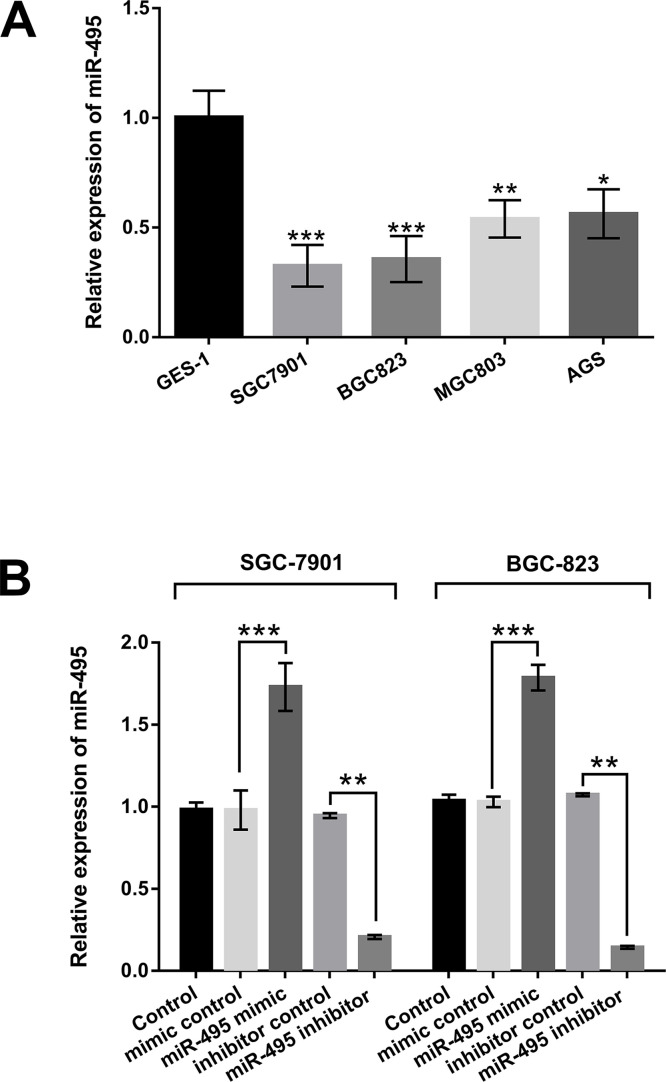
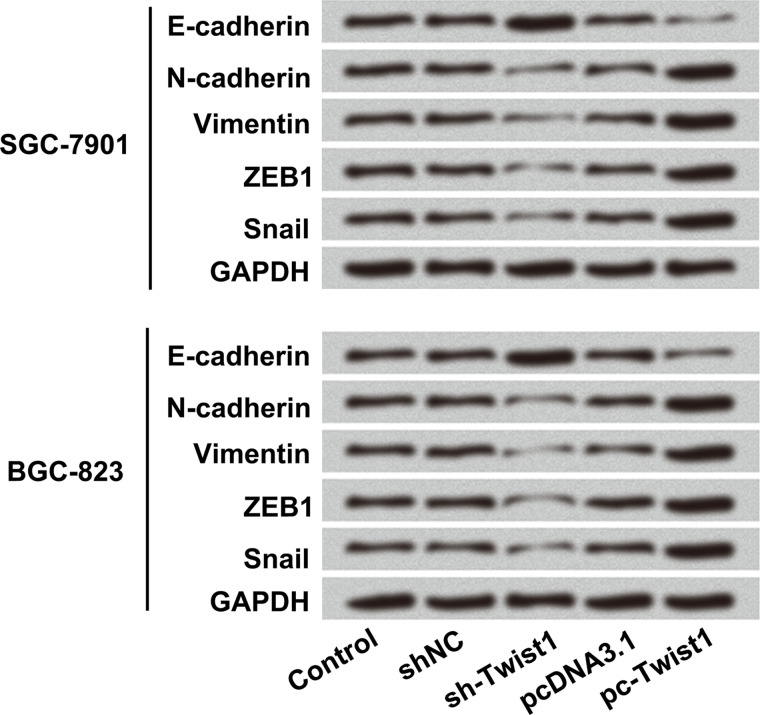
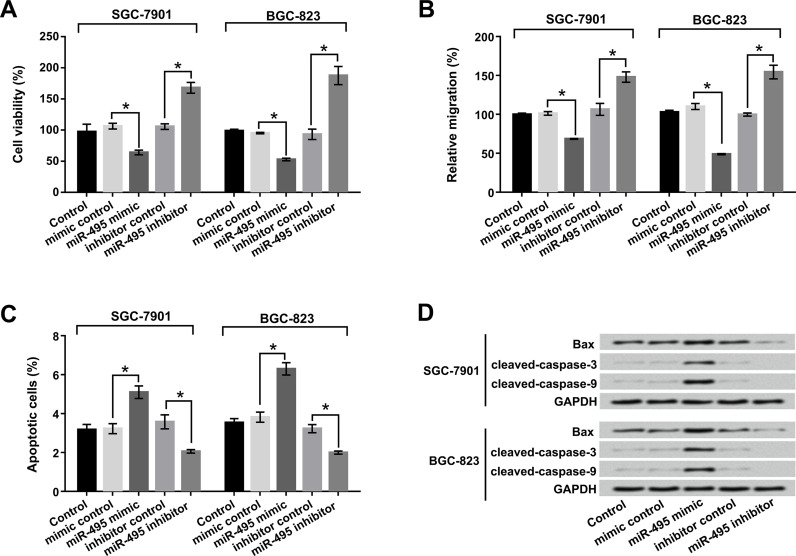
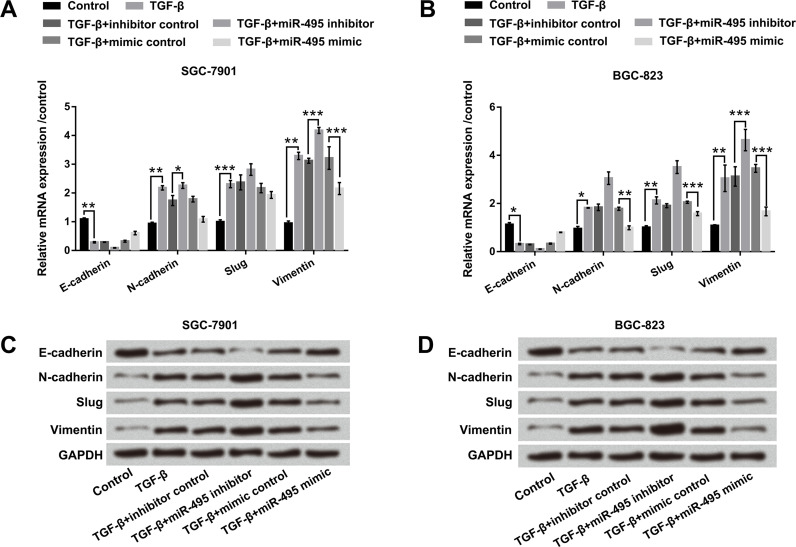
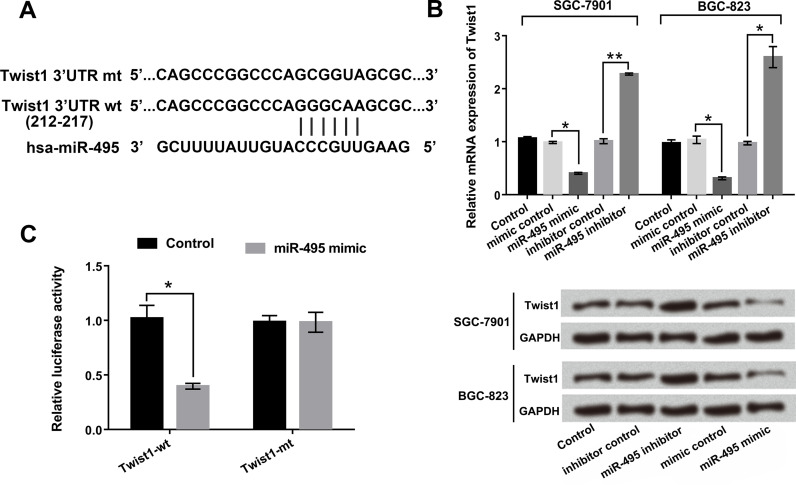
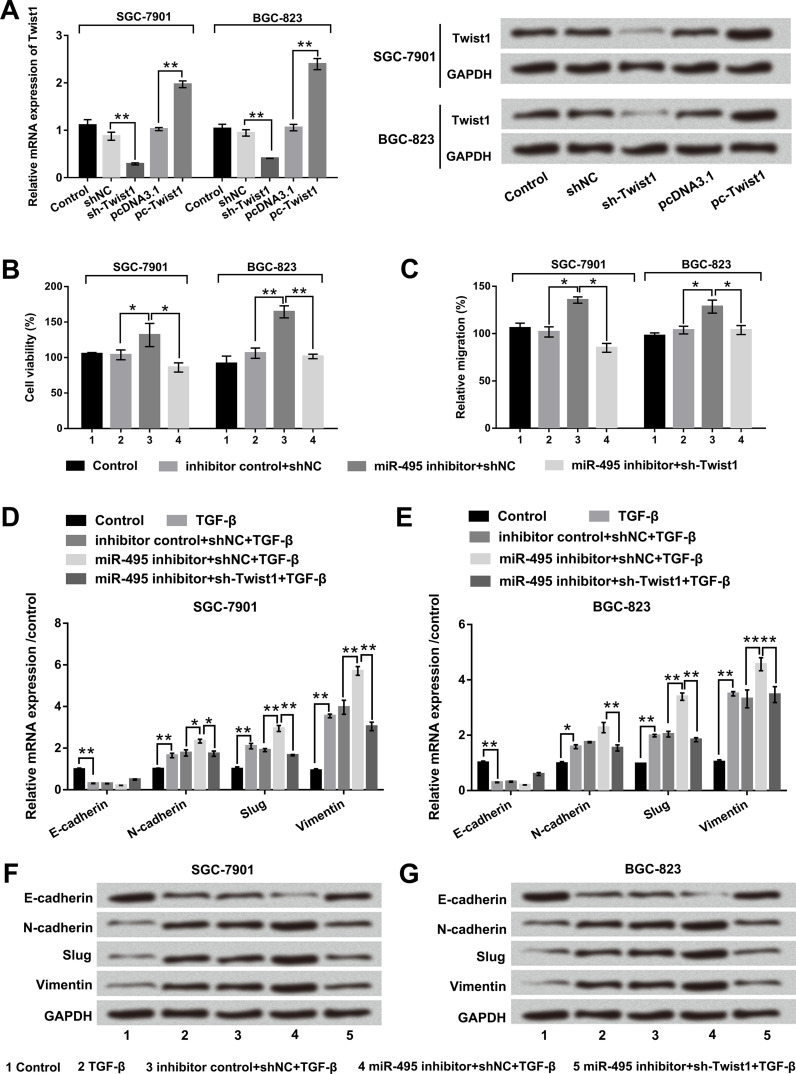
Recently, microRNAs (miRNAs) have been reported to participate in multiple biological processes. However, the effects of miR-495 on gastric cancer (GC) remain unclear. The purpose of this study was to explore the functions of miR-495 in GC cell proliferation, metastasis, and apoptosis. SGC-7901 and BGC-823 cell lines were transfected with miR-495 mimic, miR-495 inhibitor, and negative controls (mimic control and inhibitor control). The expressions of miR-495, cell viability, migration, apoptosis, and apoptosis-related factors were examined by qRT-PCR, trypan blue staining, Transwell, flow cytometry, and Western blot, respectively. Simultaneously, key factor expression levels of EMT were detected by qRT-PCR and Western blot. The direct target of miR-495 was confirmed by dual-luciferase assay. Additionally, sh-Twist1, pc-Twist1, and corresponding controls were transfected into SGC-7901 and BGC-823 cells, and the protein levels of EMT-associated factors were detected by Western blot. miR-495 was downregulated in GC cells. miR-495 expression level was effectively overexpressed or suppressed in SGC-7901 and BGC-823 cells. Overexpression of miR-495 significantly decreased cell viability and migration, increased apoptosis, and inhibited the EMT process. Suppression of miR-495 showed contrary results. Twist1 was clarified as a target gene of miR-495, and Twist1 silencing obviously reduced the promoting effect of miR-495 suppression on these biological processes. Twist1 silencing significantly blocked the EMT process in both SGC-7901 and BGC-823 cells. miR-495 inhibited proliferation and metastasis and promoted apoptosis by targeting Twist1 in GC cells. These data indicated that miR-495 might be a novel antitumor factor of GC and provide a new method for the treatment of GC.
最近,研究表明 microRNAs(miRNAs)参与多种生物学过程。然而,miR-495 对胃癌(GC)的影响仍不清楚。本研究旨在探讨 miR-495 在 GC 细胞增殖、转移和凋亡中的作用。用 miR-495 模拟物、miR-495 抑制剂和阴性对照(模拟物对照和抑制剂对照)转染 SGC-7901 和 BGC-823 细胞系。通过 qRT-PCR、台盼蓝染色、Transwell、流式细胞术和 Western blot 分别检测 miR-495 的表达、细胞活力、迁移、凋亡和凋亡相关因子。同时,通过 qRT-PCR 和 Western blot 检测 EMT 关键因子表达水平。通过双荧光素酶报告实验验证 miR-495 的直接靶标。此外,将 sh-Twist1、pc-Twist1 和相应的对照转染到 SGC-7901 和 BGC-823 细胞中,通过 Western blot 检测 EMT 相关因子的蛋白水平。miR-495 在 GC 细胞中下调。在 SGC-7901 和 BGC-823 细胞中,miR-495 表达水平被有效过表达或抑制。miR-495 过表达显著降低细胞活力和迁移,增加凋亡,并抑制 EMT 过程。抑制 miR-495 则显示出相反的结果。Twist1 被确定为 miR-495 的靶基因,Twist1 沉默明显减弱了 miR-495 抑制对这些生物学过程的促进作用。Twist1 沉默显著阻断了 SGC-7901 和 BGC-823 细胞中的 EMT 过程。miR-495 通过靶向 Twist1 抑制 GC 细胞增殖和转移,促进凋亡。这些数据表明,miR-495 可能是 GC 的一种新型抗肿瘤因子,并为 GC 的治疗提供了一种新方法。