Beam Nancy K, Bekele Dadi Gezehegn, Rankin Sally H, Weiss Sandra, Cooper Bruce, Thompson Lisa M
Family Health Care Nursing, School of Nursing, University of California, San Francisco, California, USA.
School of Nursing and Midwifery, College of Medicine and Health Sciences, Hawassa University, Hawassa, Ethiopia.
BMJ Open. 2018 Apr 3;8(4):e016853. doi: 10.1136/bmjopen-2017-016853.
Despite global efforts to increase facility-based delivery (FBD), 90% of women in rural Ethiopia deliver at home without a skilled birth attendant. Men have an important role in increasing FBD due to their decision-making power, but this is largely unexplored. This study aimed to determine the FBD care attributes preferred by women and men, and whether poverty or household decision-making are associated with choice to deliver in a facility.
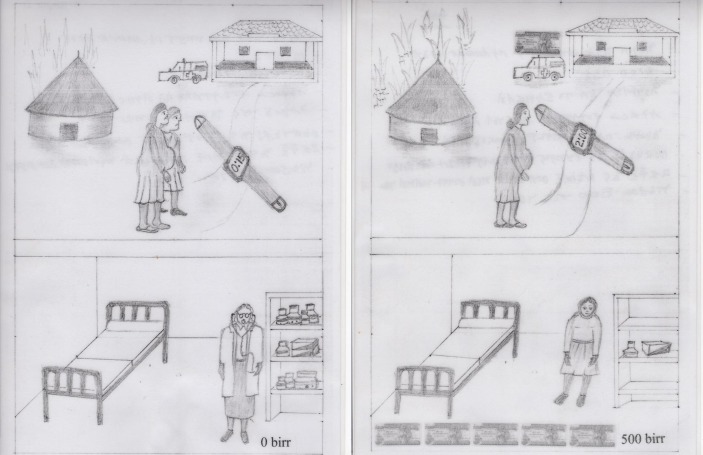
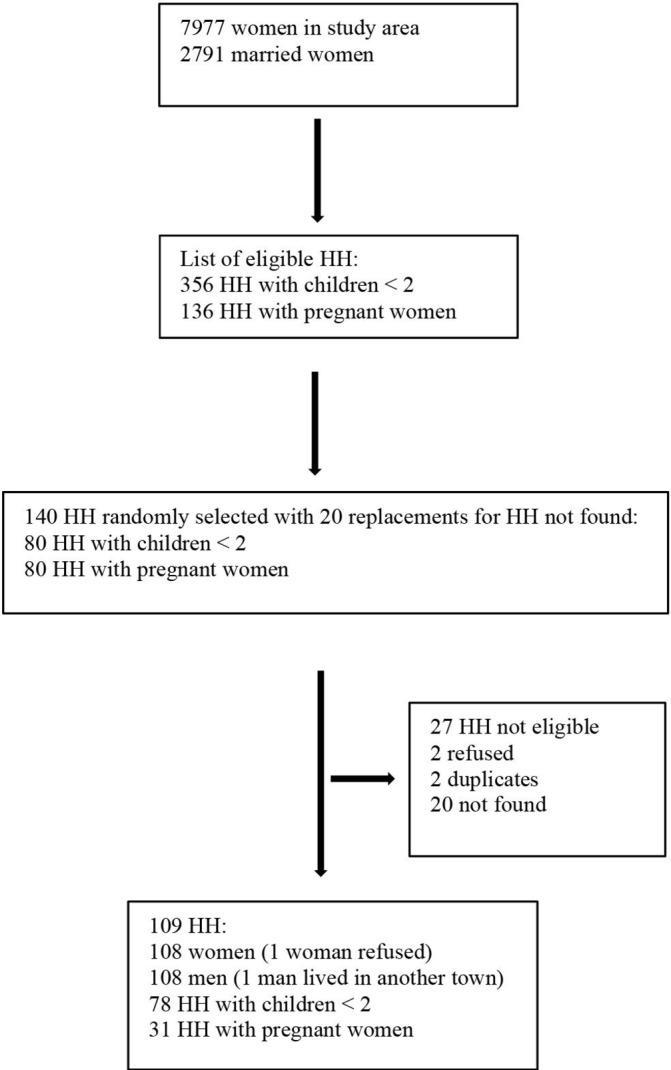
We conducted a cross-sectional discrete choice experiment in 109 randomly selected households in rural Ethiopia in September-October 2015. We interviewed women who were pregnant or who had a child <2 years old and their male partners.
Both women and men preferred health facilities where medications and supplies were available (OR=3.08; 95% CI 2.03 to 4.67 and OR=2.68; 95% CI 1.79 to 4.02, respectively), a support person was allowed in the delivery room (OR=1.69; 95% CI 1.37 to 2.07 and OR=1.74; 95% CI 1.42 to 2.14, respectively) and delivery cost was low (OR=1.15 95% CI 1.12 to 1.18 and OR=1.14; 95% CI 1.11 to 1.17, respectively). Women valued free ambulance service (OR=1.37; 95% CI 1.09 to 1.70), while men favoured nearby facilities (OR=1.09; 95% CI 1.06 to 1.13) with friendly providers (OR=1.30; 95% CI 1.03 to 1.64). Provider preferences were complex. Neither women nor men preferred female doctors to health extension workers (HEW) (OR=0.92; 95% CI 0.59 to 1.42 and OR=0.74; 95% CI 0.47 to 1.14, respectively), male doctors to HEW (OR=1.33; 95% CI 0.89 to 1.99 and OR=0.75; 95% CI 0.50 to 1.12, respectively) or female over male nurses (OR=0.68; 95% CI 0.94 to 1.71 and OR=1.03; 95% CI 0.77 to 2.94, respectively). While both women and men preferred male nurses to HEW (OR=1.86; 95% CI 1.23 to 2.80 and OR=1.95; 95% CI 1.30 to 2.95, respectively), men (OR=1.89; 95% CI 1.29 to 2.78), but not women (OR=1.47; 95% CI 1.00 to 2.13) preferred HEW to female nurses. Both women and men preferred female doctors to male nurses (OR=1.71; 95% CI 1.27 to 2.29 and OR=1.44; 95% CI 1.07 to 1.92, respectively), male doctors to female nurses (OR=1.95; 95% CI 1.44 to 2.62 and OR=1.41; 95% CI 1.05 to 1.90, respectively) and male doctors to male nurses (OR=2.47; 95% CI 1.84 to 3.32 and OR=1.46; 95% CI 1.09 to 1.95, respectively), while only women preferred male doctors to female doctors (OR=1.45; 95% CI 1.09 to 1.93 and OR=1.01; 95% CI 0.76 to 1.35, respectively) and only men preferred female nurses to female doctors (OR=1.34; 95% CI 0.98 to 1.84 and OR=1.39; 95% CI 1.02 to 1.89, respectively). Men were disproportionately involved in making household decisions ( (1, n=216)=72.18, p<0.001), including decisions to seek healthcare ( (1, n=216)=55.39, p<0.001), yet men were often unaware of their partners' prenatal care attendance ( (1, n=215)=82.59, p<0.001).
Women's and men's preferences may influence delivery service choices. Considering these choices is one way the Ethiopian government and health facilities may encourage FBD in rural areas.
尽管全球都在努力增加设施分娩(FBD),但埃塞俄比亚农村地区90%的妇女在家分娩且没有熟练的接生人员。由于男性具有决策权,他们在增加设施分娩方面可发挥重要作用,但这一点在很大程度上尚未得到探讨。本研究旨在确定女性和男性对设施分娩护理属性的偏好,以及贫困或家庭决策是否与在医疗机构分娩的选择相关。
2015年9月至10月,我们在埃塞俄比亚农村随机抽取的109个家庭中进行了一项横断面离散选择实验。我们采访了怀孕或有2岁以下子女的妇女及其男性伴侣。
女性和男性都更倾向于有药品和用品的医疗机构(比值比[OR]=3.08;95%置信区间[CI] 2.03至4.67,以及OR=2.68;95% CI 1.79至4.02)、产房允许有陪产人员(OR=1.69;95% CI 1.37至2.07,以及OR=1.74;95% CI 1.42至2.14)且分娩费用低的机构(OR=1.15,95% CI 1.12至1.18,以及OR=1.14;95% CI 1.11至1.17)。女性重视免费救护车服务(OR=1.37;95% CI 1.09至1.70),而男性则青睐距离近的机构(OR=1.09;95% CI 1.06至1.13)以及医护人员态度友好的机构(OR=1.30;95% CI 1.03至1.64)。对医护人员的偏好较为复杂。女性和男性都不认为女医生比健康推广工作者(HEW)更有优势(OR=0.92;95% CI 0.59至1.42,以及OR=0.74;95% CI 0.47至1.14),也不认为男医生比HEW更有优势(OR=1.33;95% CI 0.89至1.99以及OR=0.75;95% CI 0.50至1.12),或者女护士比男护士更有优势(OR=0.68;95% CI 0.94至1.71以及OR=1.03;95% CI 0.77至2.94)。虽然女性和男性都认为男护士比HEW更有优势(OR=1.86;95% CI l.23至2.80以及OR=1.95;95% CI 1.30至2.95),但男性(OR=1.89;95% CI 1.29至2.78)而非女性(OR=1.47;95% CI 1.00至2.13)认为HEW比女护士更有优势。女性和男性都认为女医生比男护士更有优势(OR=1.71;95% CI 1.27至2.29以及OR=1.44;95% CI 1.07至1.92),男医生比女护士更有优势(OR=1.95;95% CI 1.44至2.62以及OR=1.41;95% CI 1.05至1.90),男医生比男护士更有优势(OR=2.47;95% CI 1.84至3.32以及OR=1.46;95% CI 1.09至1.95),而只有女性认为男医生比女医生更有优势(OR=1.45;95% CI 1.09至1.93以及OR=1.01;95% CI 0.76至1.35),只有男性认为女护士比女医生更有优势(OR=1.34;95% CI 0.98至1.84以及OR=1.39;95% CI 1.02至1.89)。男性在家庭决策中参与程度过高(卡方值(1,n = 216)=72.18,p < 0.001),包括寻求医疗保健的决策(卡方值(1,n = 2 l6)=55.39,p < 0.001),然而男性往往不知道其伴侣的产前检查情况(卡方值(1,n = 215)=8r59,p < 0.001)。
女性和男性的偏好可能会影响分娩服务的选择。考虑这些选择是埃塞俄比亚政府和医疗机构鼓励农村地区设施分娩的一种方式。