Department of Ophthalmology, The 2nd Affiliated University Hospital, Harbin, Heilongjiang, China (mainland).
Health Center of Heilongjiang University, Harbin, Heilongjiang, China (mainland).
Med Sci Monit. 2018 Apr 4;24:1980-1987. doi: 10.12659/msm.905450.
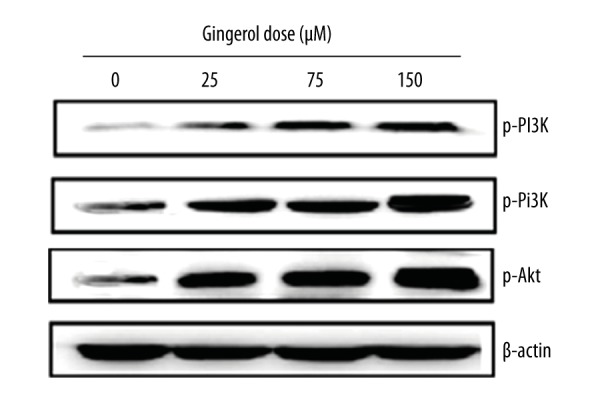
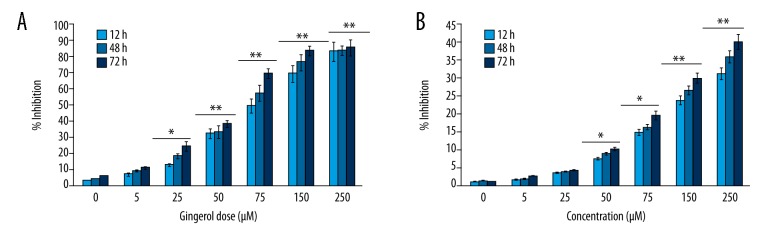
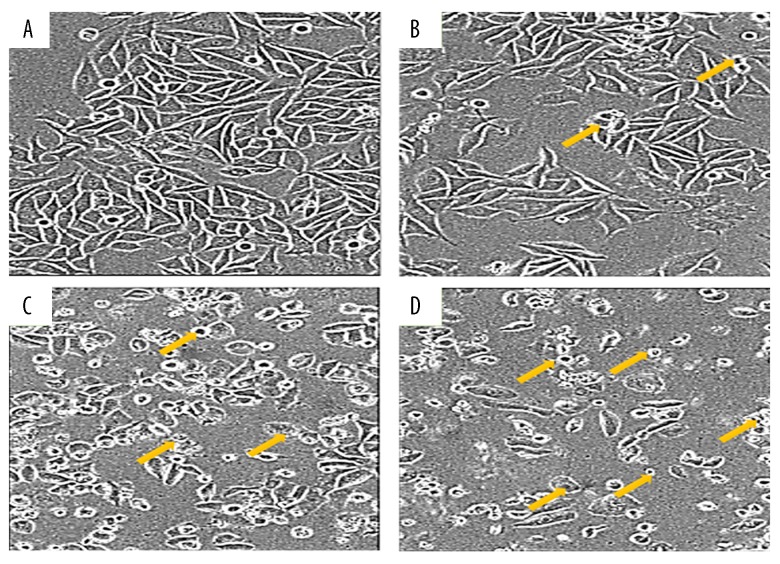
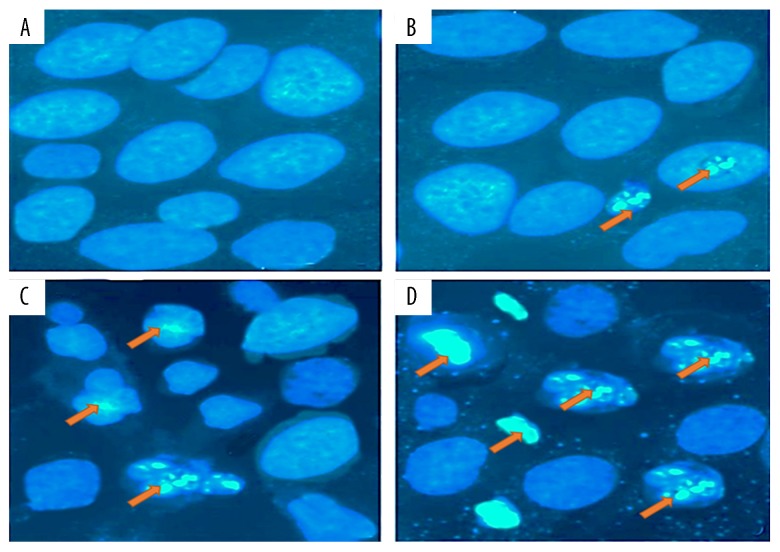
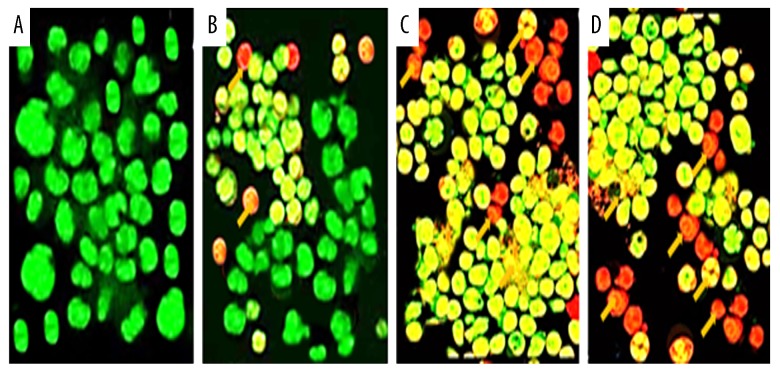
BACKGROUND The main aim of the current investigation was to study the antiproliferative activity of gingerol in RB355 human retinoblastoma cancer cells. The effects of gingerol on apoptosis induction, cell cycle arrest, and PI3K/Akt signaling pathway were also evaluated. MATERIAL AND METHODS MTT cell viability assay was used to assess the cytotoxic effects of gingerol in these cells while. To study apoptotic effects in these cells, we used inverted microscopy along with fluorescence microscopy using acridine orange/propidium iodide and Hoechst 33258 as staining dyes. Flow cytometry was used to study cell cycle phase distribution and Western blot assay indicated effects on PI3K/Akt protein expression levels. RESULTS Results showed that gingerol exerted dose-dependent and time-dependent growth inhibitory effects in these retinoblastoma cells. However, the growth inhibitory effects of gingerol were less pronounced against normal fr2 cells. As compared to the untreated control cells, gingerol-treated cells at concentrations of 25, 75, and 150 μM had drastic changes in cell morphology, including rounding and withering of cells, with disorganized cell layers. Gingerol-treated cells exhibited bright fluorescence, indicating rupture of the cell membrane. These results were further confirmed by acridine orange/propidium iodide staining, in which untreated cells showed normal green fluorescence and gingerol-treated cells showed yellow/red fluorescence. Gingerol also led to dose-dependent G2/M phase cell cycle arrest in RB355 retinoblastoma cells, as well as concentration-dependent activation of PI3K-related protein expressions. CONCLUSIONS Gingerol exhibits potent anticancer effects in RB355 human retinoblastoma cancer cells and these effects were mediated via apoptosis induction, cell cycle arrest, and modulation of the PI3K/Akt signaling pathway.
本研究旨在探讨姜辣素对 RB355 人视网膜母细胞瘤癌细胞的增殖抑制作用,并评估其对细胞凋亡诱导、细胞周期阻滞和 PI3K/Akt 信号通路的影响。
采用 MTT 细胞活力测定法评估姜辣素对这些细胞的细胞毒性作用。为了研究这些细胞中的凋亡效应,我们使用了倒置显微镜和吖啶橙/碘化丙啶荧光显微镜以及 Hoechst 33258 作为染色染料。通过流式细胞术研究细胞周期相分布,通过 Western blot 分析表明对 PI3K/Akt 蛋白表达水平的影响。
结果表明,姜辣素对这些视网膜母细胞瘤细胞表现出剂量依赖性和时间依赖性的生长抑制作用。然而,姜辣素对正常 fr2 细胞的生长抑制作用不明显。与未经处理的对照细胞相比,浓度为 25、75 和 150 μM 的姜辣素处理细胞的细胞形态发生了明显变化,包括细胞圆缩和枯萎,细胞层排列紊乱。姜辣素处理的细胞发出明亮的荧光,表明细胞膜破裂。吖啶橙/碘化丙啶染色进一步证实了这一点,未经处理的细胞显示正常的绿色荧光,而姜辣素处理的细胞显示黄色/红色荧光。姜辣素还导致 RB355 视网膜母细胞瘤细胞中呈现剂量依赖性的 G2/M 期细胞周期阻滞,以及 PI3K 相关蛋白表达的浓度依赖性激活。
姜辣素对 RB355 人视网膜母细胞瘤癌细胞具有强大的抗癌作用,这些作用是通过诱导细胞凋亡、细胞周期阻滞和调节 PI3K/Akt 信号通路介导的。