Robins Meridith T, Chiang Terrance, Berry Jennifer N, Ko Mee Jung, Ha Jiwon E, van Rijn Richard M
Department of Medicinal Chemistry and Molecular Pharmacology, Purdue Institute for Integrative Neuroscience, Purdue University, West Lafayette, IN, United States.
Front Behav Neurosci. 2018 Mar 20;12:54. doi: 10.3389/fnbeh.2018.00054. eCollection 2018.
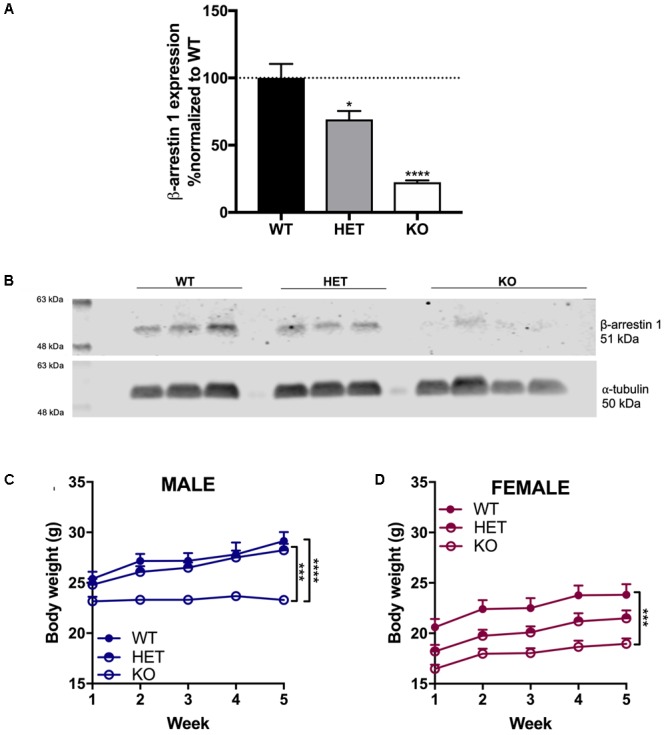
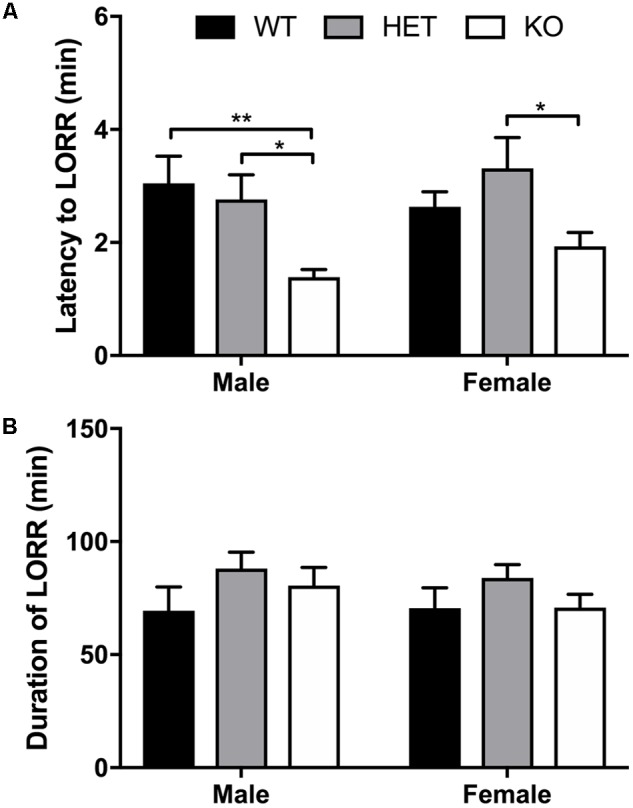
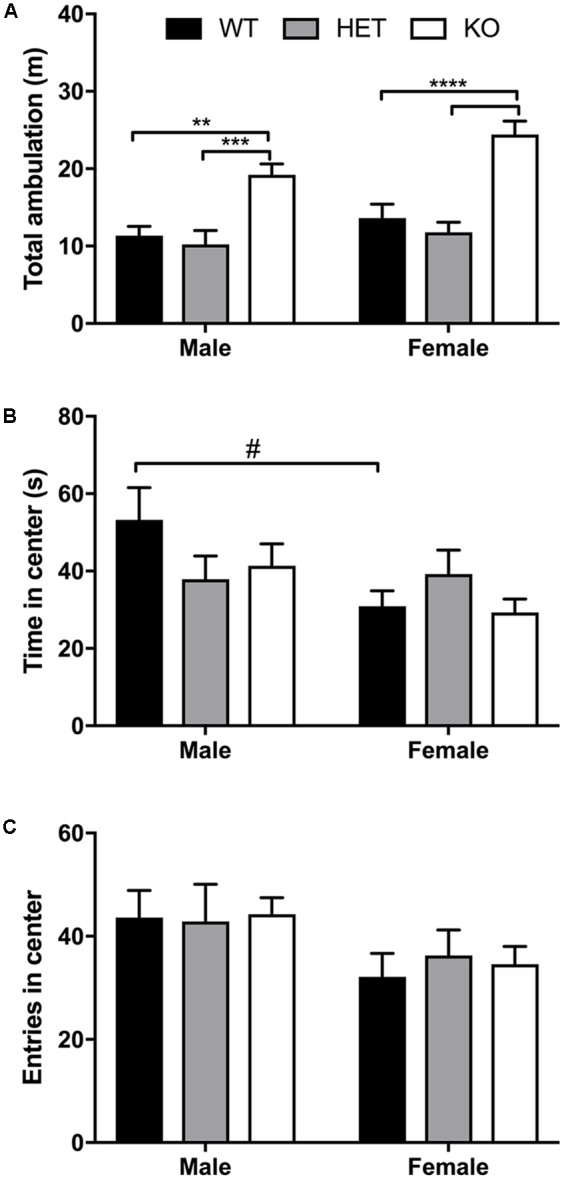
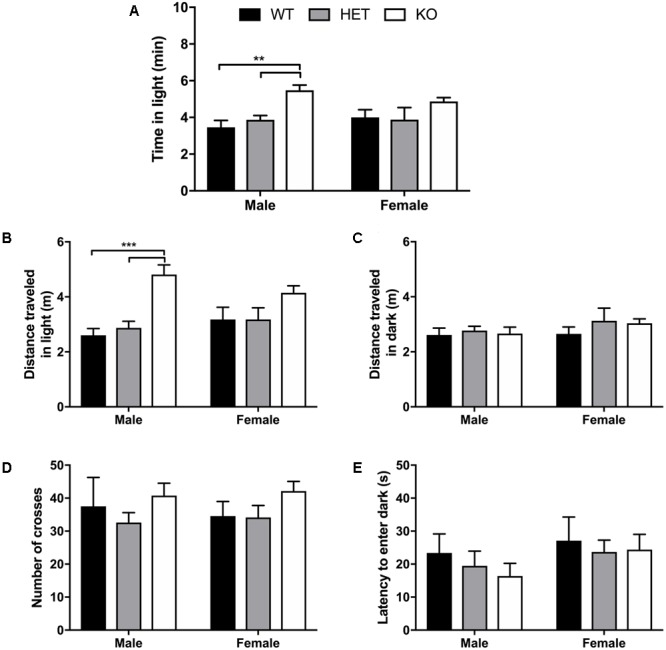
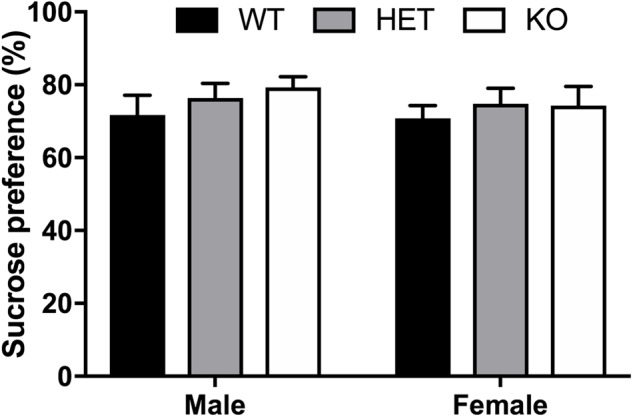
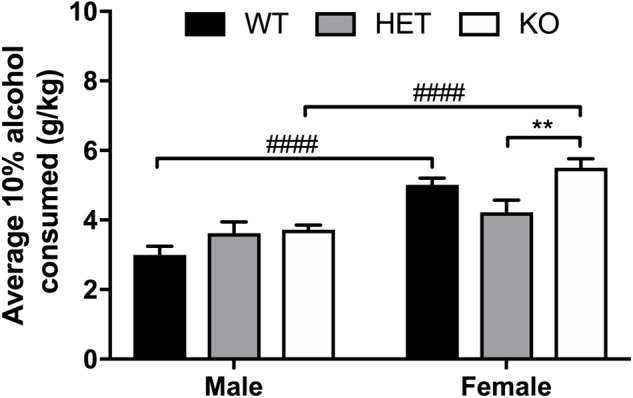
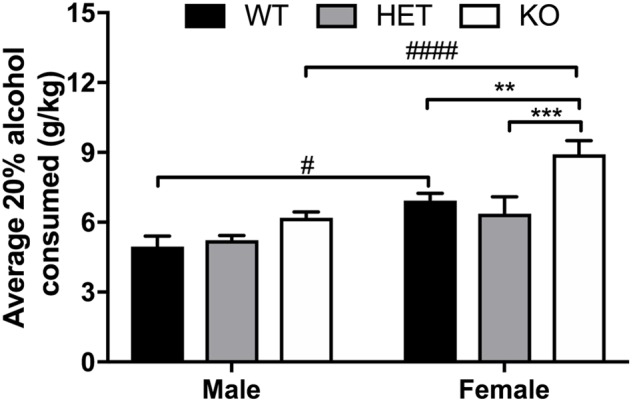
β-Arrestin 1 and 2 are highly expressed proteins involved in the desensitization of G protein-coupled receptor signaling which also regulate a variety of intracellular signaling pathways. Gene knockout (KO) studies suggest that the two isoforms are not homologous in their effects on baseline and drug-induced behavior; yet, the role of β-arrestin 1 in the central nervous system has been less investigated compared to β-arrestin 2. Here, we investigate how global β-arrestin 1 KO affects anxiety-like and alcohol-related behaviors in male and female C57BL/6 mice. We observed increased baseline locomotor activity in β-arrestin 1 KO animals compared with wild-type (WT) or heterozygous (HET) mice with a sex effect. KO male mice were less anxious in a light/dark transition test, although this effect may have been confounded by increased locomotor activity. No differences in sucrose intake were observed between genotypes or sexes. Female β-arrestin 1 KO mice consumed more 10% alcohol than HET females in a limited 4-h access, two-bottle choice, drinking-in-the-dark model. In a 20% alcohol binge-like access model, female KO animals consumed significantly more alcohol than HET and WT females. A significant sex effect was observed in both alcohol consumption models, with female mice consuming greater amounts of alcohol than males relative to body weight. Increased sensitivity to latency to loss of righting reflex (LORR) was observed in β-arrestin 1 KO mice although no differences were observed in duration of LORR. Overall, our efforts suggest that β-arrestin 1 may be protective against increased alcohol consumption in females and hyperactivity in both sexes.
β-抑制蛋白1和2是高度表达的蛋白质,参与G蛋白偶联受体信号的脱敏过程,同时也调节多种细胞内信号通路。基因敲除(KO)研究表明,这两种异构体对基线和药物诱导行为的影响并不相同;然而,与β-抑制蛋白2相比,β-抑制蛋白1在中枢神经系统中的作用研究较少。在此,我们研究了全身性β-抑制蛋白1基因敲除对雄性和雌性C57BL/6小鼠焦虑样行为和酒精相关行为的影响。我们观察到,与野生型(WT)或杂合子(HET)小鼠相比,β-抑制蛋白1基因敲除动物的基线运动活性增加,且存在性别效应。在明暗转换试验中,基因敲除雄性小鼠的焦虑程度较低,尽管这种效应可能因运动活性增加而受到混淆。在基因型或性别之间未观察到蔗糖摄入量的差异。在限时4小时、双瓶选择、暗箱饮酒模型中,雌性β-抑制蛋白1基因敲除小鼠比杂合子雌性小鼠摄入更多的10%酒精。在20%酒精暴饮样摄入模型中,雌性基因敲除动物比杂合子和野生型雌性小鼠摄入的酒精量显著更多。在两种酒精消费模型中均观察到显著的性别效应,相对于体重,雌性小鼠比雄性小鼠摄入的酒精量更多。在β-抑制蛋白1基因敲除小鼠中观察到对翻正反射丧失潜伏期(LORR)的敏感性增加,尽管在LORR持续时间上未观察到差异。总体而言,我们的研究结果表明,β-抑制蛋白可能对雌性酒精摄入量增加以及两性多动具有保护作用。