Department of Veterinary and Biomedical Sciences, University of Minnesota, St. Paul, MN, United States.
Laboratory of Viral Diseases, National Institute of Allergy and Infectious Diseases, National Institutes of Health, Bethesda, MD, United States.
Front Immunol. 2018 Mar 20;9:492. doi: 10.3389/fimmu.2018.00492. eCollection 2018.
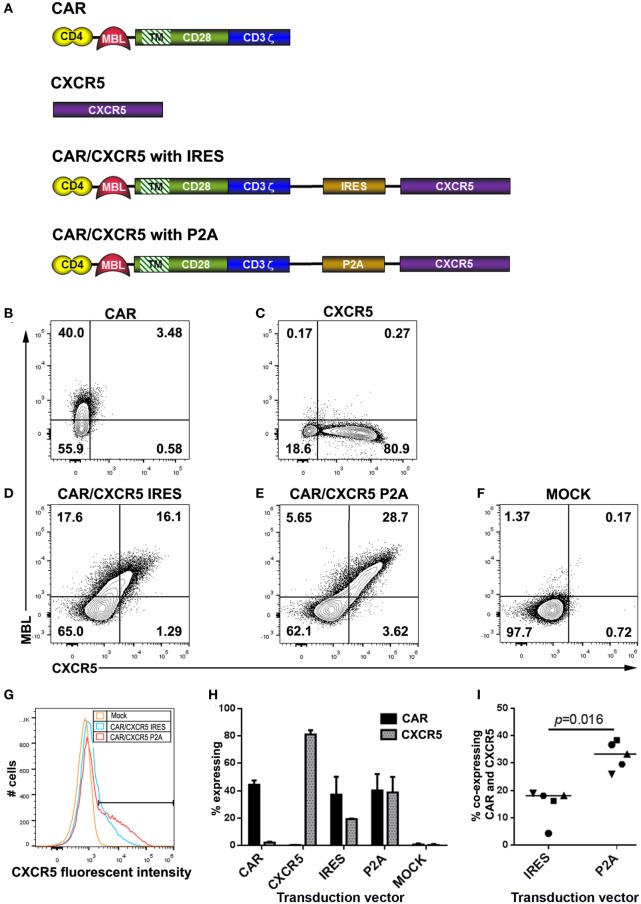
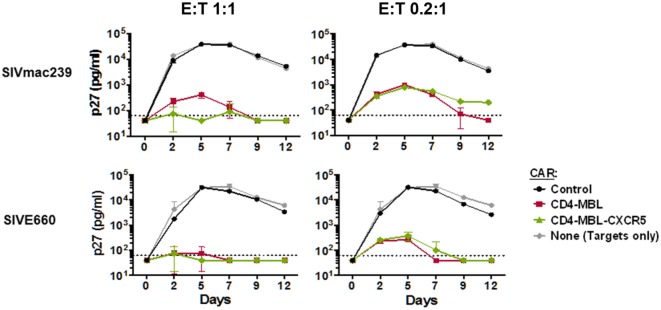
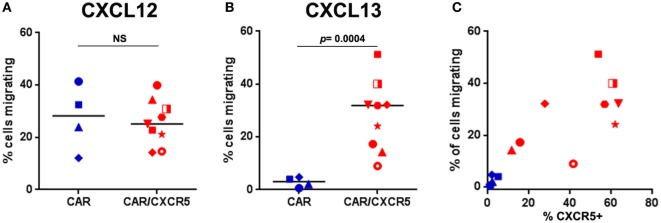
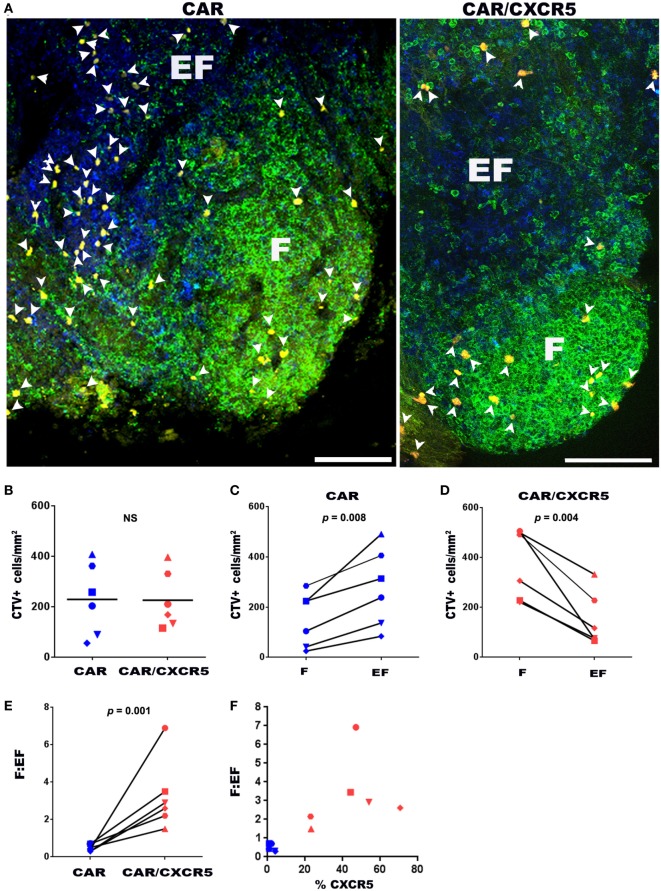
There is a need to develop improved methods to treat and potentially cure HIV infection. During chronic HIV infection, replication is concentrated within T follicular helper cells (Tfh) located within B cell follicles, where low levels of virus-specific CTL permit ongoing viral replication. We previously showed that elevated levels of simian immunodeficiency virus (SIV)-specific CTL in B cell follicles are linked to both decreased levels of viral replication in follicles and decreased plasma viral loads. These findings provide the rationale to develop a strategy for targeting follicular viral-producing (Tfh) cells using antiviral chimeric antigen receptor (CAR) T cells co-expressing the follicular homing chemokine receptor CXCR5. We hypothesize that antiviral CAR/CXCR5-expressing T cells, when infused into an SIV-infected animal or an HIV-infected individual, will home to B cell follicles, suppress viral replication, and lead to long-term durable remission of SIV and HIV. To begin to test this hypothesis, we engineered gammaretroviral transduction vectors for co-expression of a bispecific anti-SIV CAR and rhesus macaque CXCR5. Viral suppression by CAR/CXCR5-transduced T cells was measured , and CXCR5-mediated migration was evaluated using both an transwell migration assay, as well as a novel tissue migration assay. The functionality of the CAR/CXCR5 T cells was demonstrated through their potent suppression of SIV and SIV replication in and migration to the ligand CXCL13 , and concentration in B cell follicles in tissues . These novel antiviral immunotherapy products have the potential to provide long-term durable remission (functional cure) of HIV and SIV infections.
需要开发改进的方法来治疗和潜在治愈 HIV 感染。在慢性 HIV 感染期间,复制集中在滤泡 T 辅助细胞(Tfh)中,这些细胞位于 B 细胞滤泡内,其中低水平的病毒特异性 CTL 允许持续的病毒复制。我们之前表明,滤泡内升高的猴免疫缺陷病毒(SIV)特异性 CTL 水平与滤泡内病毒复制水平降低和血浆病毒载量降低有关。这些发现为开发靶向滤泡内病毒产生(Tfh)细胞的策略提供了依据,该策略使用共表达滤泡归巢趋化因子受体 CXCR5 的抗病毒嵌合抗原受体(CAR)T 细胞。我们假设,当将抗病毒 CAR/CXCR5 表达 T 细胞输注到 SIV 感染的动物或 HIV 感染的个体中时,它们将归巢到 B 细胞滤泡,抑制病毒复制,并导致 SIV 和 HIV 的长期持久缓解。为了开始测试这一假设,我们设计了用于共表达双特异性抗 SIV CAR 和恒河猴 CXCR5 的γ逆转录病毒转导载体。通过 CAR/CXCR5 转导的 T 细胞测量病毒抑制,并用 Transwell 迁移测定法和新型组织迁移测定法评估 CXCR5 介导的迁移。通过其对 SIV 和 SIV 复制的有效抑制以及向配体 CXCL13 的迁移和在组织中的 B 细胞滤泡中的浓缩,证明了 CAR/CXCR5 T 细胞的功能。这些新型抗病毒免疫疗法产品有可能为 HIV 和 SIV 感染提供长期持久缓解(功能性治愈)。