Refaat Alaa, Owis Mohamed, Abdelhamed Sherif, Saiki Ikuo, Sakurai Hiroaki
Drug Resistance Group, Centre for Cancer Research and Cell Biology, School of Medicine, Dentistry and Biomedical Science, Queen's University Belfast, Belfast BT9 7AE, Northern Ireland.
Department of Cancer Cell Biology, Graduate School of Medical and Pharmaceutical Sciences, University of Toyama, Toyama 930-0194, Japan.
Oncol Lett. 2018 Apr;15(4):4753-4758. doi: 10.3892/ol.2018.8014. Epub 2018 Feb 9.
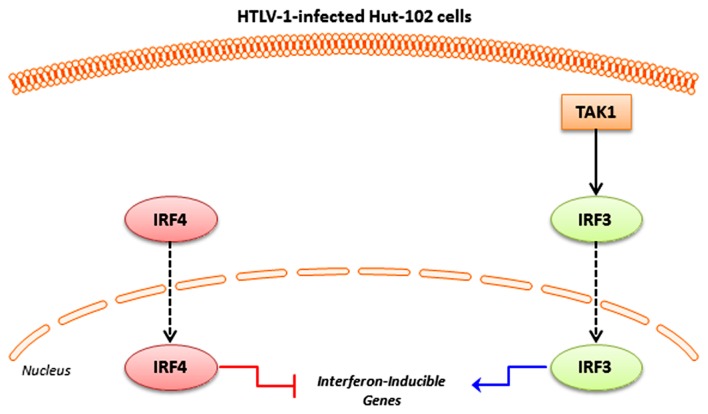
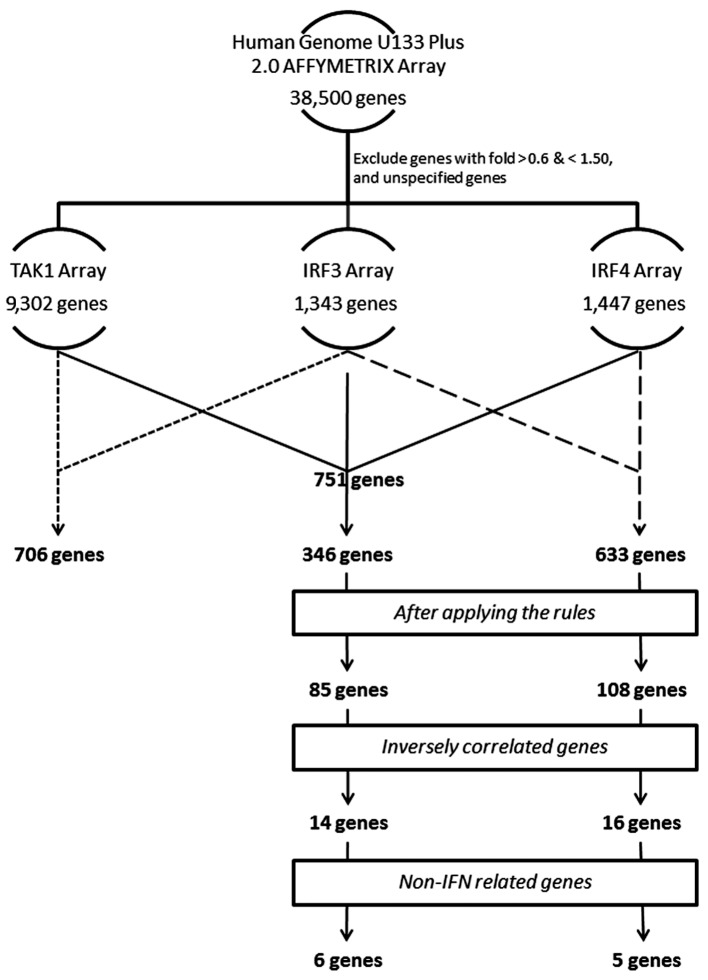
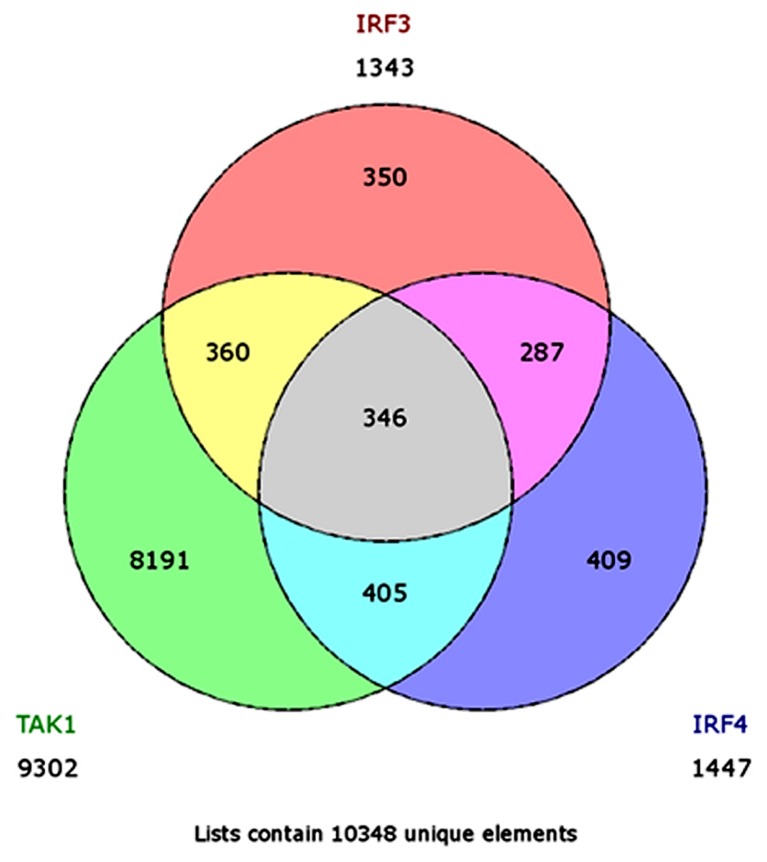
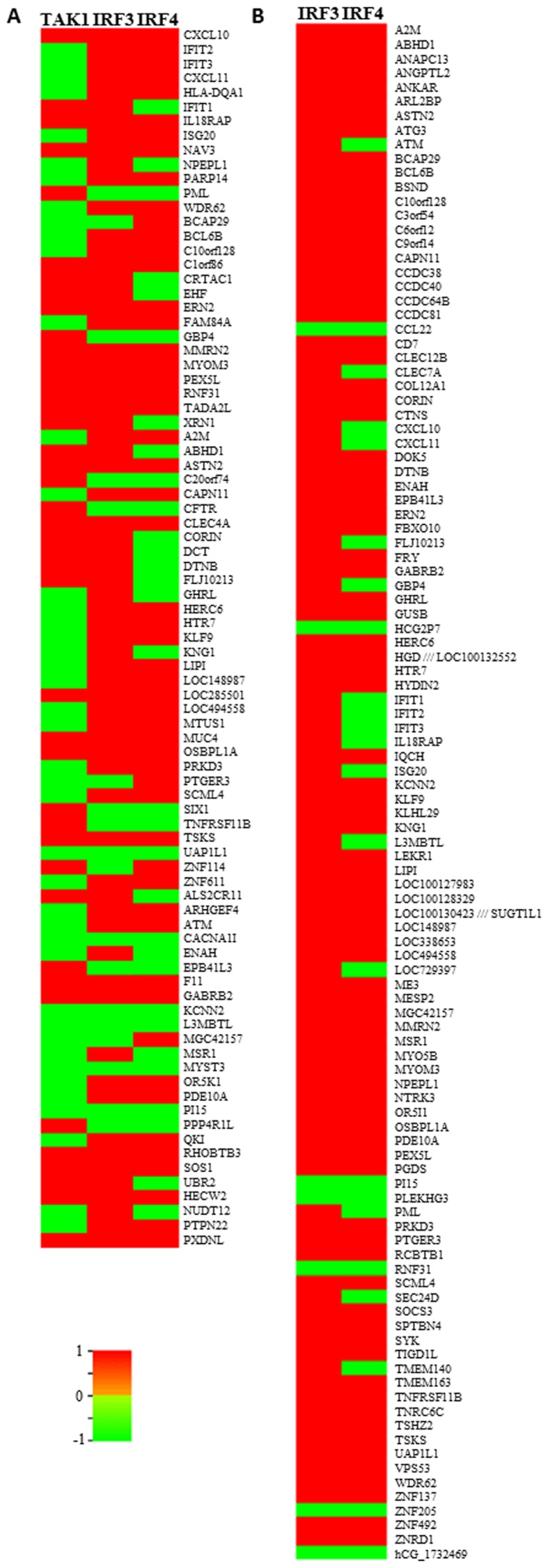
HuT-102 cells are considered one of the most representable human T-lymphotropic virus 1 (HTLV-1)-infected cell lines for studying adult T-cell lymphoma (ATL). In our previous studies, genome-wide screening was performed using the GeneChip system with Human Genome Array U133 Plus 2.0 for transforming growth factor-β-activated kinase 1 (TAK1)-, interferon regulatory factor 3 (IRF3)- and IRF4-regulated genes to demonstrate the effects of interferon-inducible genes in HuT-102 cells. Our previous findings demonstrated that TAK1 induced interferon inducible genes via an IRF3-dependent pathway and that IRF4 has a counteracting effect. As our previous data was performed by manual selection of common interferon-related genes mentioned in the literature, there has been some obscure genes that have not been considered. In an attempt to maximize the outcome of those microarrays, the present study reanalyzed the data collected in previous studies through a set of computational rules implemented using 'R' software, to identify important candidate genes that have been missed in the previous two studies. The final list obtained consisted of ten genes that are highly recommend as potential candidate for therapies targeting the HTLV-1 infected cancer cells. Those genes are ATM, CFTR, MUC4, PARP14, QK1, UBR2, CLEC7A (Dectin-1), L3MBTL, SEC24D and TMEM140. Notably, PARP14 has gained increased attention as a promising target in cancer cells.
HuT-102细胞被认为是研究成人T细胞淋巴瘤(ATL)最具代表性的人类嗜T淋巴细胞病毒1(HTLV-1)感染细胞系之一。在我们之前的研究中,使用带有人类基因组阵列U133 Plus 2.0的基因芯片系统对转化生长因子-β激活激酶1(TAK1)、干扰素调节因子3(IRF3)和IRF4调控的基因进行全基因组筛选,以证明干扰素诱导基因在HuT-102细胞中的作用。我们之前的研究结果表明,TAK1通过依赖IRF3的途径诱导干扰素诱导基因,而IRF4具有拮抗作用。由于我们之前的数据是通过手动选择文献中提到的常见干扰素相关基因获得的,因此存在一些未被考虑的模糊基因。为了最大限度地提高这些微阵列的结果,本研究通过使用“R”软件实施的一组计算规则,重新分析了之前研究中收集的数据,以识别在前两项研究中遗漏的重要候选基因。最终获得的列表包含十个基因,强烈推荐它们作为靶向HTLV-1感染癌细胞治疗的潜在候选基因。这些基因是ATM、CFTR、MUC4、PARP14、QK1、UBR2、CLEC7A(Dectin-1)、L3MBTL、SEC24D和TMEM140。值得注意的是,PARP14作为癌细胞中有前景的靶点受到了越来越多的关注。