Department of Anatomy, College of Medicine, Korea University, Brain Korea, Seoul, Korea.
Department of Psychology, Korea University, Seoul, Korea.
PLoS One. 2018 Apr 4;13(4):e0193859. doi: 10.1371/journal.pone.0193859. eCollection 2018.
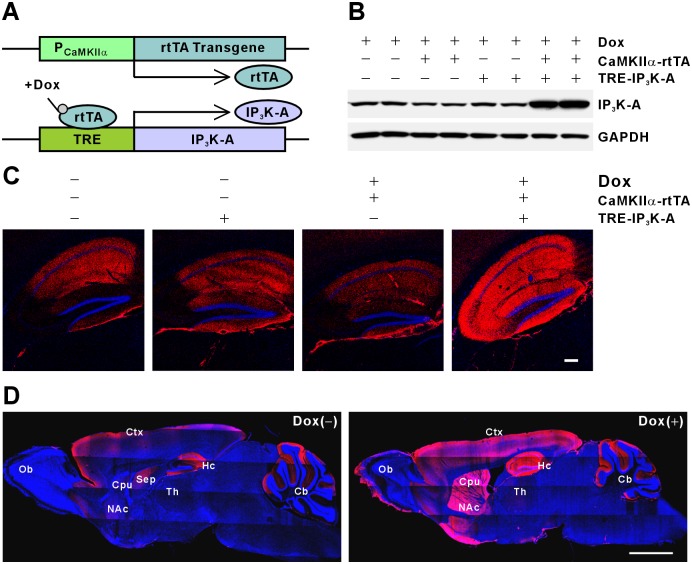
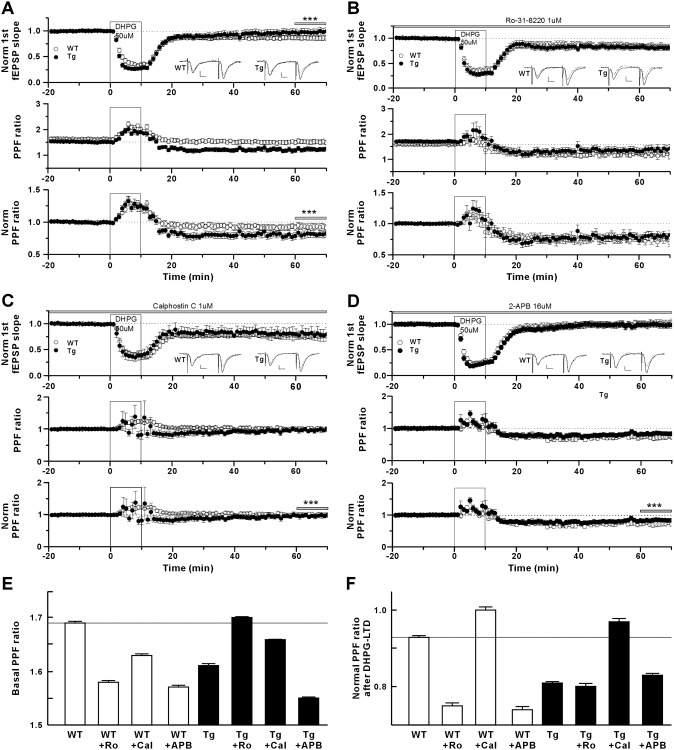
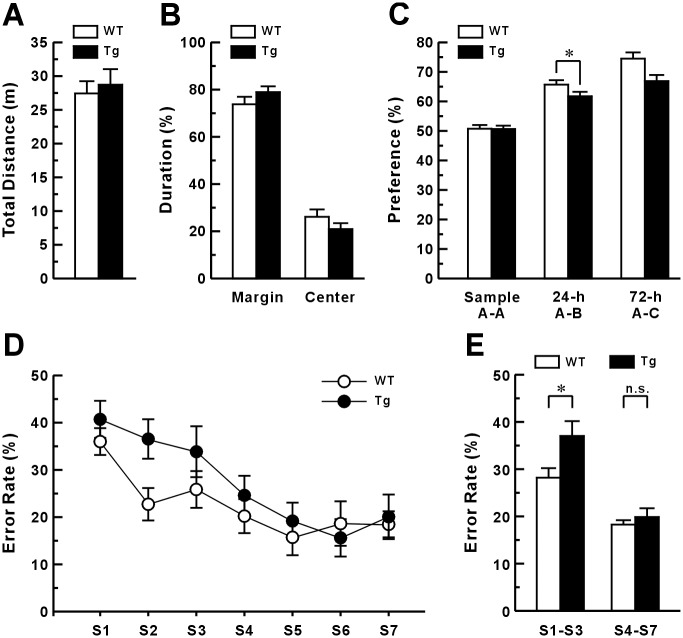
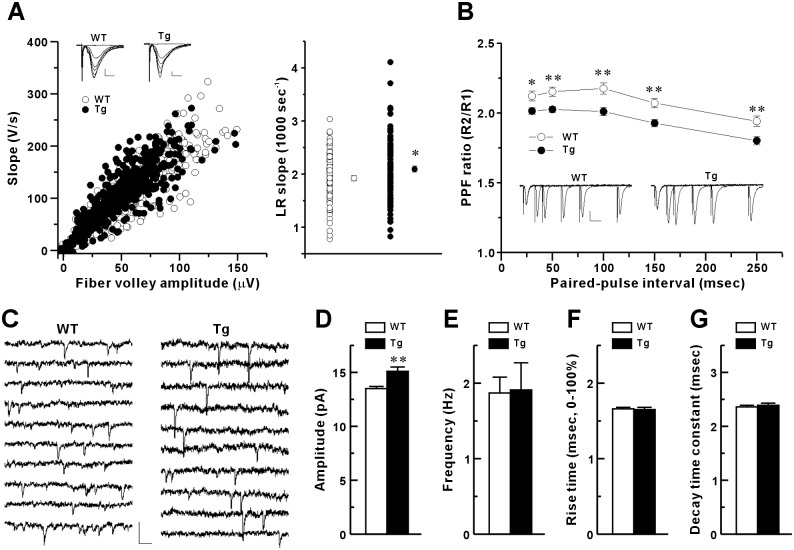
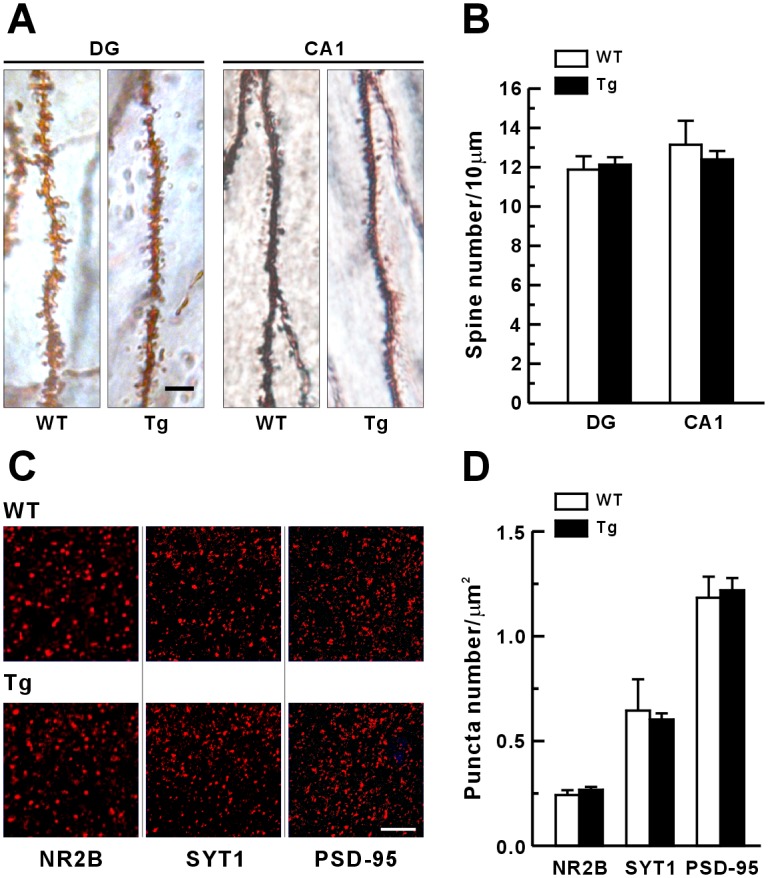
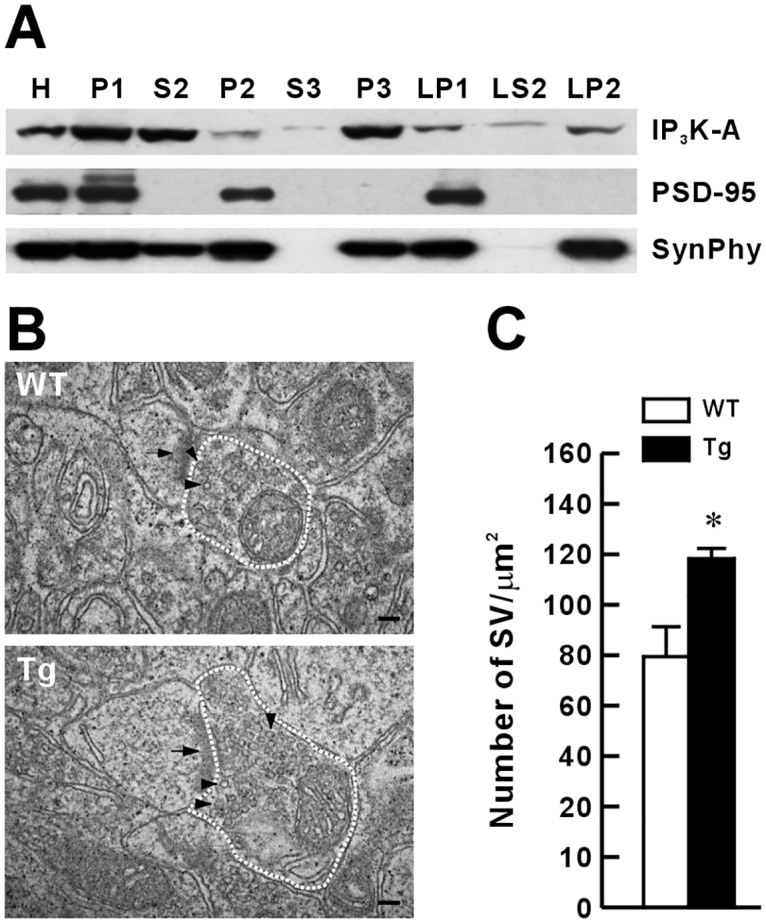
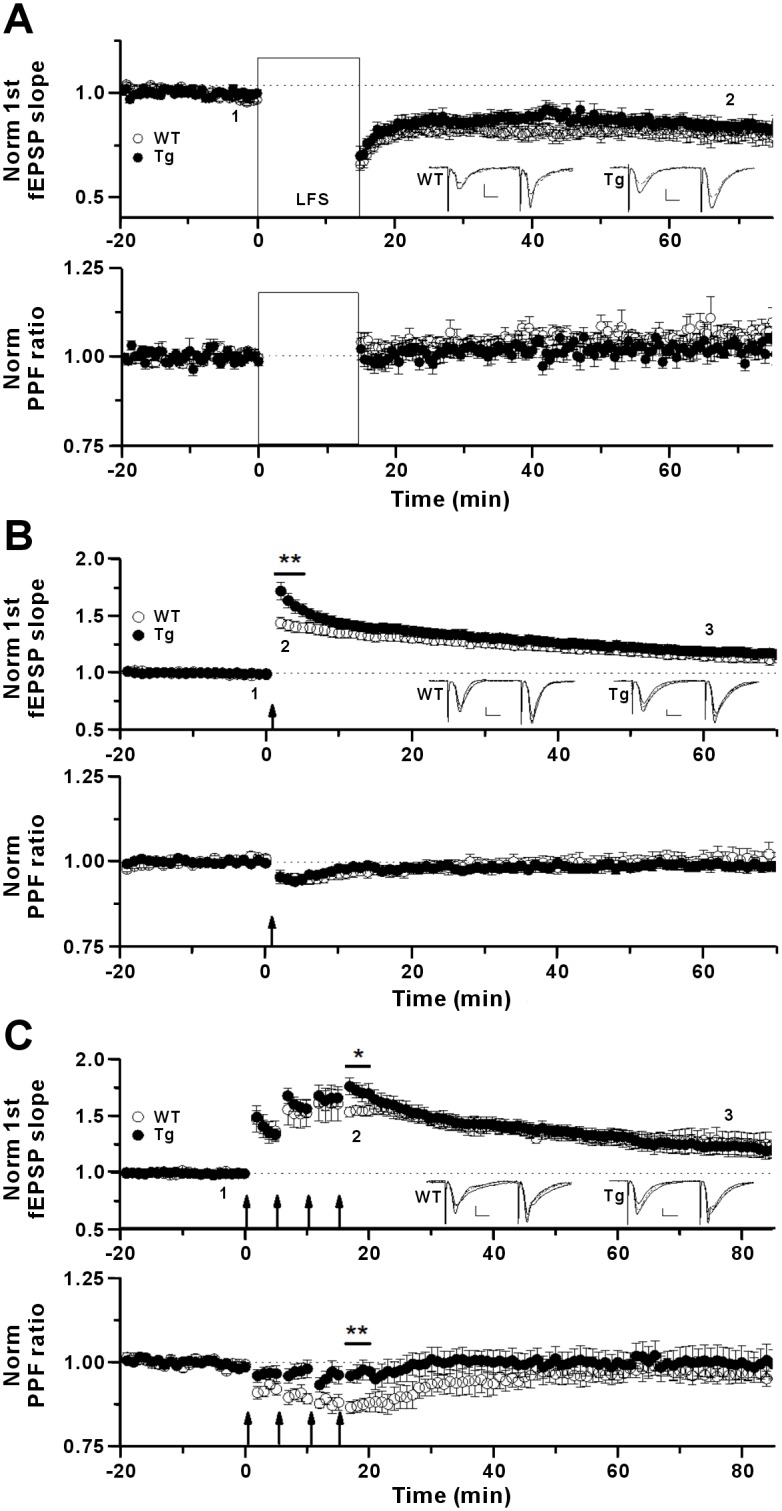
Inositol 1,4,5-trisphosphate 3-kinase A (IP3K-A) regulates the level of the inositol polyphosphates, inositol trisphosphate (IP3) and inositol tetrakisphosphate to modulate cellular signaling and intracellular calcium homeostasis in the central nervous system. IP3K-A binds to F-actin in an activity-dependent manner and accumulates in dendritic spines, where it is involved in the regulation of synaptic plasticity. IP3K-A knockout mice exhibit deficits in some forms of hippocampus-dependent learning and synaptic plasticity, such as long-term potentiation in the dentate gyrus synapses of the hippocampus. In the present study, to further elucidate the role of IP3K-A in the brain, we developed a transgenic (Tg) mouse line in which IP3K-A is conditionally overexpressed approximately 3-fold in the excitatory neurons of forebrain regions, including the hippocampus. The Tg mice showed an increase in both presynaptic release probability of evoked responses, along with bigger synaptic vesicle pools, and miniature excitatory postsynaptic current amplitude, although the spine density or the expression levels of the postsynaptic density-related proteins NR2B, synaptotagmin 1, and PSD-95 were not affected. Hippocampal-dependent learning and memory tasks, including novel object recognition and radial arm maze tasks, were partially impaired in Tg mice. Furthermore, (R,S)-3,5-dihydroxyphenylglycine-induced metabotropic glutamate receptor long-term depression was inhibited in Tg mice and this inhibition was dependent on protein kinase C but not on the IP3 receptor. Long-term potentiation and depression dependent on N-methyl-d-aspartate receptor were marginally affected in Tg mice. In summary, this study shows that overexpressed IP3K-A plays a role in some forms of hippocampus-dependent learning and memory tasks as well as in synaptic transmission and plasticity by regulating both presynaptic and postsynaptic functions.
肌醇 1,4,5-三磷酸 3-激酶 A (IP3K-A) 调节肌醇多磷酸盐的水平,包括肌醇三磷酸 (IP3) 和肌醇四磷酸,以调节中枢神经系统中的细胞信号转导和细胞内钙稳态。IP3K-A 以活性依赖的方式与 F-肌动蛋白结合,并在树突棘中积累,参与调节突触可塑性。IP3K-A 敲除小鼠在某些形式的海马依赖性学习和突触可塑性中表现出缺陷,例如海马齿状回突触的长时程增强。在本研究中,为了进一步阐明 IP3K-A 在大脑中的作用,我们开发了一种转基因 (Tg) 小鼠系,其中 IP3K-A 在包括海马在内的前脑区域的兴奋性神经元中被条件性过表达约 3 倍。Tg 小鼠表现出诱发反应的突触前释放概率增加,同时突触小泡池增大,以及微小的兴奋性突触后电流幅度增加,尽管棘突密度或突触后密度相关蛋白 NR2B、突触小泡蛋白 1 和 PSD-95 的表达水平不受影响。海马依赖性学习和记忆任务,包括新物体识别和放射臂迷宫任务,在 Tg 小鼠中部分受损。此外,(R,S)-3,5-二羟基苯甘氨酸诱导的代谢型谷氨酸受体长时程抑制在 Tg 小鼠中被抑制,这种抑制依赖于蛋白激酶 C 而不是 IP3 受体。Tg 小鼠中 N-甲基-D-天冬氨酸受体依赖性长时程增强和长时程抑制的作用略有影响。总之,这项研究表明,过表达的 IP3K-A 通过调节突触前和突触后功能,在某些形式的海马依赖性学习和记忆任务以及突触传递和可塑性中发挥作用。