Yasuda Hiroshi
Research Institute for Radiation Biology and Medicine, Hiroshima University, 1-2-3 Kasumi, Minami-ku, Hiroshima 734-8553, Japan.
J Radiat Res. 2018 Apr 1;59(suppl_2):ii137-ii141. doi: 10.1093/jrr/rry020.
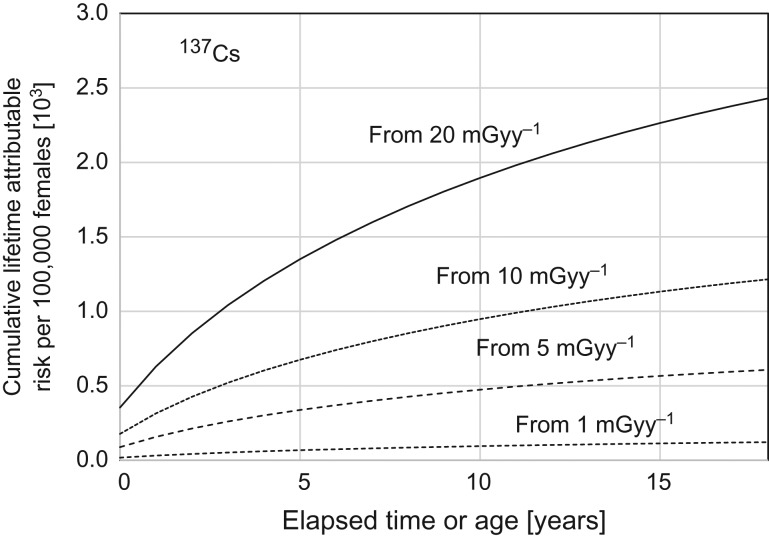
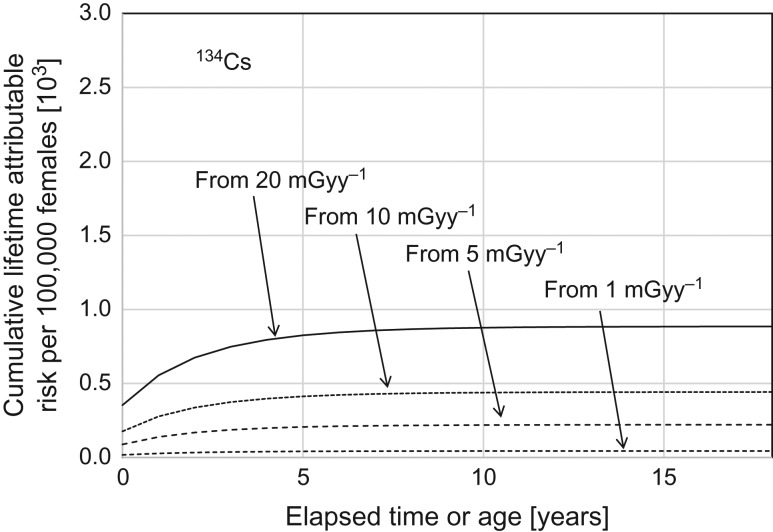
The Fukushima Daiichi accident highlighted the difficulty in making good decisions regarding post-accident actions for the protection of members of the public. Discussions are continuing between the authorities and the residents about 'how safe is safe'. Although governmental officials have argued that 20 mSv per year is a safe level of exposure, many residents have expressed strong doubts, and one of their major concerns is the greater health risk of radiation exposure for children. For settling this controversy, the author has demonstrated risk projections for cancer mortality of female children (0 to 18 years old) resulting from four different levels of radiocaesium deposits on the ground. The results showed that, for female children, the cumulative lifetime attributable risk of cancer mortality due to 18-years external radiation exposure from radiocaesium in soil would be 0.9% for 134Cs and 2.4% for 137Cs for an initial annual dose of 20 mGy/year; when the initial dose was 5 mGy/year, the cumulative lifetime cancer risk would be 0.2% and 0.6% for 134Cs and 137Cs, respectively. These results indicate the critical importance of accurate information about the composition and behavior of major radionuclides released to the environment, as well as precise dose monitoring and risk coefficients, for proper decision-making regarding protective actions for members of the public.
福岛第一核电站事故凸显了在做出有关事故后保护公众的行动的明智决策方面存在的困难。当局与居民之间关于“多安全才算安全”的讨论仍在继续。尽管政府官员认为每年20毫希沃特是安全的辐射暴露水平,但许多居民对此表示强烈怀疑,他们主要担心之一是儿童遭受辐射暴露会面临更大的健康风险。为了解决这一争议,作者展示了地面上四种不同水平的放射性铯沉积导致的女童(0至18岁)癌症死亡率的风险预测。结果表明,对于女童来说,土壤中放射性铯18年的外部辐射暴露导致的累积终身癌症死亡归因风险,当初始年剂量为20毫戈瑞/年时,134铯为0.9%,137铯为2.4%;当初始剂量为5毫戈瑞/年时,134铯和137铯的累积终身癌症风险分别为0.2%和0.6%。这些结果表明,对于就公众的防护行动做出恰当决策而言,有关释放到环境中的主要放射性核素的组成和行为的准确信息,以及精确的剂量监测和风险系数至关重要。