Department for Congenital Disorders, Statens Serum Institut, Artillerivej 5, 2300, Copenhagen S, Denmark.
Centre for Medical Parasitology at Department of International Health, Immunology and Microbiology, University of Copenhagen, Copenhagen, Denmark.
Microb Cell Fact. 2018 Apr 5;17(1):55. doi: 10.1186/s12934-018-0902-2.
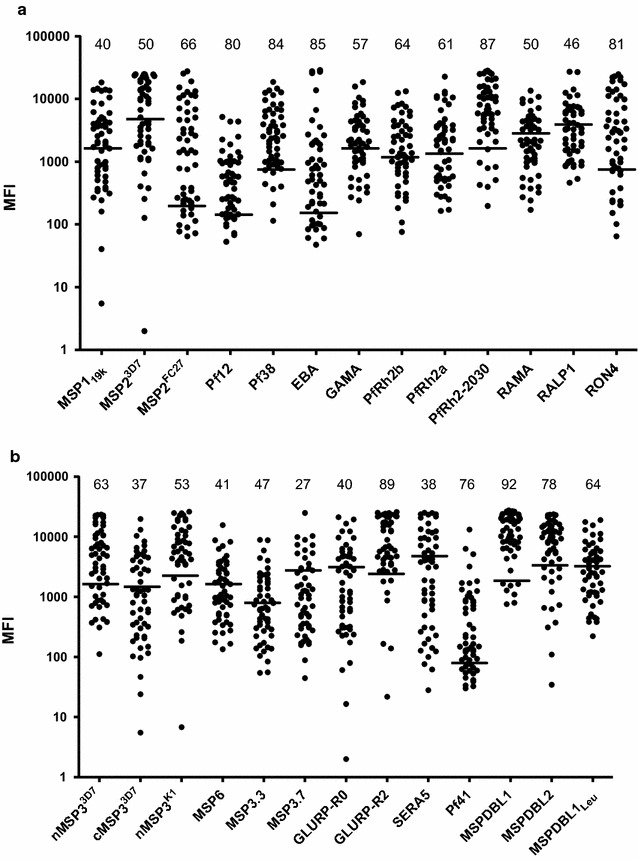
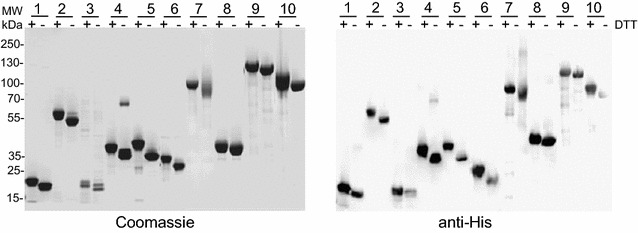
The production of recombinant proteins with proper conformation, appropriate post-translational modifications in an easily scalable and cost-effective system is challenging. Lactococcus lactis has recently been identified as an efficient Gram positive cell factory for the production of recombinant protein. We and others have used this expression host for the production of selected malaria vaccine candidates. The safety of this production system has been confirmed in multiple clinical trials. Here we have explored L. lactis cell factories for the production of 31 representative Plasmodium falciparum antigens with varying sizes (ranging from 9 to 90 kDa) and varying degree of predicted structural complexities including eleven antigens with multiple predicted structural disulfide bonds, those which are considered difficult-to-produce proteins.
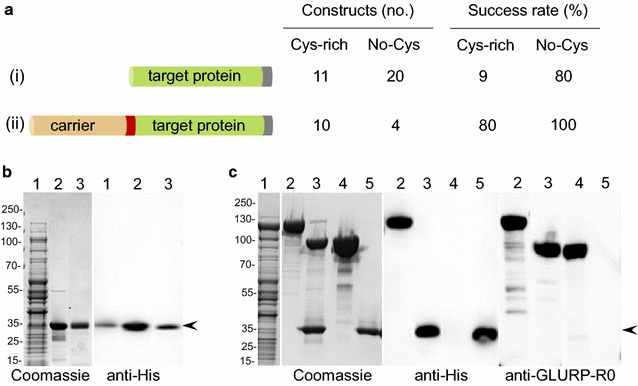
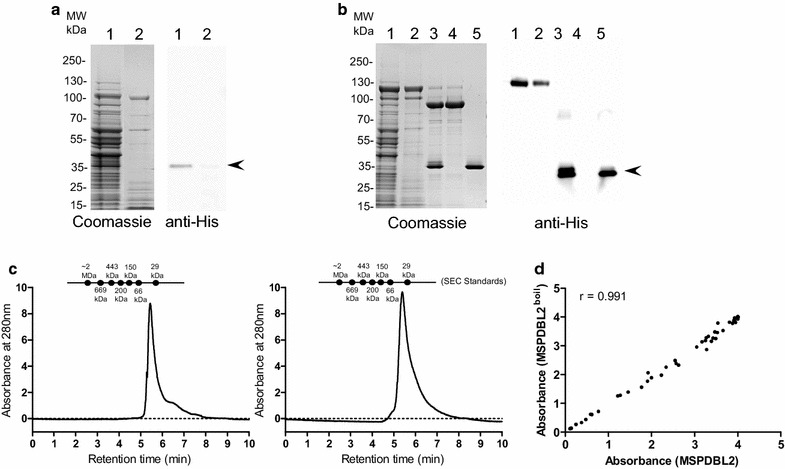
Of the 31 recombinant constructs attempted in the L. lactis expression system, the initial expression efficiency was 55% with 17 out of 31 recombinant gene constructs producing high levels of secreted recombinant protein. The majority of the constructs which failed to produce a recombinant protein were found to consist of multiple intra-molecular disulfide-bonds. We found that these disulfide-rich constructs could be produced in high yields when genetically fused to an intrinsically disorder protein domain (GLURP-R0). By exploiting the distinct biophysical and structural properties of the intrinsically disordered protein region we developed a simple heat-based strategy for fast purification of the disulfide-rich protein domains in yields ranging from 1 to 40 mg/l.
A novel procedure for the production and purification of disulfide-rich recombinant proteins in L. lactis is described.
在可扩展且具有成本效益的系统中生产具有正确构象和适当翻译后修饰的重组蛋白具有挑战性。乳球菌最近被鉴定为生产重组蛋白的有效革兰氏阳性细胞工厂。我们和其他人已经使用这种表达宿主来生产选定的疟疾疫苗候选物。该生产系统的安全性已在多项临床试验中得到证实。在这里,我们探索了乳球菌细胞工厂,以生产 31 种具有不同大小(范围为 9 至 90 kDa)和不同预测结构复杂性的代表性恶性疟原虫抗原,包括 11 种具有多个预测结构二硫键的抗原,这些抗原被认为是难以生产的蛋白质。
在乳球菌表达系统中尝试了 31 个重组构建体,初始表达效率为 55%,其中 31 个重组基因构建体中有 17 个产生高水平的分泌型重组蛋白。大多数未能产生重组蛋白的构建体被发现包含多个分子内二硫键。我们发现,当这些富含二硫键的构建体与固有无序蛋白结构域(GLURP-R0)遗传融合时,可以以高产量产生。通过利用固有无序蛋白区域的独特物理化学和结构特性,我们开发了一种简单的基于热的策略,用于快速纯化富含二硫键的蛋白结构域,产量范围为 1 至 40mg/L。
描述了一种在乳球菌中生产和纯化富含二硫键的重组蛋白的新方法。