Hachtel Jordan A, Lupini Andrew R, Idrobo Juan Carlos
Center for Nanophase Materials Sciences, Oak Ridge National Laboratory, Oak Ridge, TN, 37831, United States of America.
Materials Science and Technology Division, Oak Ridge National Laboratory, Oak Ridge, TN, 37831, United States of America.
Sci Rep. 2018 Apr 4;8(1):5637. doi: 10.1038/s41598-018-23805-5.
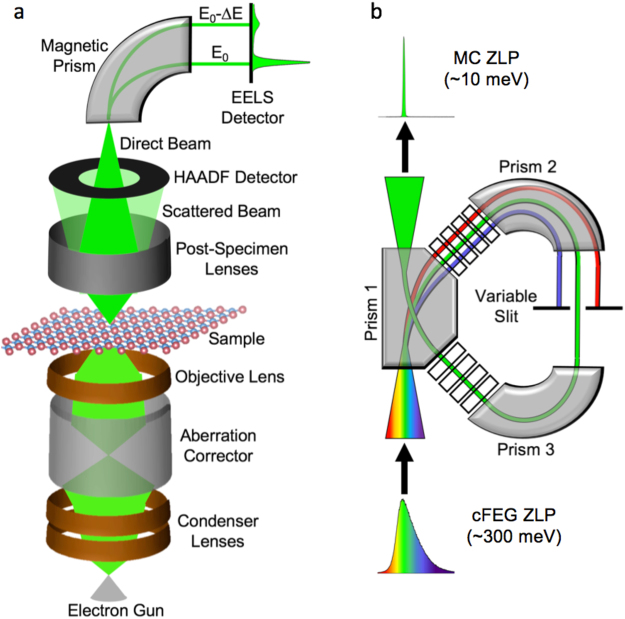
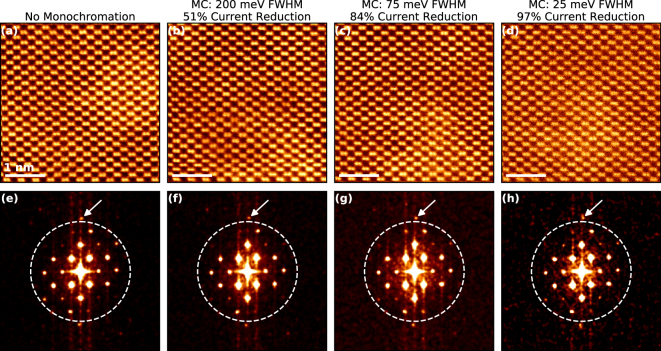
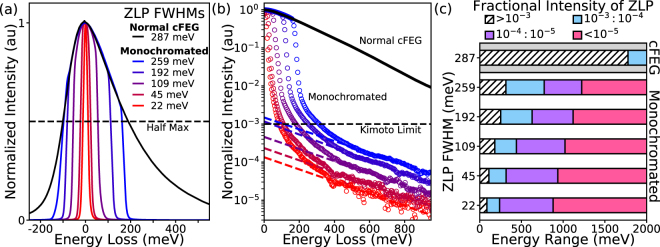
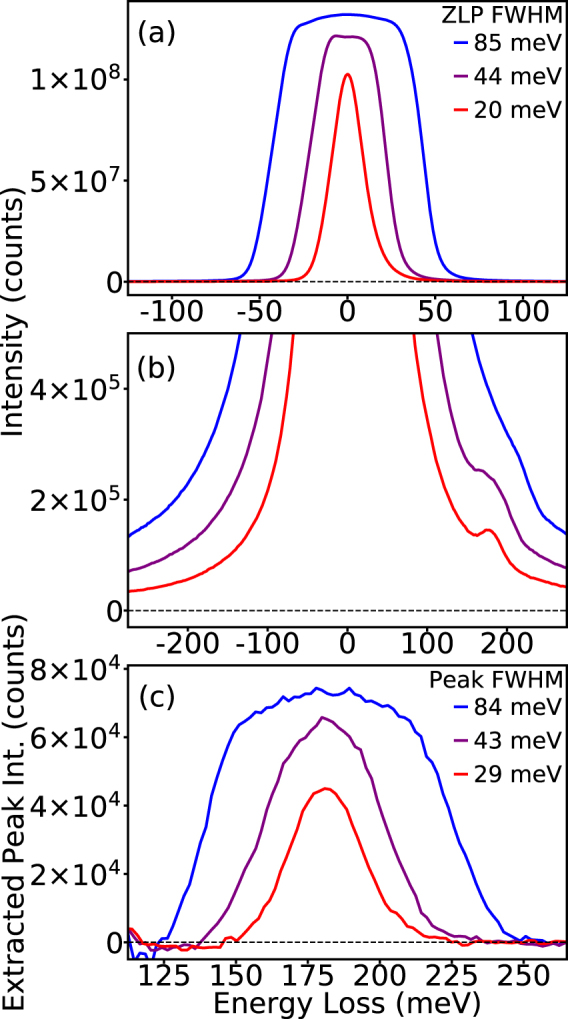
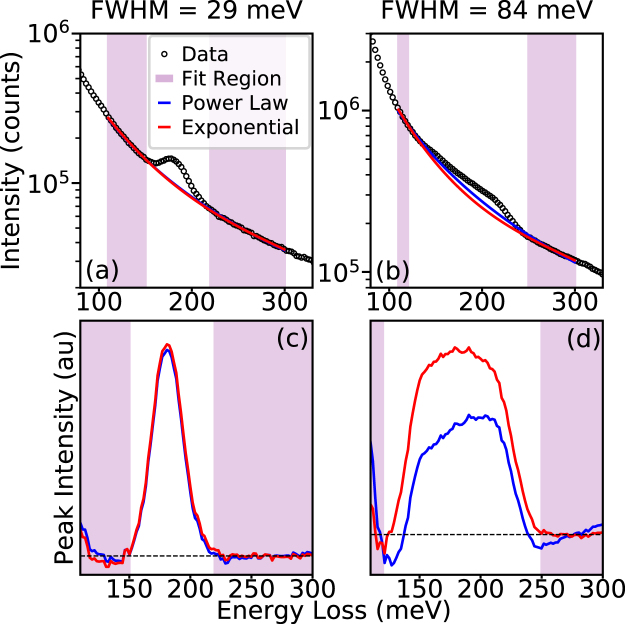
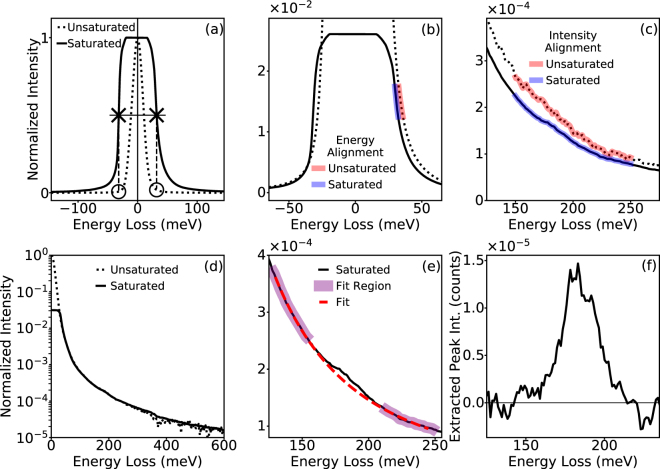
Monochromated electron energy loss spectroscopy (EELS) is one of the leading techniques to study materials properties that correspond to low (<5 eV) energy losses (i.e. band-gaps, plasmons, and excitons) with nanoscale spatial resolution. Recently a new generation of monochromators have become available, opening regimes and unlocking excitations that were previously unobservable in the electron microscope. The capabilities of these new instruments are still being explored, and here we study the effect of monochromation on various aspects of EELS analysis in the infrared (<1 eV) regime. We investigate the effect of varying levels of monochromation on energy resolution, zero-loss peak (ZLP) tail reduction, ZLP tail shape, signal-to-noise-ratio, and spatial resolution. From these experiments, the new capabilities of monochromated EELS are shown to be highly promising for the future of localized spectroscopic analysis.
单色电子能量损失谱(EELS)是研究与低能量损失(<5 eV)相关的材料特性(即带隙、等离子体激元和激子)的主要技术之一,具有纳米级空间分辨率。最近,新一代单色仪已经问世,开启了新的研究领域,并解锁了以前在电子显微镜中无法观测到的激发态。这些新仪器的功能仍在探索中,在此我们研究了单色化对红外(<1 eV)区域EELS分析各个方面的影响。我们研究了不同单色化水平对能量分辨率、零损失峰(ZLP)尾部减少、ZLP尾部形状、信噪比和空间分辨率的影响。从这些实验中可以看出,单色EELS的新功能对于未来的局部光谱分析极具前景。