Sorriento Daniela, De Luca Nicola, Trimarco Bruno, Iaccarino Guido
Dipartimento di Scienze Biomediche Avanzate, Università Federico II, Napoli, Italy.
Dipartimento di Medicina, Chirurgia e Odontoiatria, Università degli Studi di Salerno, Baronissi, Italy.
Front Physiol. 2018 Mar 21;9:258. doi: 10.3389/fphys.2018.00258. eCollection 2018.
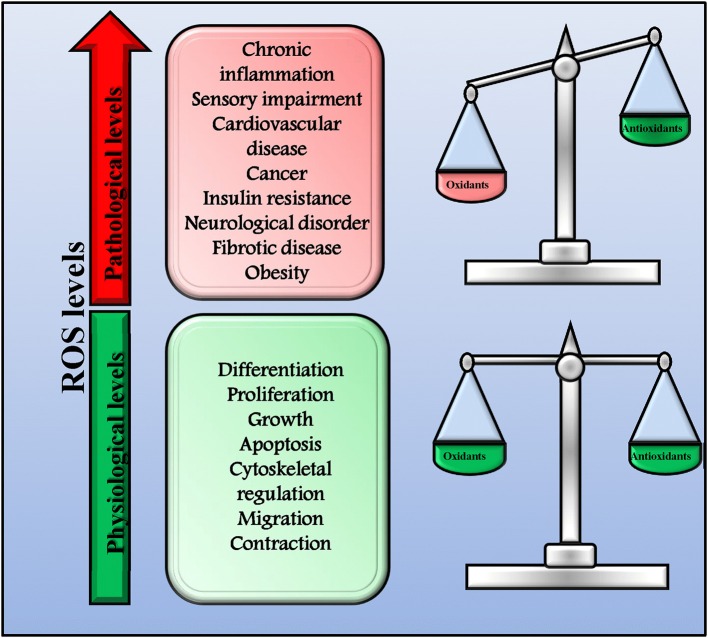
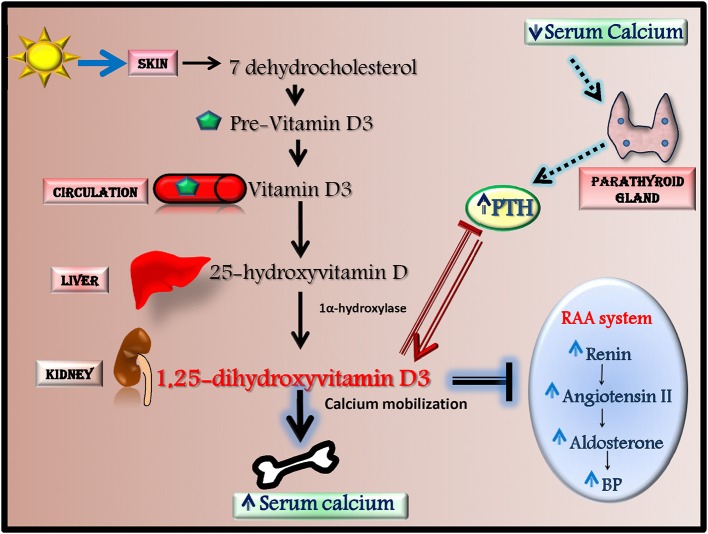
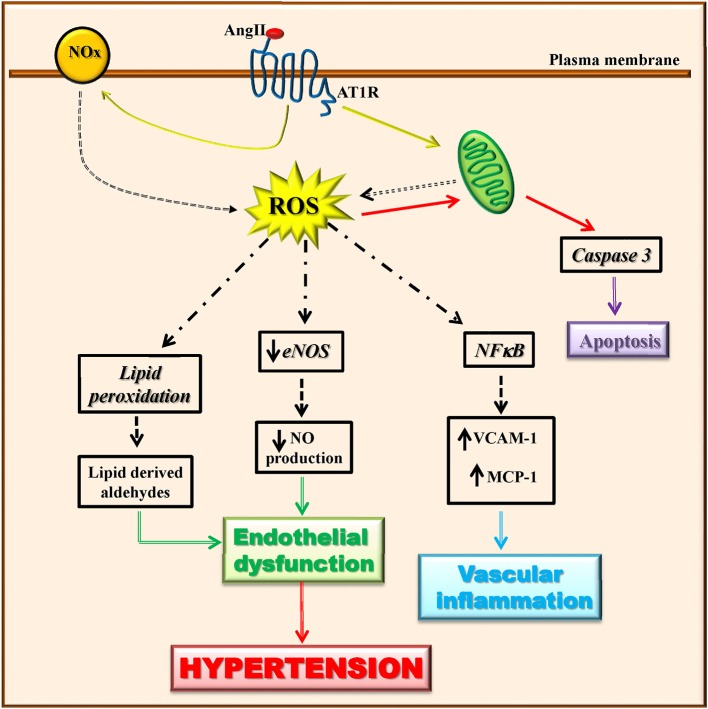
Reactive oxygen species (ROS) and reactive nitrogen species (RNS) play a key role in the regulation of the physiological and pathological signaling within the vasculature. In physiological conditions, a delicate balance between oxidants and antioxidants protects cells from the detrimental effects of ROS/RNS. Indeed, the imbalance between ROS/RNS production and antioxidant defense mechanisms leads to oxidative and nitrosative stress within the cell. These processes promote the vascular damage observed in chronic conditions, such as hypertension. The strong implication of ROS/RNS in the etiology of hypertension suggest that antioxidants could be effective in the treatment of this pathology. Indeed, in animal models of hypertension, the overexpression of antioxidants and the genetic modulation of oxidant systems have provided an encouraging proof of concept. Nevertheless, the translation of these strategies to human disease did not reach the expected success. This could be due to the complexity of this condition, whose etiology depends on multiple factors (smoking, diet, life styles, genetics, family history, comorbidities). Indeed, 95% of reported high blood pressure cases are deemed "essential hypertension," and at the molecular level, oxidative stress seems to be a common feature of hypertensive states. In this scenario, new therapies are emerging that could be useful to reduce oxidative stress in hypertension. It is now ascertained the role of Vitamin D deficiency in the development of essential hypertension and it has been shown that an appropriate high dose of Vitamin D significantly reduces blood pressure in hypertensive cohorts with vitamin D deficiency. Moreover, new drugs are emerging which have both antihypertensive action and antioxidant properties, such as celiprolol, carvedilol, nebivolol. Indeed, besides adrenergic desensitization, these kind of drugs are able to interfere with ROS/RNS generation and/or signaling, and are therefore considered promising therapeutics in the management of hypertension. In the present review we have dealt with the effectiveness of the antioxidant therapy in the management of hypertension. In particular, we discuss about Vitamin D and anti-hypertensive drugs with antioxidant properties.
活性氧(ROS)和活性氮(RNS)在血管系统内生理和病理信号的调节中起关键作用。在生理条件下,氧化剂和抗氧化剂之间的微妙平衡可保护细胞免受ROS/RNS的有害影响。事实上,ROS/RNS产生与抗氧化防御机制之间的失衡会导致细胞内的氧化应激和亚硝化应激。这些过程会促进在慢性疾病(如高血压)中观察到的血管损伤。ROS/RNS在高血压病因中的强烈关联表明抗氧化剂可能对治疗这种疾病有效。确实,在高血压动物模型中,抗氧化剂的过表达和氧化系统的基因调控提供了令人鼓舞的概念验证。然而,将这些策略转化用于人类疾病并未取得预期的成功。这可能是由于这种疾病的复杂性,其病因取决于多种因素(吸烟、饮食、生活方式、遗传、家族病史、合并症)。事实上,95%报告的高血压病例被认为是“原发性高血压”,在分子水平上,氧化应激似乎是高血压状态的一个共同特征。在这种情况下,正在出现可能有助于降低高血压中氧化应激的新疗法。现在已经确定维生素D缺乏在原发性高血压发展中的作用,并且已经表明适当高剂量的维生素D可显著降低维生素D缺乏的高血压人群的血压。此外,正在出现兼具抗高血压作用和抗氧化特性的新药,如塞利洛尔、卡维地洛、奈必洛尔。确实,除了肾上腺素能脱敏作用外,这类药物还能够干扰ROS/RNS的产生和/或信号传导,因此被认为是高血压管理中有前景的治疗方法。在本综述中,我们探讨了抗氧化治疗在高血压管理中的有效性。特别是,我们讨论了维生素D和具有抗氧化特性的抗高血压药物。