Department of Pharmacology and Therapeutics, The University of Melbourne, Parkville, Melbourne, Victoria, 3010, Australia.
The Florey Institute of Neuroscience and Mental Health, Parkville, Melbourne, Australia.
Purinergic Signal. 2018 Jun;14(2):97-108. doi: 10.1007/s11302-018-9605-8. Epub 2018 Apr 4.
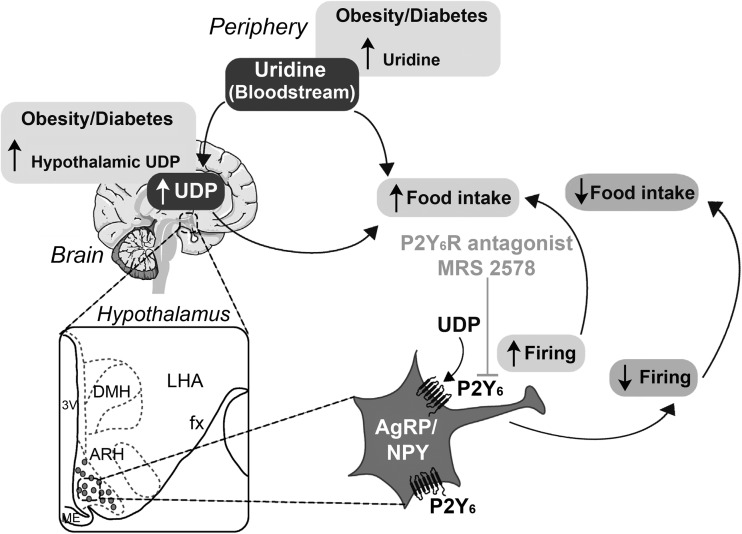
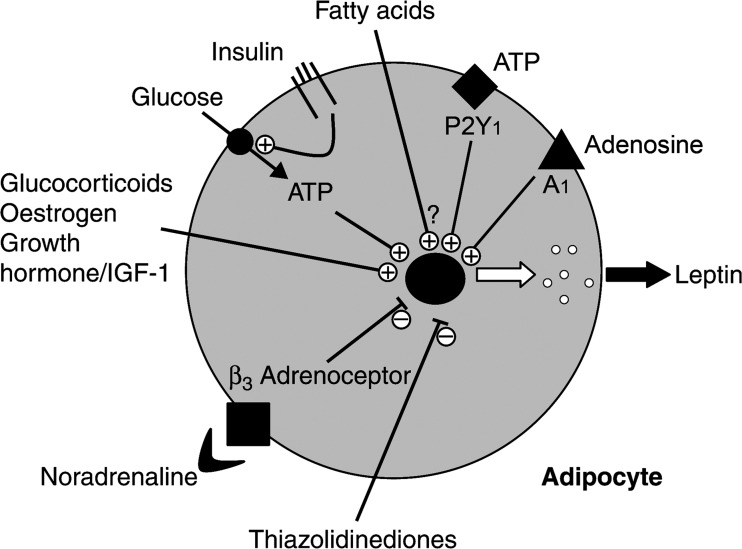
Obesity is a growing worldwide health problem, with an alarming increasing prevalence in developed countries, caused by a dysregulation of energy balance. Currently, no wholly successful pharmacological treatments are available for obesity and related adverse consequences. In recent years, hints obtained from several experimental animal models support the notion that purinergic signalling, acting through ATP-gated ion channels (P2X), G protein-coupled receptors (P2Y) and adenosine receptors (P1), is involved in obesity, both at peripheral and central levels. This review has drawn together, for the first time, the evidence for a promising, much needed novel therapeutic purinergic signalling approach for the treatment of obesity with a 'proof of concept' that hopefully could lead to further investigations and clinical trials for the management of obesity.
肥胖是一个全球性的健康问题,在发达国家,由于能量平衡失调,肥胖的发病率惊人地不断上升。目前,还没有完全成功的治疗肥胖症和相关不良后果的药物治疗方法。近年来,从几种实验动物模型中获得的线索支持这样一种观点,即嘌呤能信号通过 ATP 门控离子通道(P2X)、G 蛋白偶联受体(P2Y)和腺苷受体(P1)发挥作用,参与肥胖症的发生,包括外周和中枢水平。这篇综述首次汇集了有希望的、非常需要的新型嘌呤能信号治疗肥胖症的证据,为肥胖症的治疗提供了“概念验证”,希望能进一步开展研究和临床试验,以管理肥胖症。