Nathanson David, Sabale Ugne, Eriksson Jan W, Nyström Thomas, Norhammar Anna, Olsson Urban, Bodegård Johan
Department of Clinical Science and Education, Karolinska Institutet, Södersjukhuset, Stockholm, Sweden.
Department of Health Economics, Astra Zeneca Nordic-Baltic, Astraallén, B674, 151 85, Södertälje, Sweden.
Pharmacoecon Open. 2018 Dec;2(4):393-402. doi: 10.1007/s41669-017-0063-y.
The objective of this study was to describe healthcare resource use and cost development in Sweden during 2006-2014 in a type 2 diabetes (T2D) population receiving glucose-lowering drugs (GLDs).
In- and outpatient healthcare resource use and costs were extracted from mandatory national registries: the Cause of Death Register; the National Patient Register; and the Prescribed Drug Register. Primary care data were estimated based on an observational study including patients from 84 primary care centers in Sweden. Numbers of any cause inpatient, outpatient, and primary care contacts were extracted and direct healthcare costs were estimated.
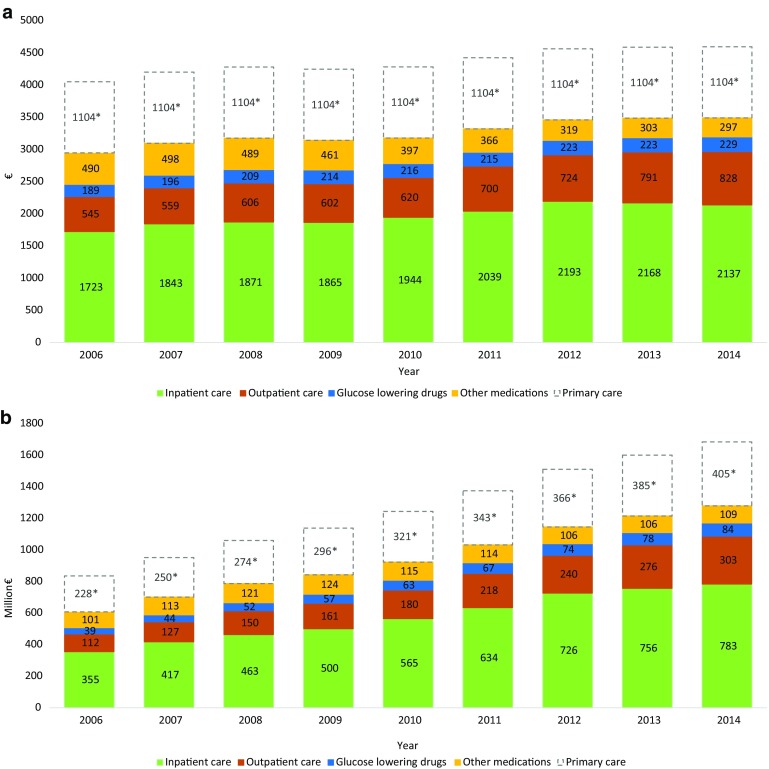
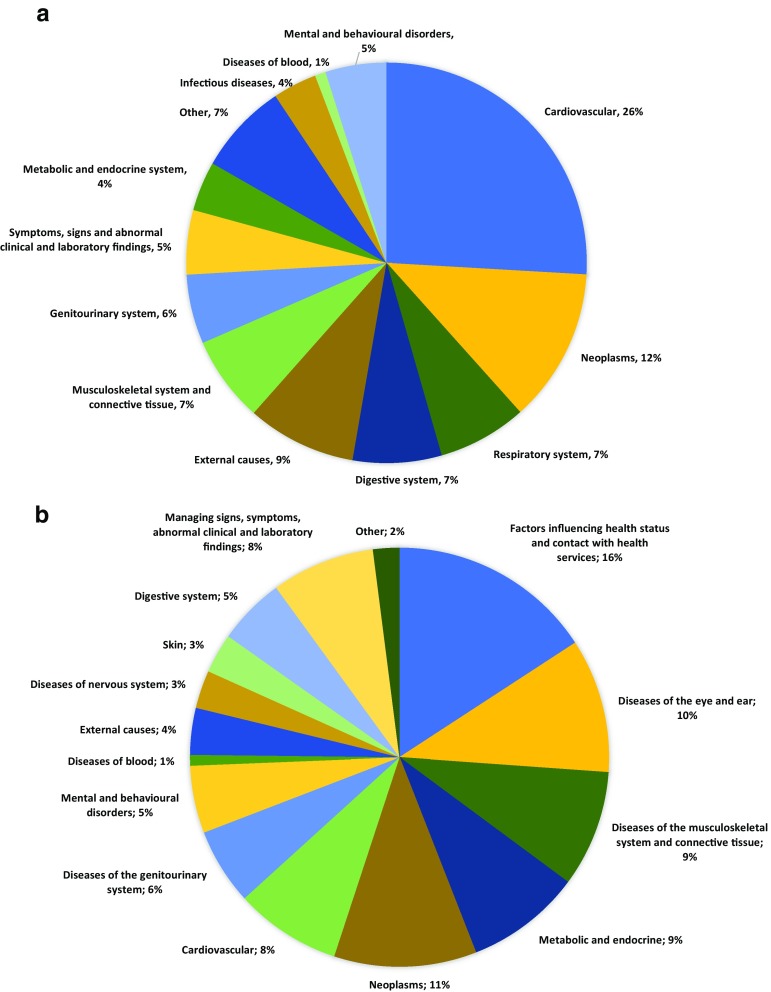
During 2006-2014, the number of inpatient and primary care contacts increased by approximately 70% (from 45,559 to 78,245 and from 4.9 to 8.8 million, respectively) and outpatient care contacts almost doubled (from 105,653 to 209,417). Mean annual per patient costs increased by 13%, reaching €4594. Total healthcare costs increased from €835 million to €1.684 billion. Inpatient care costs constituted 47% of total costs in 2014 (€783 million), primary care accounted for 24% (€405 million), outpatient care 18% (€303 million), non-GLD medications 6% (€109 million), and GLDs 5% (€84 million). Cardiovascular diseases (CVDs) were the most costly disease group in inpatient care (26%), whereas managing unspecified factors influencing health and T2D-associated diseases were the most costly in outpatient care (16 and 11%, respectively).
The healthcare costs of the GLD-treated T2D population doubled during 2006-2014, mostly driven by the increasing size of this population, of which inpatient care accounted for 47%. GLDs constituted the smallest share of costs. CVD was the most resource-requiring disease group.
本研究的目的是描述2006 - 2014年期间瑞典接受降糖药物(GLDs)治疗的2型糖尿病(T2D)人群的医疗资源使用情况和成本变化。
从国家强制登记处提取住院和门诊医疗资源使用情况及成本数据:死亡原因登记处、国家患者登记处和处方药登记处。基于一项观察性研究估算初级保健数据,该研究纳入了瑞典84个初级保健中心的患者。提取任何原因导致的住院、门诊和初级保健接触次数,并估算直接医疗成本。
2006 - 2014年期间,住院和初级保健接触次数分别增加了约70%(从45,559次增至78,245次,从490万次增至880万次),门诊护理接触次数几乎翻倍(从105,653次增至209,417次)。患者年均成本增加了13%,达到4594欧元。医疗总成本从8.35亿欧元增至16.84亿欧元。2014年住院护理成本占总成本的47%(7.83亿欧元),初级保健占24%(4.05亿欧元),门诊护理占18%(3.03亿欧元),非GLD药物占6%(1.09亿欧元),GLDs占5%(8400万欧元)。心血管疾病(CVDs)是住院护理中成本最高的疾病组(26%),而处理影响健康的未明确因素和T2D相关疾病在门诊护理中成本最高(分别为16%和11%)。
2006 - 2014年期间,接受GLD治疗的T2D人群的医疗成本翻倍,主要是由该人群规模的增加推动的,其中住院护理占47%。GLDs占成本的比例最小。CVD是最需要资源的疾病组。