Department of Biology, Lund University, Lund, Sweden.
Department of Biological Sciences and Biotechnology, Botswana International University of Science and Technology, Private Bag 16, Palapye, Botswana.
PLoS One. 2018 Apr 6;13(4):e0194911. doi: 10.1371/journal.pone.0194911. eCollection 2018.
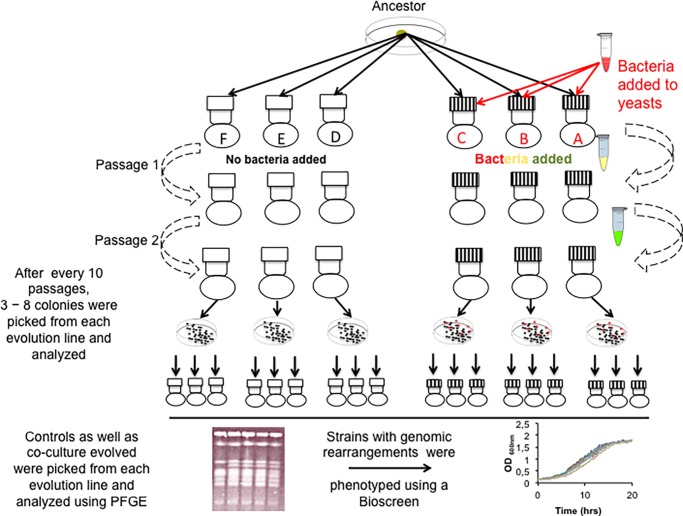
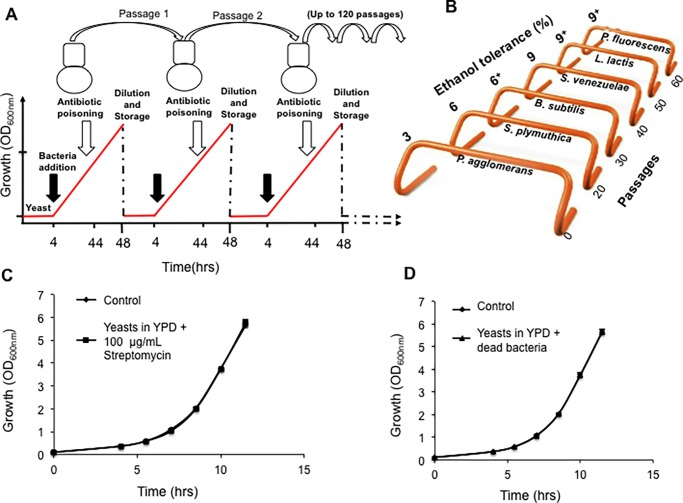
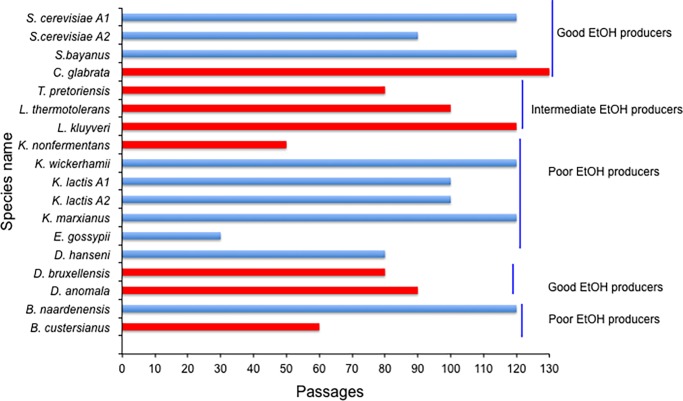
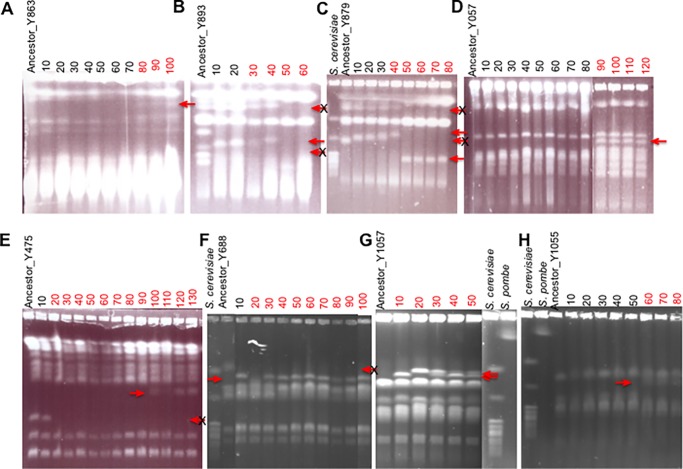
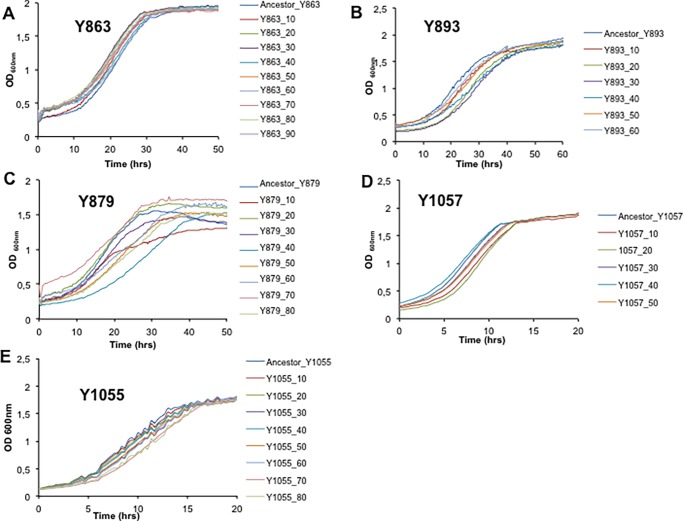
There is an enormous genetic diversity evident in modern yeasts, but our understanding of the ecological basis of such diversifications in nature remains at best fragmented so far. Here we report a long-term experiment mimicking a primordial competitive environment, in which yeast and bacteria co-exist and compete against each other. Eighteen yeasts covering a wide phylogenetic background spanning approximately 250 million years of evolutionary history were used to establish independent evolution lines for at most 130 passages. Our collection of hundreds of modified strains generated through such a rare two-species cross-kingdom competition experiment re-created the appearance of large-scale genomic rearrangements and altered phenotypes important in the diversification history of yeasts. At the same time, the methodology employed in this evolutionary study would also be a non-gene-technological method of reprogramming yeast genomes and then selecting yeast strains with desired traits. Cross-kingdom competition may therefore be a method of significant value to generate industrially useful yeast strains with new metabolic traits.
现代酵母中存在巨大的遗传多样性,但我们对这种自然多样化的生态基础的理解迄今为止仍然是零散的。在这里,我们报告了一个长期的实验,模拟了原始的竞争环境,其中酵母和细菌共存并相互竞争。我们使用了 18 种酵母,它们跨越了大约 2.5 亿年的进化历史,涵盖了广泛的系统发育背景,为最多 130 代建立了独立的进化线。通过这种罕见的跨物种竞争实验,我们产生了数百个经过修饰的菌株,这些菌株重新创造了大规模基因组重排和改变表型的现象,这些现象在酵母多样化历史中非常重要。同时,这种进化研究中使用的方法也可以成为一种非基因技术方法,重新编程酵母基因组,然后选择具有所需特性的酵母菌株。因此,跨物种竞争可能是一种具有重要价值的方法,可以产生具有新代谢特性的工业有用酵母菌株。