Seo Seul Ki, Kim Nari, Lee Ju Hee, Kim Sang Min, Lee Sang Yeub, Bae Jang Whan, Hwang Kyung Kuk, Kim Dong Woon, Koch Walter J, Cho Myeong Chan
Department of Internal Medicine, Chungbuk National University College of Medicine, Cheongju, Korea.
Chungbuk Regional Cardiocerebrovascular Center, Chungbuk National University Hospital, Cheongju, Korea.
Korean Circ J. 2018 Apr;48(4):296-309. doi: 10.4070/kcj.2017.0119.
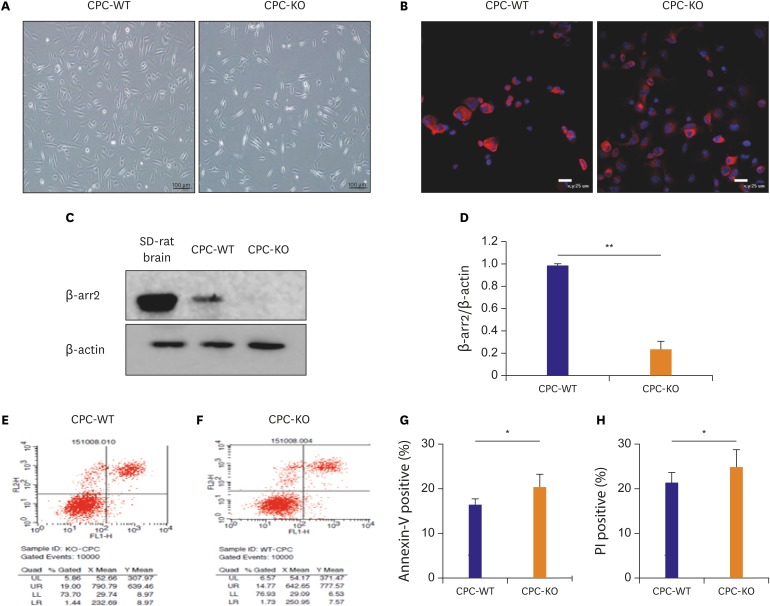
β-arrestin2 (β-arr2) basically regulates multiple signaling pathways in mammalian cells by desensitization and internalization of G-protein coupled receptors (GPCRs). We investigated impacts of β-arr2 on survival, mobility, and tube formation of cardiac progenitor cells (CPCs) obtained from wild-type (WT) mouse (CPC-WT), and β-arr2 knock-out (KO) mouse (CPC-KO) cultured in presence or absence of serum and oxygen as non-canonical roles in GPCR system.
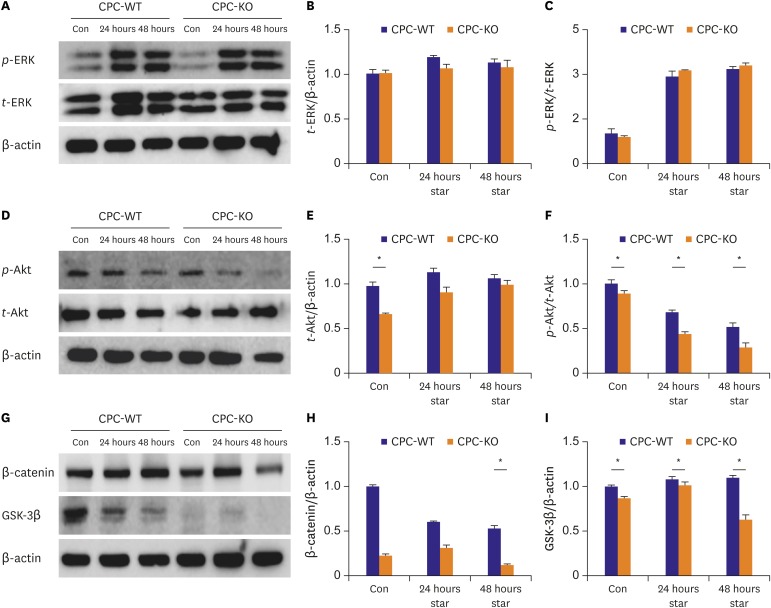
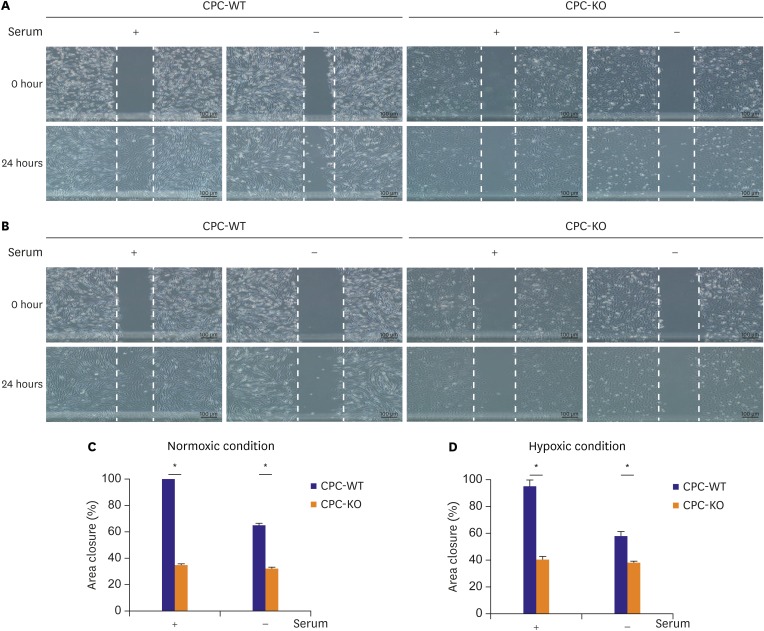
CPCs were cultured in Dulbecco's Modified Eagle Medium/Nutrient Mixture F-12 -based media containing fetal bovine serum and growth factors. Survival of 2 types of CPCs in hypoxia and/or serum deprivation was measured by fluorescence-activated cell sorting. Wound healing ability, and tube formation ability on Matrigel of 2 kinds of CPCs were compared in normoxic and hypoxic cultures. Protein expression related to survival and mobility were measured with the Western blot for each culture conditions.
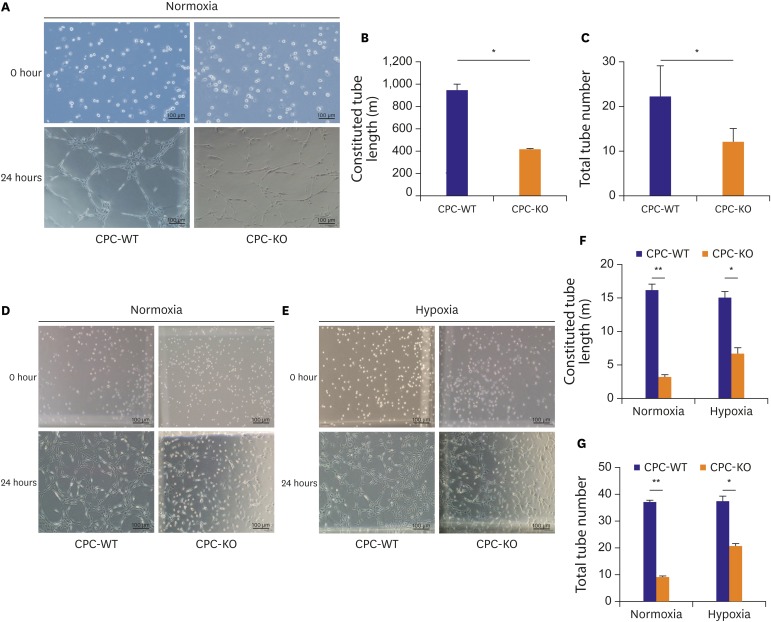
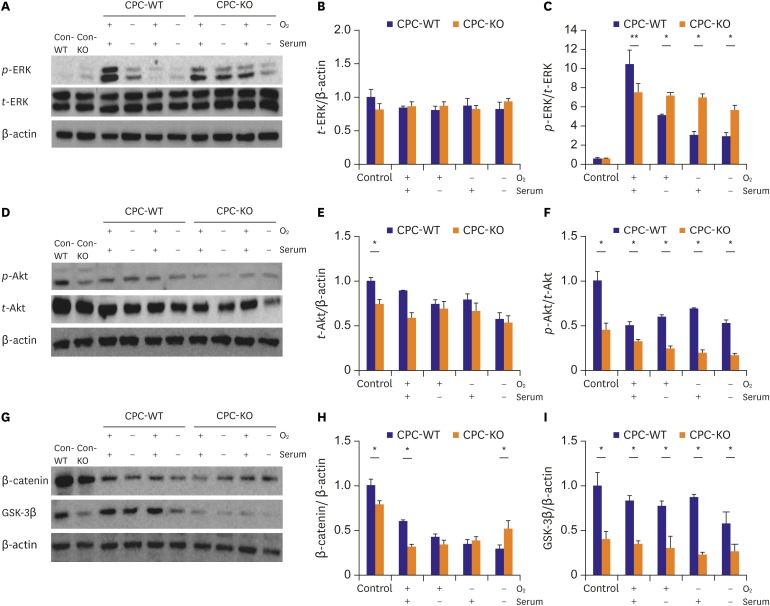
CPC-KO showed significantly worse mobility in the wound healing assay and in tube formation on Matrigel especially in hypoxic culture than did the CPC-WT. Also, CPC-KO showed significantly higher apoptosis fraction in both normoxic and hypoxic cultures than did the CPC-WT. Expression of proteins associated with cell survival and mobility, e.g., protein kinase B (Akt), β-catenin, and glycogen synthase kinase-3β (GSK-3β) was significantly worse in CPC-KO.
The CPC-KO had significantly worse cell mobility, tube formation ability, and survival than the CPC-WT, especially in the hypoxic cultures. Apparently, β-arr2 is important on CPC survival by means of mobility and tube formation in myocardial ischemia.
β-抑制蛋白2(β-arr2)主要通过G蛋白偶联受体(GPCR)的脱敏和内化来调节哺乳动物细胞中的多种信号通路。我们研究了β-arr2对从野生型(WT)小鼠(CPC-WT)和β-arr2基因敲除(KO)小鼠(CPC-KO)获得的心脏祖细胞(CPC)的存活、迁移和管形成的影响,这些细胞在有或无血清及氧气的条件下培养,以探究其在GPCR系统中的非经典作用。
将CPC培养于含有胎牛血清和生长因子的基于杜氏改良 Eagle 培养基/营养混合物 F-12 的培养基中。通过荧光激活细胞分选法测定两种CPC在缺氧和/或血清剥夺条件下的存活率。在常氧和缺氧培养条件下比较两种CPC的伤口愈合能力以及在基质胶上的管形成能力。针对每种培养条件,用蛋白质印迹法检测与存活和迁移相关的蛋白质表达。
在伤口愈合试验和基质胶上的管形成实验中,尤其是在缺氧培养条件下,CPC-KO的迁移能力明显比CPC-WT差。此外,在常氧和缺氧培养条件下,CPC-KO的凋亡率均明显高于CPC-WT。与细胞存活和迁移相关的蛋白质,如蛋白激酶B(Akt)、β-连环蛋白和糖原合酶激酶-3β(GSK-3β)在CPC-KO中的表达明显较差。
CPC-KO的细胞迁移能力、管形成能力和存活率明显比CPC-WT差,尤其是在缺氧培养条件下。显然,β-arr2通过在心肌缺血中的迁移和管形成对CPC存活至关重要。