Rehabilitation Center for Children and Adolescents, University Children's Hospital Zurich, Mühlebergstrasse 104, CH-8910, Affoltern am Albis, Switzerland.
Department of Physical Medicine and Rehabilitation, Harvard Medical School, at Spaulding Rehabilitation Hospital, Charlestown MA, USA.
J Neuroeng Rehabil. 2018 Apr 6;15(1):30. doi: 10.1186/s12984-018-0366-y.
The application of rehabilitation robots has grown during the last decade. While meta-analyses have shown beneficial effects of robotic interventions for some patient groups, the evidence is less in others. We established the Advanced Robotic Therapy Integrated Centers (ARTIC) network with the goal of advancing the science and clinical practice of rehabilitation robotics. The investigators hope to exploit variations in practice to learn about current clinical application and outcomes. The aim of this paper is to introduce the ARTIC network to the clinical and research community, present the initial data set and its characteristics and compare the outcome data collected so far with data from prior studies.
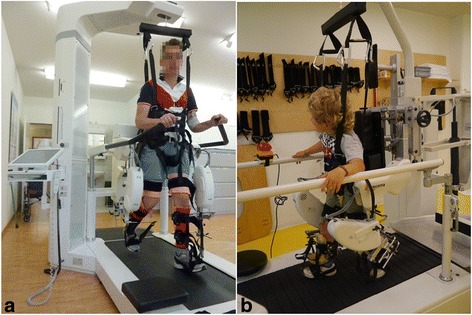
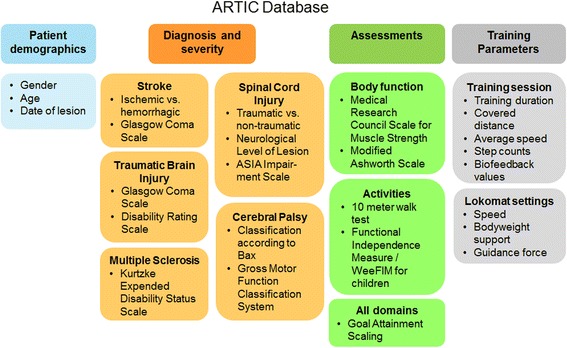
ARTIC is a pragmatic observational study of clinical care. The database includes patients with various neurological and gait deficits who used the driven gait orthosis Lokomat® as part of their treatment. Patient characteristics, diagnosis-specific information, and indicators of impairment severity are collected. Core clinical assessments include the 10-Meter Walk Test and the Goal Attainment Scaling. Data from each Lokomat® training session are automatically collected.
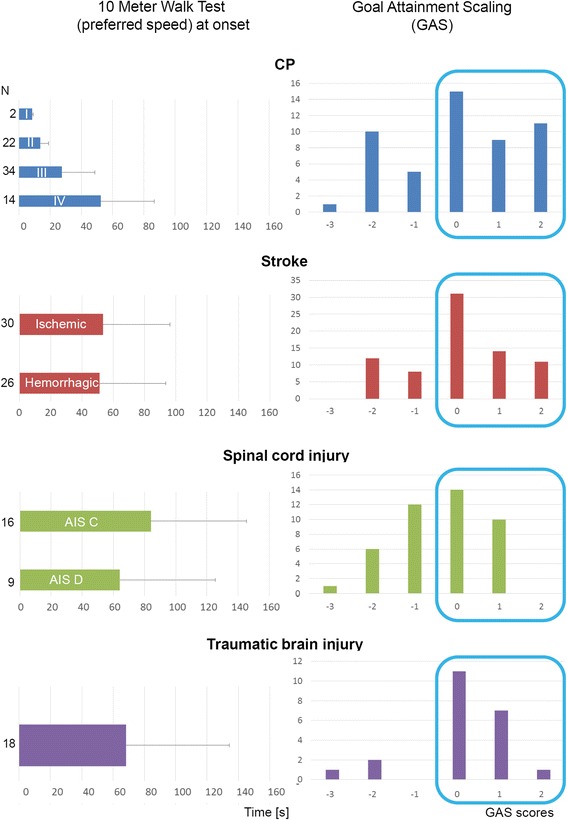
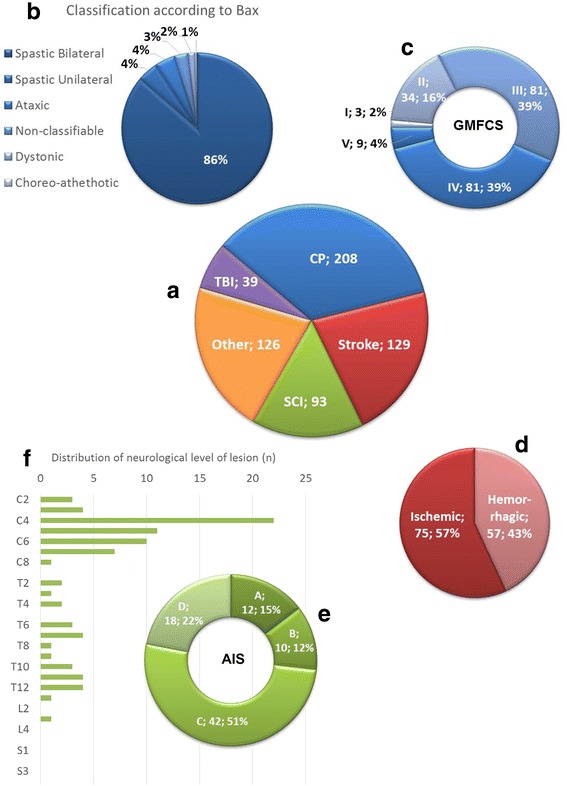
At time of analysis, the database contained data collected from 595 patients (cerebral palsy: n = 208; stroke: n = 129; spinal cord injury: n = 93; traumatic brain injury: n = 39; and various other diagnoses: n = 126). At onset, average walking speeds were slow. The training intensity increased from the first to the final therapy session and most patients achieved their goals.
The characteristics of the patients matched epidemiological data for the target populations. When patient characteristics differed from epidemiological data, this was mainly due to the selection criteria used to assess eligibility for Lokomat® training. While patients included in randomized controlled interventional trials have to fulfill many inclusion and exclusion criteria, the only selection criteria applying to patients in the ARTIC database are those required for use of the Lokomat®. We suggest that the ARTIC network offers an opportunity to investigate the clinical application and effectiveness of rehabilitation technologies for various diagnoses. Due to the standardization of assessments and the use of a common technology, this network could serve as a basis for researchers interested in specific interventional studies expanding beyond the Lokomat®.
康复机器人的应用在过去十年中得到了发展。虽然荟萃分析表明机器人干预对一些患者群体有有益的效果,但在其他患者群体中的证据则较少。我们建立了先进的机器人治疗综合中心(ARTIC)网络,旨在推进康复机器人的科学和临床实践。研究人员希望利用实践中的差异来了解当前的临床应用和结果。本文的目的是向临床和研究界介绍 ARTIC 网络,介绍初始数据集及其特征,并将迄今为止收集的结果数据与先前研究的数据进行比较。
ARTIC 是一项关于临床护理的实用观察性研究。该数据库包括患有各种神经和步态缺陷的患者,他们在治疗中使用驱动式步态矫形器 Lokomat®。收集患者特征、诊断特异性信息和损伤严重程度指标。核心临床评估包括 10 米步行测试和目标实现量表。每个 Lokomat®训练课程的数据都是自动收集的。
在分析时,数据库包含从 595 名患者(脑瘫:n=208;中风:n=129;脊髓损伤:n=93;创伤性脑损伤:n=39;以及各种其他诊断:n=126)收集的数据。在发病时,平均步行速度较慢。训练强度从第一节课到最后一节课逐渐增加,大多数患者达到了他们的目标。
患者的特征与目标人群的流行病学数据相匹配。当患者特征与流行病学数据不同时,这主要是由于用于评估 Lokomat®训练资格的选择标准。虽然随机对照干预试验中纳入的患者必须满足许多纳入和排除标准,但 ARTIC 数据库中患者适用的唯一选择标准是使用 Lokomat®的要求。我们认为,ARTIC 网络为研究各种诊断的康复技术的临床应用和效果提供了机会。由于评估的标准化和通用技术的使用,该网络可以为有兴趣进行超越 Lokomat®的特定干预研究的研究人员提供基础。