The Key Laboratory of Stem Cell Biology, Institute of Health Sciences, Shanghai Institutes for Biological Sciences, Chinese Academy of Sciences, University of Chinese Academy of Sciences, Shanghai, China.
The Key Laboratory of Stem Cell Biology, Chinese Academy of Sciences Center for Excellence in Molecular Cell Science, Institute of Health Sciences, Shanghai Institutes for Biological Sciences, Chinese Academy of Sciences, University of Chinese Academy of Sciences, Shanghai, China.
J Exp Med. 2018 May 7;215(5):1365-1382. doi: 10.1084/jem.20171417. Epub 2018 Apr 6.
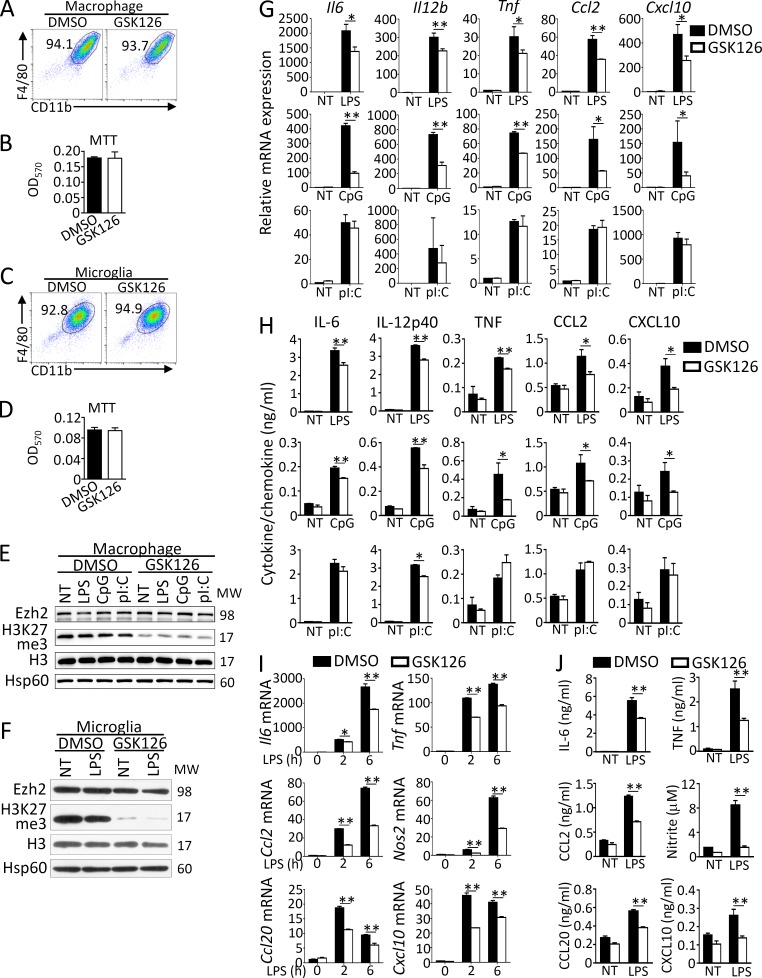
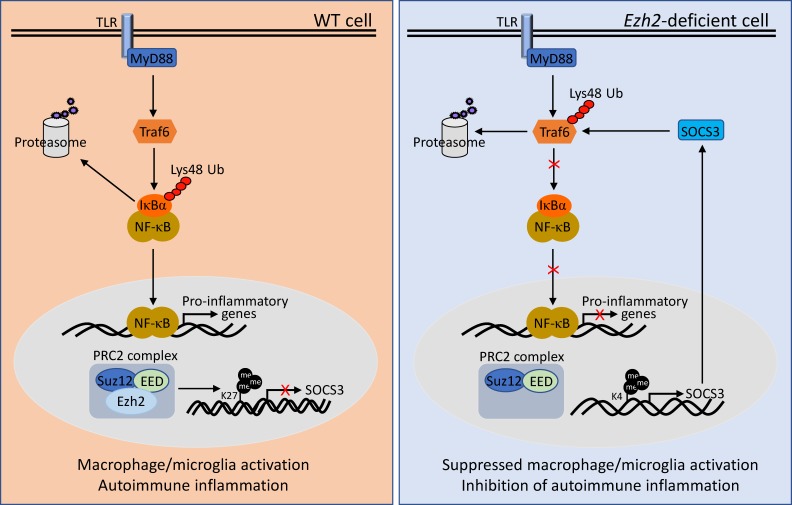
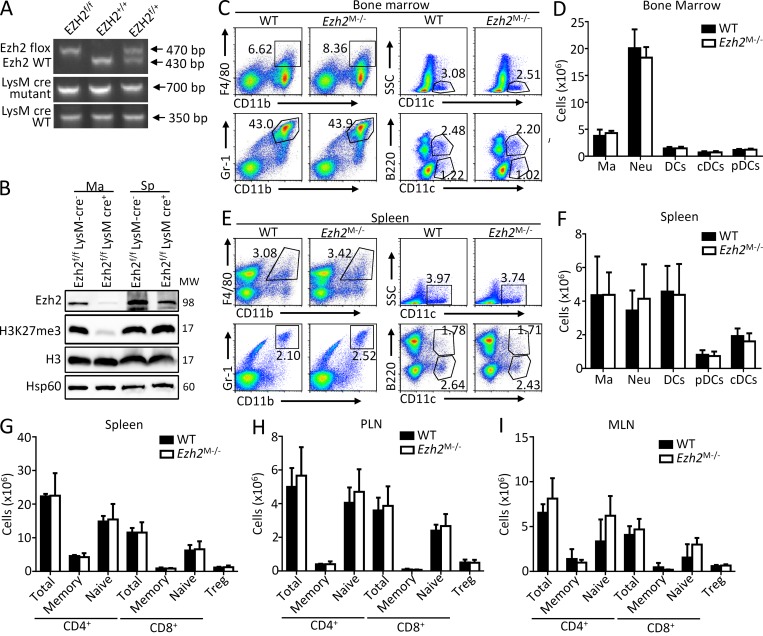
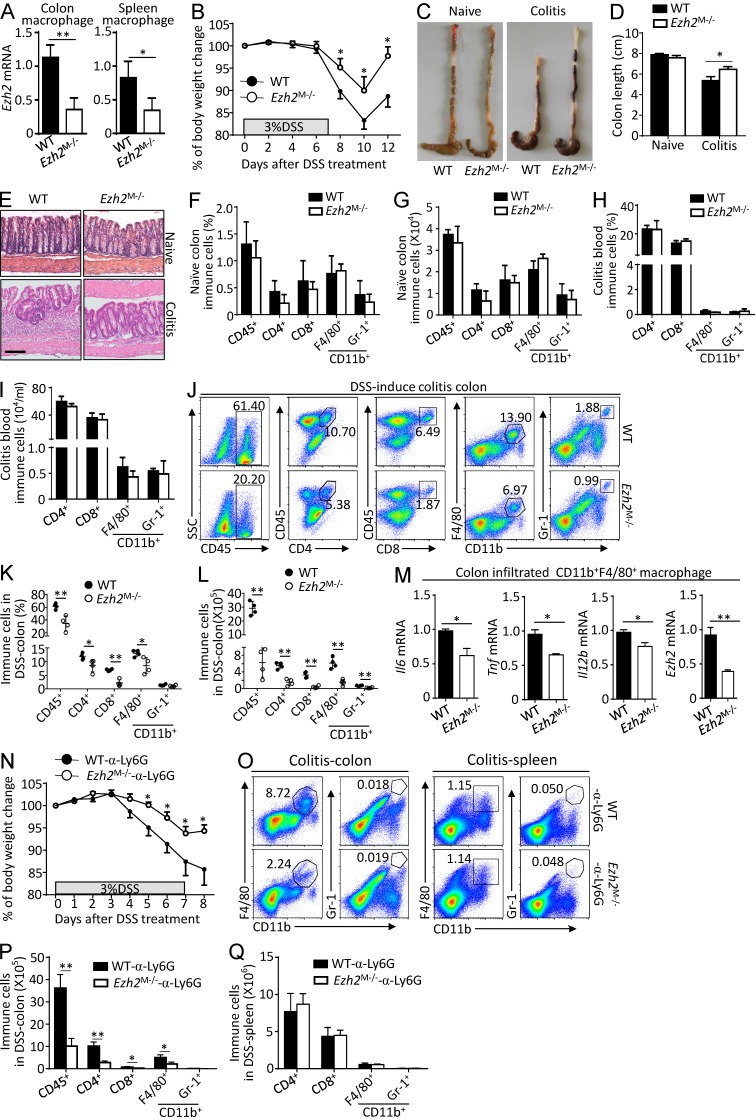
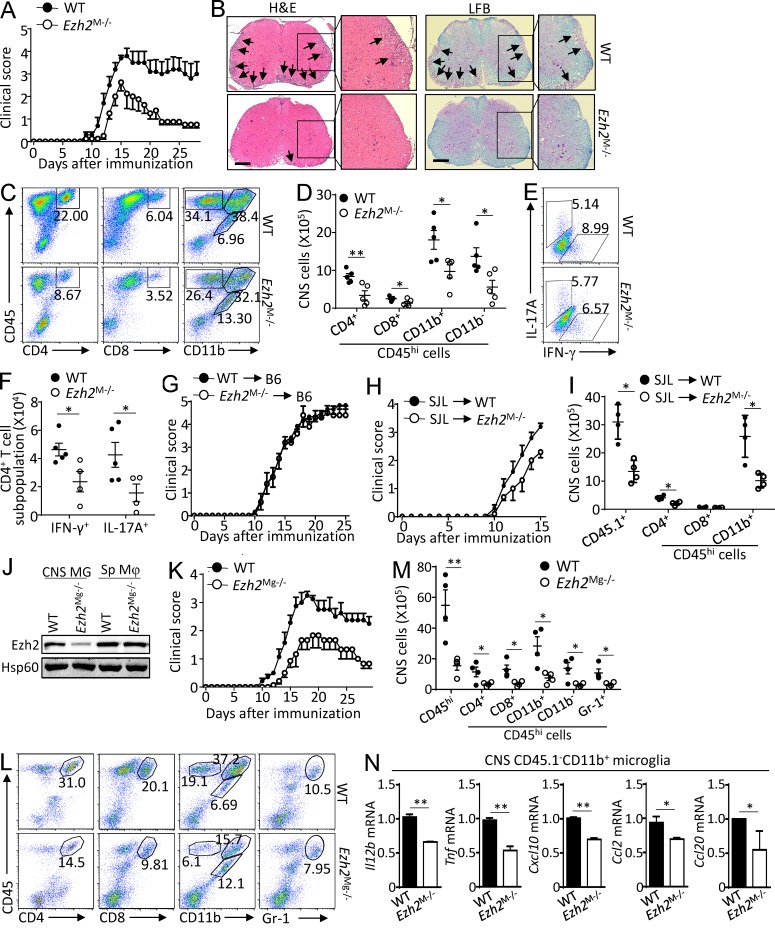
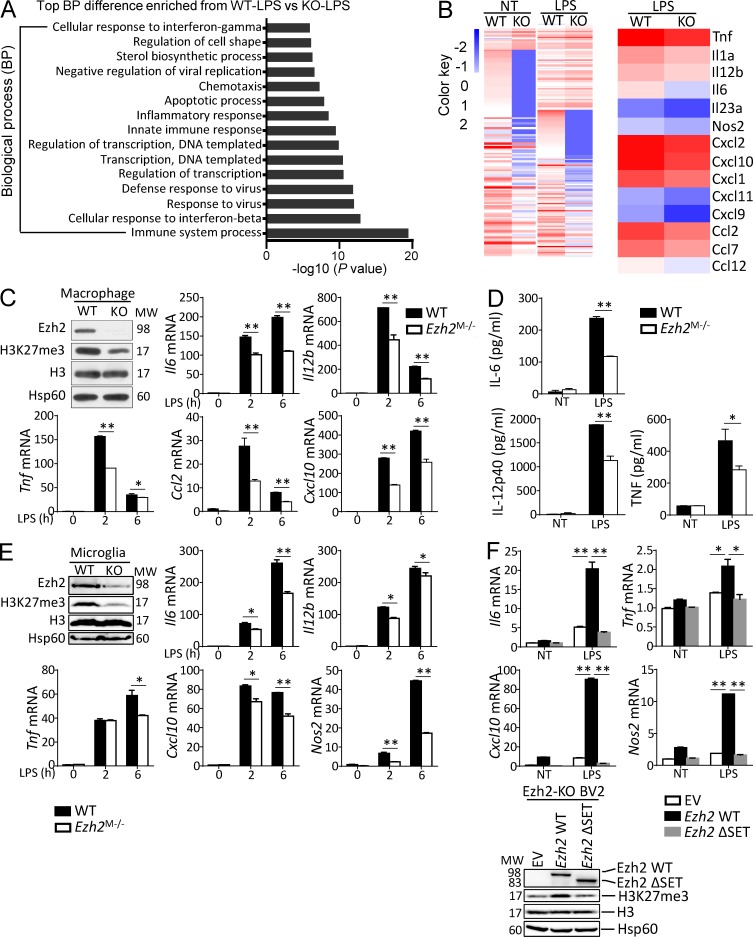
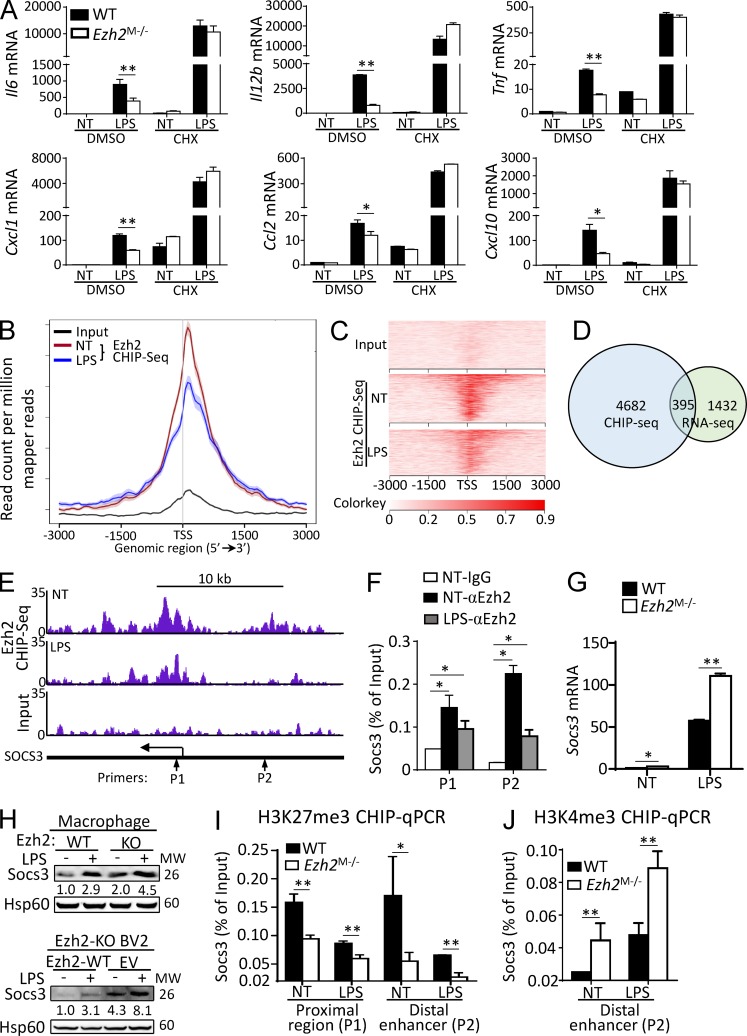
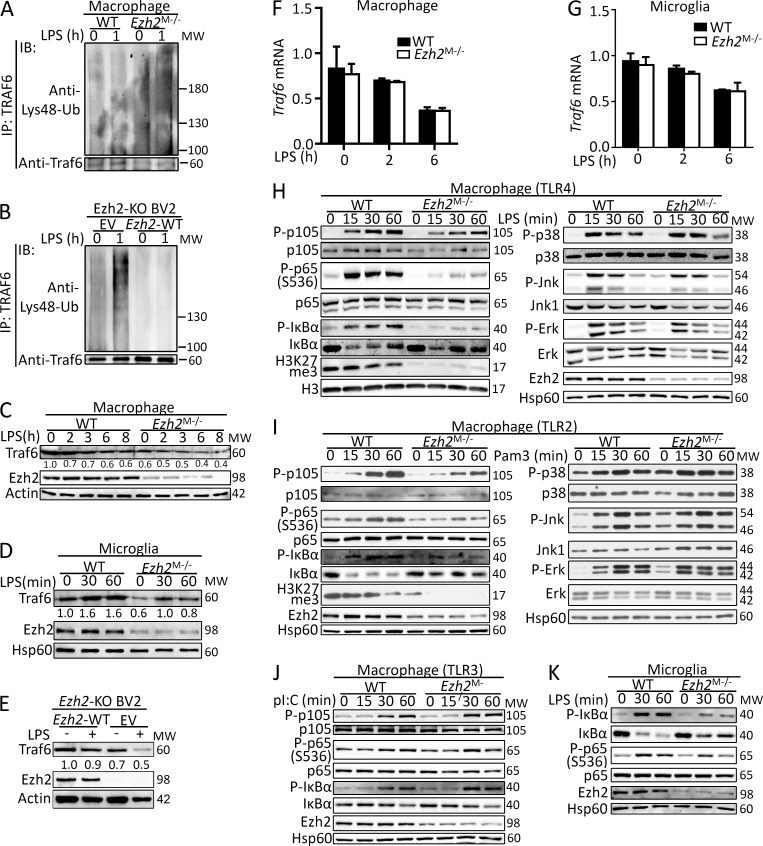
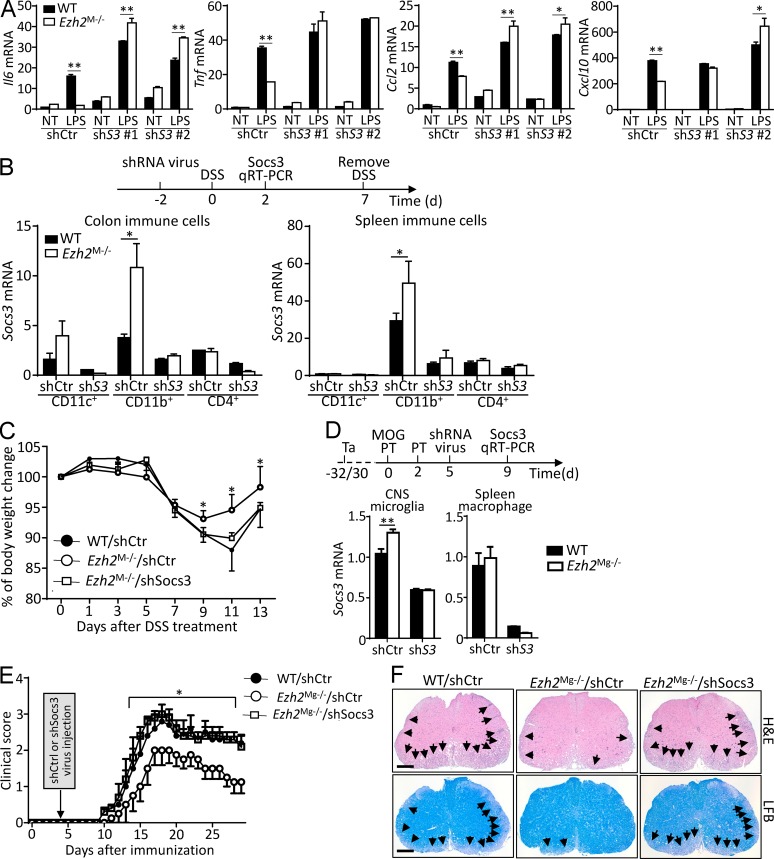
Histone 3 Lys27 (H3K27) trimethyltransferase Ezh2 is implicated in the pathogenesis of autoimmune inflammation. Nevertheless, the role of Ezh2 in macrophage/microglial activation remains to be defined. In this study, we identified that macrophage/microglial H3K27me3 or Ezh2, rather than functioning as a repressor, mediates toll-like receptor (TLR)-induced proinflammatory gene expression, and therefore Ezh2 depletion diminishes macrophage/microglial activation and attenuates the autoimmune inflammation in dextran sulfate sodium-induced colitis and experimental autoimmune encephalomyelitis. Mechanistic characterizations indicated that deficiency directly stimulates suppressor of cytokine signaling 3 (Socs3) expression and therefore enhances the Lys48-linked ubiquitination and degradation of tumor necrosis factor receptor-associated factor 6. As a consequence, TLR-induced MyD88-dependent nuclear factor κB activation and the expression of proinflammatory genes in macrophages/microglia are compromised in the absence of Ezh2. The functional dependence of Ezh2 for Socs3 is further illustrated by the rescue experiments in which silencing of Socs3 restores macrophage activation and rescues autoimmune inflammation in macrophage/microglial -deficient mice. Together, these findings establish Ezh2 as a macrophage lineage-specific mediator of autoimmune inflammation and highlight a previously unknown mechanism of Ezh2 function.
组蛋白 3 赖氨酸 27 三甲基转移酶 Ezh2 参与自身免疫性炎症的发病机制。然而,Ezh2 在巨噬细胞/小胶质细胞激活中的作用仍有待确定。在这项研究中,我们发现巨噬细胞/小胶质细胞中的 H3K27me3 或 Ezh2 不是作为抑制物,而是介导 Toll 样受体 (TLR) 诱导的促炎基因表达,因此 Ezh2 耗竭可减少巨噬细胞/小胶质细胞的激活,并减轻葡聚糖硫酸钠诱导的结肠炎和实验性自身免疫性脑脊髓炎中的自身免疫炎症。机制特征表明,Ezh2 缺陷直接刺激细胞因子信号转导抑制因子 3 (Socs3) 的表达,从而增强肿瘤坏死因子受体相关因子 6 的 Lys48 连接泛素化和降解。因此,在缺乏 Ezh2 的情况下,TLR 诱导的 MyD88 依赖性核因子 κB 激活和促炎基因在巨噬细胞/小胶质细胞中的表达受到损害。Ezh2 对 Socs3 的功能依赖性进一步通过沉默 Socs3 恢复巨噬细胞激活并挽救巨噬细胞/小胶质细胞缺陷型小鼠自身免疫炎症的挽救实验得到证实。总之,这些发现确立了 Ezh2 作为自身免疫性炎症的巨噬细胞谱系特异性介质,并强调了 Ezh2 功能的一个先前未知的机制。