Diabetes and Obesity Center, University of Louisville, Louisville, KY, United States.
Diabetes and Obesity Center, University of Louisville, Louisville, KY, United States.
J Mol Cell Cardiol. 2018 May;118:183-192. doi: 10.1016/j.yjmcc.2018.04.002. Epub 2018 Apr 5.
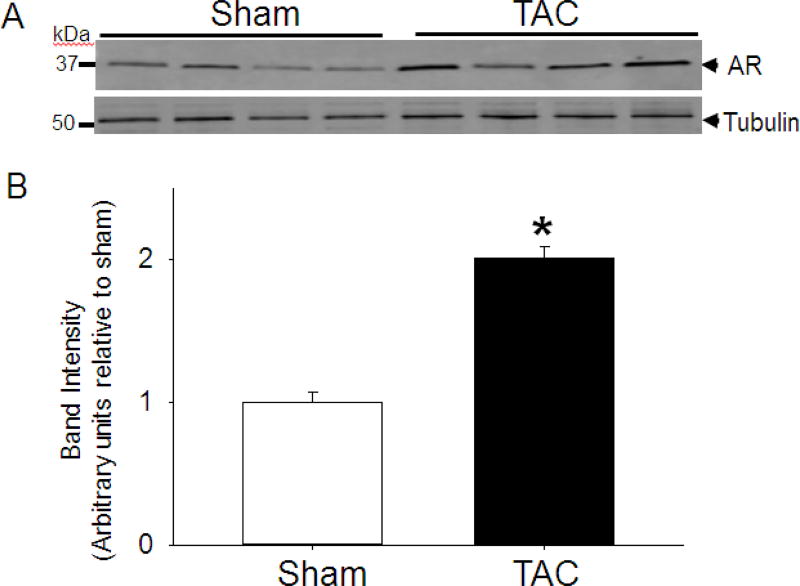
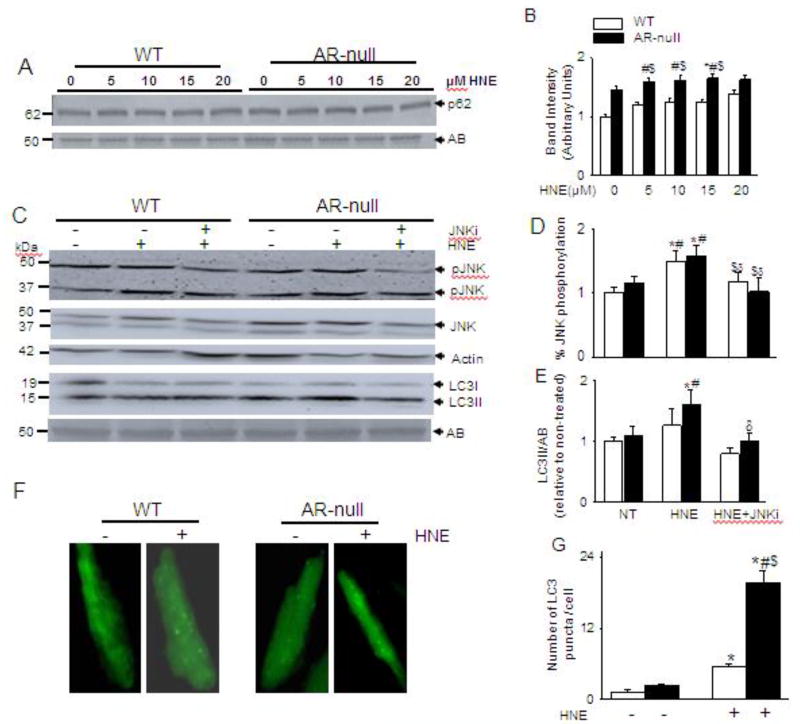
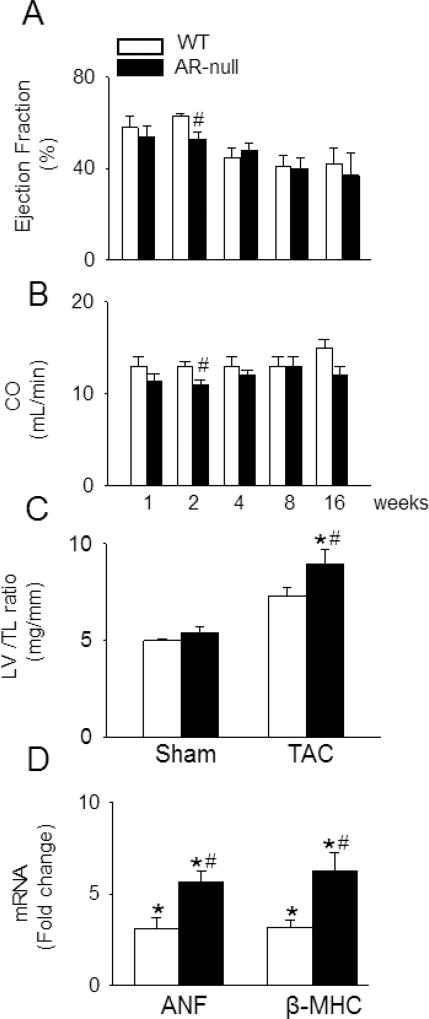
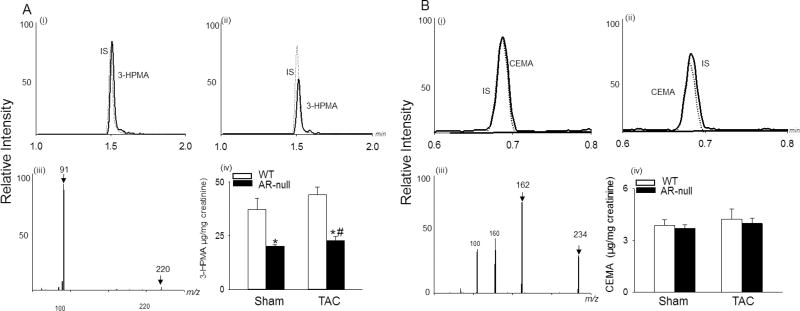
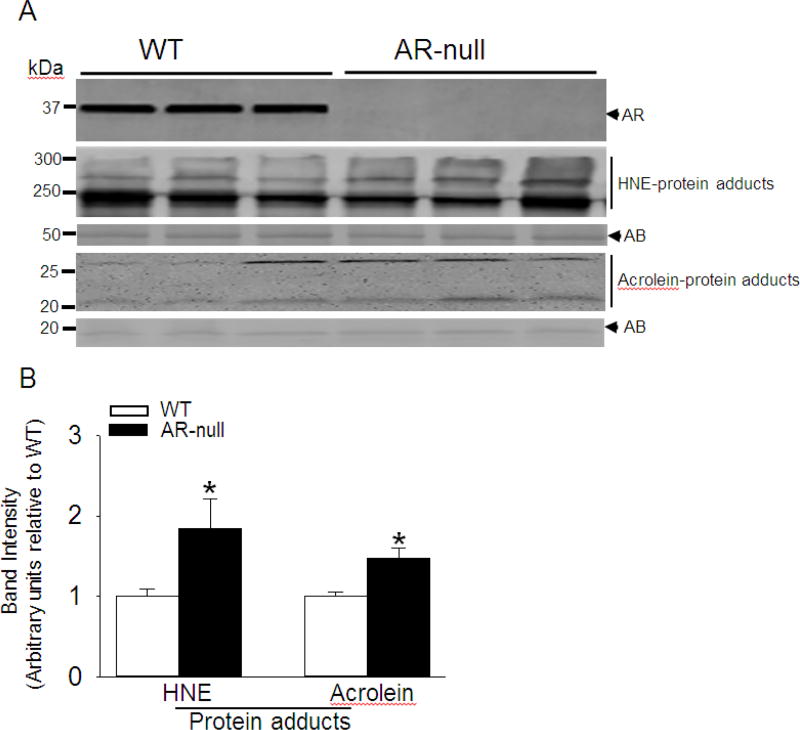
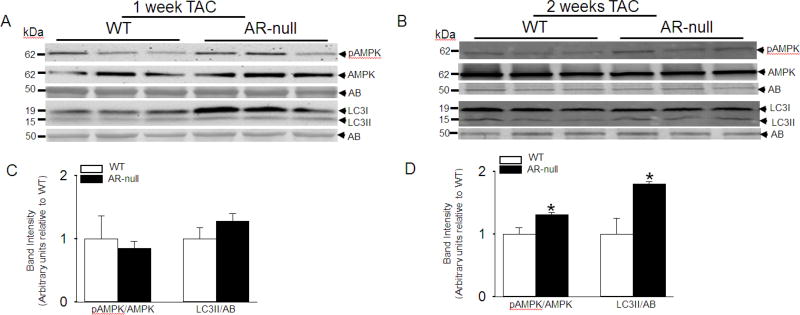
Pathological cardiac hypertrophy is associated with the accumulation of lipid peroxidation-derived aldehydes such as 4-hydroxy-trans-2-nonenal (HNE) and acrolein in the heart. These aldehydes are metabolized via several pathways, of which aldose reductase (AR) represents a broad-specificity route for their elimination. We tested the hypothesis that by preventing aldehyde removal, AR deficiency accentuates the pathological effects of transverse aortic constriction (TAC). We found that the levels of AR in the heart were increased in mice subjected to TAC for 2 weeks. In comparison with wild-type (WT), AR-null mice showed lower ejection fraction, which was exacerbated 2 weeks after TAC. Levels of atrial natriuretic peptide and myosin heavy chain were higher in AR-null than in WT TAC hearts. Deficiency of AR decreased urinary levels of the acrolein metabolite, 3-hydroxypropylmercapturic acid. Deletion of AR did not affect the levels of the other aldehyde-metabolizing enzyme - aldehyde dehydrogenase 2 in the heart, or its urinary product - (N-Acetyl-S-(2-carboxyethyl)-l-cystiene). AR-null hearts subjected to TAC showed increased accumulation of HNE- and acrolein-modified proteins, as well as increased AMPK phosphorylation and autophagy. Superfusion with HNE led to a greater increase in p62, LC3II formation, and GFP-LC3-II punctae formation in AR-null than WT cardiac myocytes. Pharmacological inactivation of JNK decreased HNE-induced autophagy in AR-null cardiac myocytes. Collectively, these results suggest that during hypertrophy the accumulation of lipid peroxidation derived aldehydes promotes pathological remodeling via excessive autophagy, and that metabolic detoxification of these aldehydes by AR may be essential for maintaining cardiac function during early stages of pressure overload.
病理性心肌肥厚与脂质过氧化衍生的醛如 4-羟基-trans-2-壬烯醛(HNE)和丙烯醛在心脏中的积累有关。这些醛通过几种途径代谢,其中醛还原酶(AR)代表它们消除的广谱途径。我们检验了这样一个假设,即通过阻止醛的去除,AR 缺乏会加剧主动脉缩窄(TAC)的病理效应。我们发现,在接受 TAC 治疗 2 周的小鼠心脏中,AR 的水平增加。与野生型(WT)相比,AR 缺失小鼠的射血分数较低,在 TAC 后 2 周时更为严重。AR 缺失小鼠的心房利钠肽和肌球蛋白重链水平高于 WT TAC 心脏。AR 缺乏降低了丙烯醛代谢物 3-羟丙基硫代尿酸的尿水平。AR 缺失对心脏中其他醛代谢酶-醛脱氢酶 2 的水平或其尿产物-(N-乙酰-S-(2-羧乙基)-L-半胱氨酸)没有影响。接受 TAC 的 AR 缺失心脏显示 HNE 和丙烯醛修饰蛋白的积累增加,以及 AMPK 磷酸化和自噬增加。与 WT 心肌细胞相比,在 AR 缺失的心肌细胞中,HNE 导致 p62、LC3II 形成和 GFP-LC3-II 斑点形成的增加更为明显。JNK 的药理学失活降低了 AR 缺失的心肌细胞中 HNE 诱导的自噬。总的来说,这些结果表明,在肥大过程中,脂质过氧化衍生醛的积累通过过度自噬促进病理性重塑,而 AR 对这些醛的代谢解毒可能是在压力超负荷早期维持心脏功能所必需的。