Wei Jie, Gong Xue, Wang Qing, Pan Min, Liu Xiaoqing, Liu Jing, Xia Fan, Wang Fuan
Key Laboratory of Analytical Chemistry for Biology and Medicine (Ministry of Education) , College of Chemistry and Molecular Sciences , Wuhan University , Wuhan , P. R. China . Email:
Department of Gastroenterology , Zhongnan Hospital of Wuhan University , Hubei Clinical Center & Key Lab of Intestinal & Colorectal Diseases , Wuhan , P. R. China.
Chem Sci. 2017 Oct 23;9(1):52-61. doi: 10.1039/c7sc03939e. eCollection 2018 Jan 7.
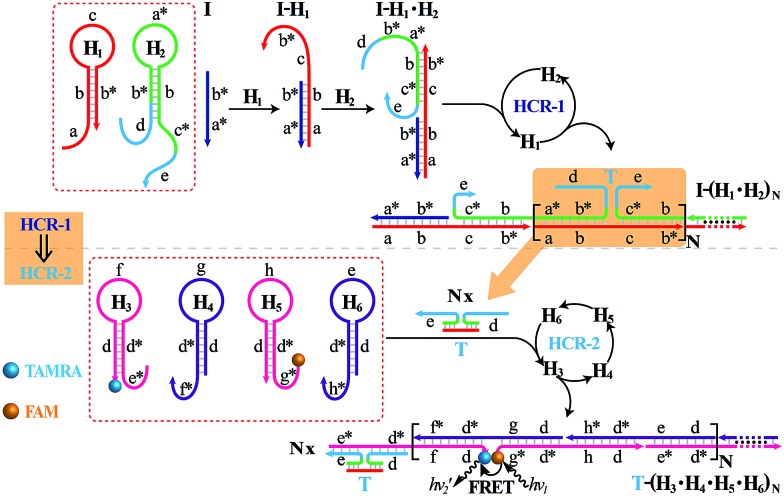
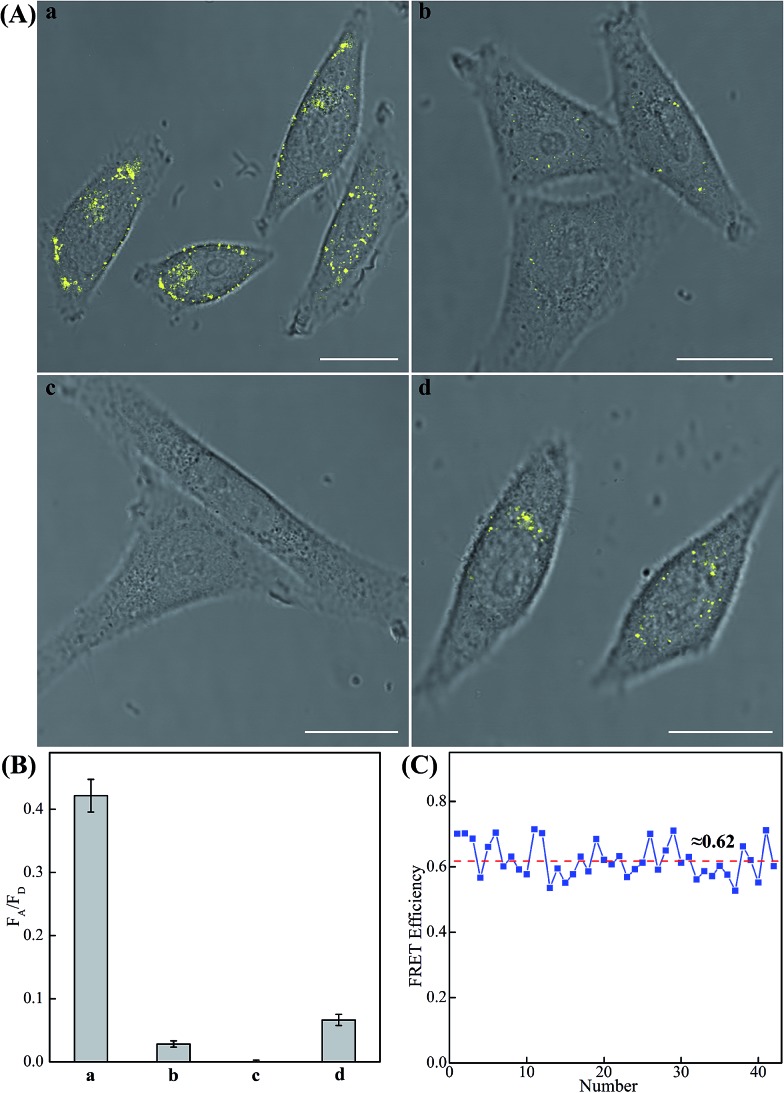
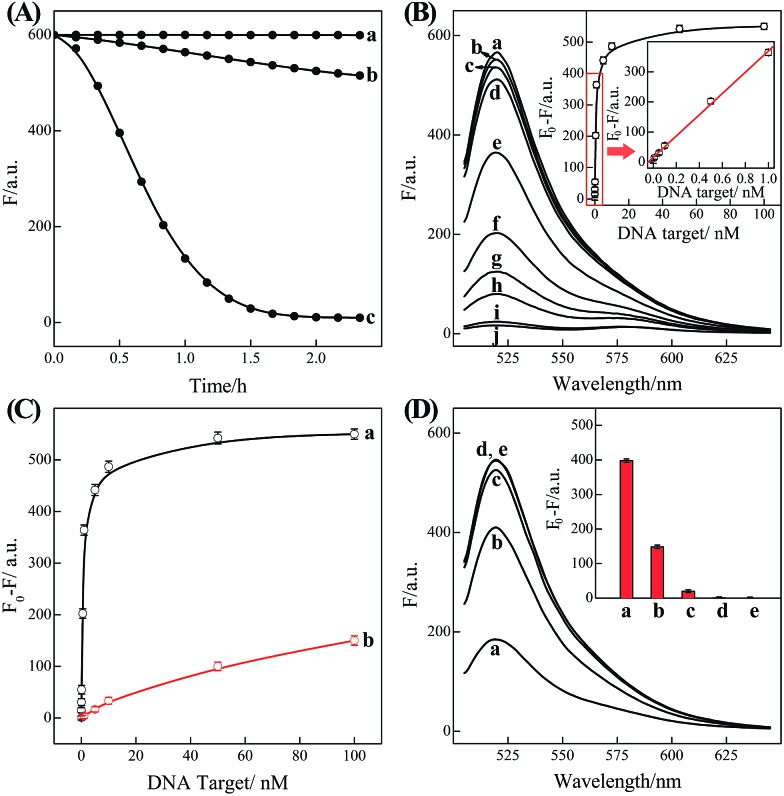
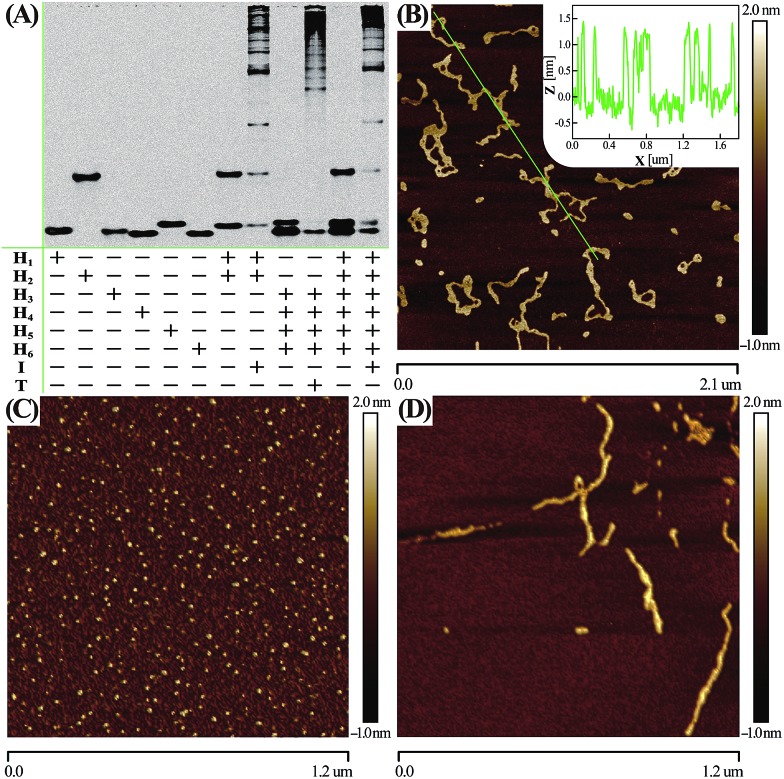
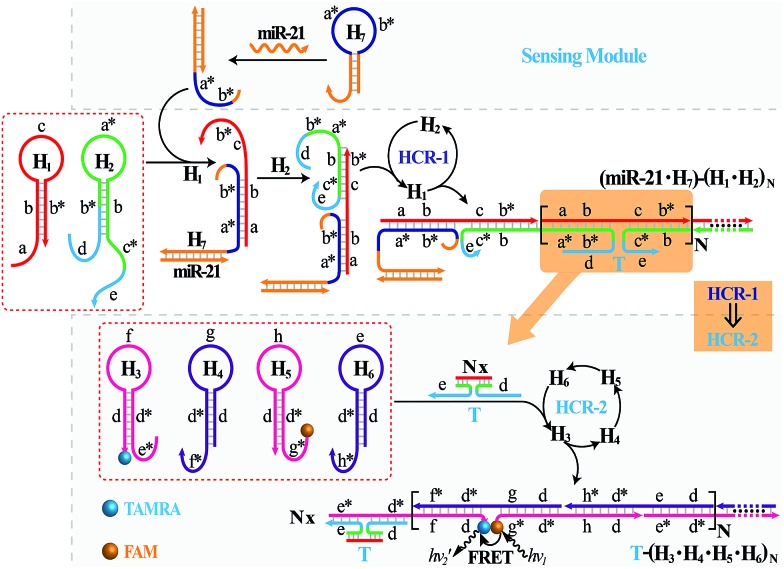
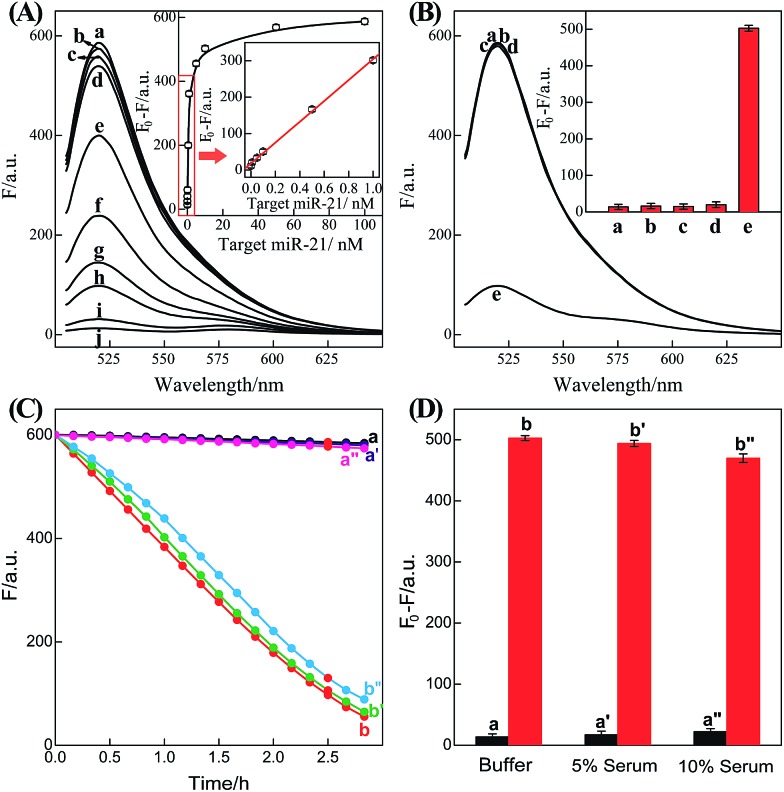
Biomolecular self-assembly has spurred substantial research efforts for the development of low-cost point-of-care diagnostics. Herein, we introduce an isothermal enzyme-free concatenated hybridization chain reaction (C-HCR), in which the output of the upstream hybridization chain reaction (HCR-1) layer acts as an intermediate input to activate the downstream hybridization chain reaction (HCR-2) layer. The initiator motivates HCR-1 through the autonomous cross-opening of two functional DNA hairpins, yielding polymeric dsDNA nanowires composed of numerous tandem triggers as output of the primary sensing event. The reconstituted amplicon then initiates HCR-2 and transduces the analyte recognition into an amplified readout, originating from the synergistic effect between HCR-1 and HCR-2 layers. Native gel electrophoresis, atom force microscopy (AFM) and fluorescence spectra revealed that C-HCR mediated the formation of frond-like branched dsDNA nanowires and the generation of an amplified FRET signal. As a versatile and robust amplification strategy, the unpreceded C-HCR can discriminate DNA analyte from its mutants with high accuracy and specificity. By incorporating an auxiliary sensing module, the integrated C-HCR amplifier was further adapted for highly sensitive and selective detection of microRNA (miRNA), as a result of the hierarchical and sequential hybridization chain reactions, in human serum and even living cells through an easy-to-integrate "plug-and-play" procedure. In addition, the C-HCR amplifier was successfully implemented for intracellular miRNA imaging by acquiring an accurate and precise signal localization inside living cells, which was especially suitable for the and amplified detection of trace amounts of analyte. The C-HCR amplification provides a comprehensive and smart toolbox for highly sensitive detection of various biomarkers and thus should hold great promise in clinical diagnosis and assessment. The infinite layer of multilayered C-HCR is anticipated to further strengthen the amplification capacity and reliability (anti-invasion performance) of intracellular imaging approach, which is of great significance for its bioanalytical applications.
生物分子自组装推动了大量研究工作,以开发低成本的即时诊断技术。在此,我们介绍一种等温无酶串联杂交链式反应(C-HCR),其中上游杂交链式反应(HCR-1)层的输出作为中间输入,以激活下游杂交链式反应(HCR-2)层。引发剂通过两个功能性DNA发夹的自主交叉打开来激发HCR-1,产生由众多串联触发物组成的聚合双链DNA纳米线,作为初级传感事件的输出。重构的扩增子随后启动HCR-2,并将分析物识别转化为放大的读数,这源于HCR-1和HCR-2层之间的协同效应。天然凝胶电泳、原子力显微镜(AFM)和荧光光谱表明,C-HCR介导了叶状分支双链DNA纳米线的形成以及放大的荧光共振能量转移(FRET)信号的产生。作为一种通用且强大的扩增策略,前所未有的C-HCR能够以高精度和特异性区分DNA分析物与其突变体。通过整合一个辅助传感模块,集成的C-HCR放大器由于分层和顺序杂交链式反应,通过易于整合的“即插即用”程序,进一步适用于人血清甚至活细胞中微小RNA(miRNA)的高灵敏度和选择性检测。此外,通过在活细胞内获得准确精确的信号定位,C-HCR放大器成功实现了细胞内miRNA成像,这特别适用于痕量分析物的放大检测。C-HCR扩增为各种生物标志物的高灵敏度检测提供了一个全面且智能的工具箱,因此在临床诊断和评估中应具有巨大潜力。多层C-HCR的无限层有望进一步增强细胞内成像方法的扩增能力和可靠性(抗侵袭性能),这对其生物分析应用具有重要意义。