Rosling M, Trenker C, Neesse A, Görg C
Interdisziplinäre Ultraschallzentrum, Universitätsklinikum Gießen und Marburg, Philipps Universität Marburg.
Klinik für Hämatologie, Onkologie, Immunologie, Universitätsklinikum Gießen und Marburg, Philipps Universität Marburg.
Ultrasound Int Open. 2018 Jan;4(1):E30-E34. doi: 10.1055/s-0043-125311. Epub 2018 Apr 4.
Both B-mode ultrasound and contrast-enhanced ultrasound (CEUS) are well established procedures when diagnosing traumatic splenic ruptures (TSR). To date, there are no data about CEUS patterns in spontaneous splenic ruptures (SSR). It remains unknown whether TSR and SSR differ with respect to clinical characteristics, B-mode and CEUS characteristics.
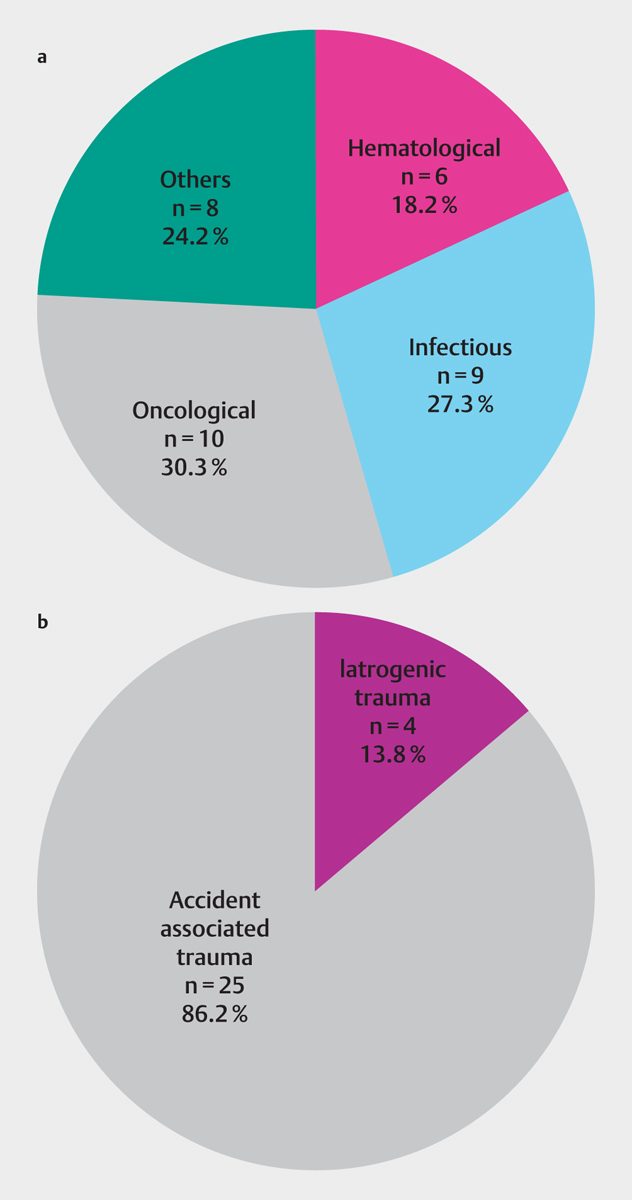
Between 12/2003 and 2/2010, n=33 SSRs and n=29 TSRs were diagnosed in a tertiary referral center. All patients were examined with B-mode and CEUS, and clinical data and the outcome were retrospectively analyzed.
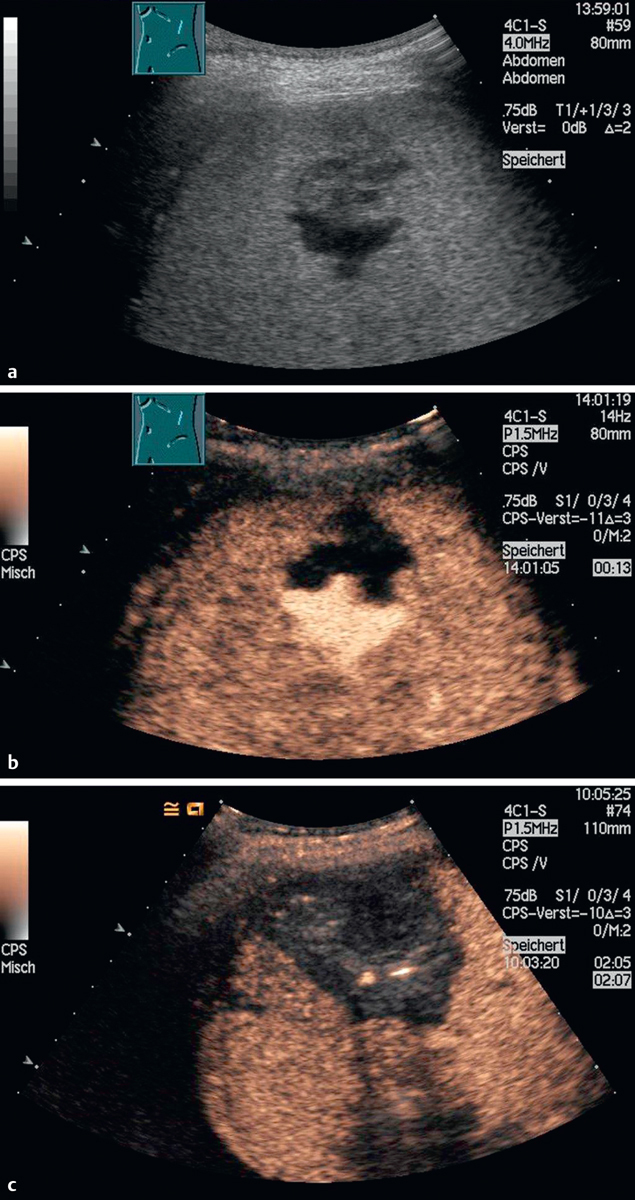
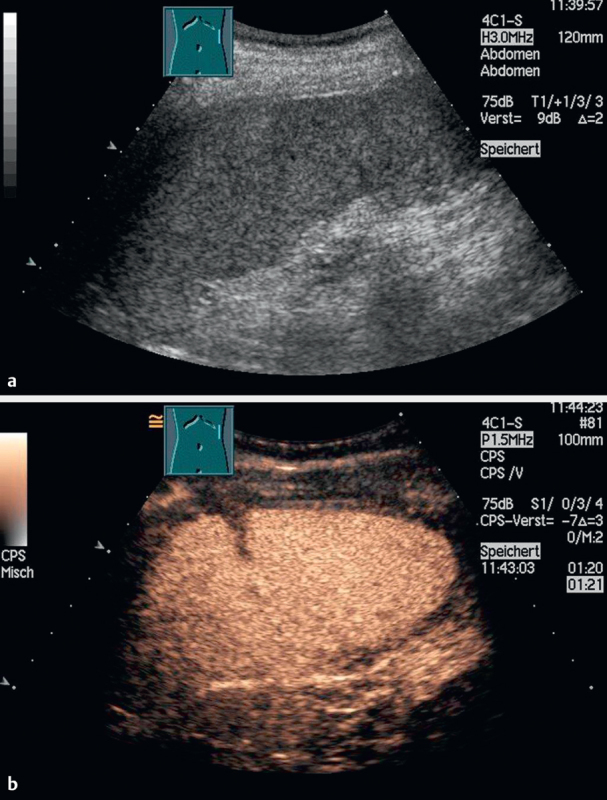
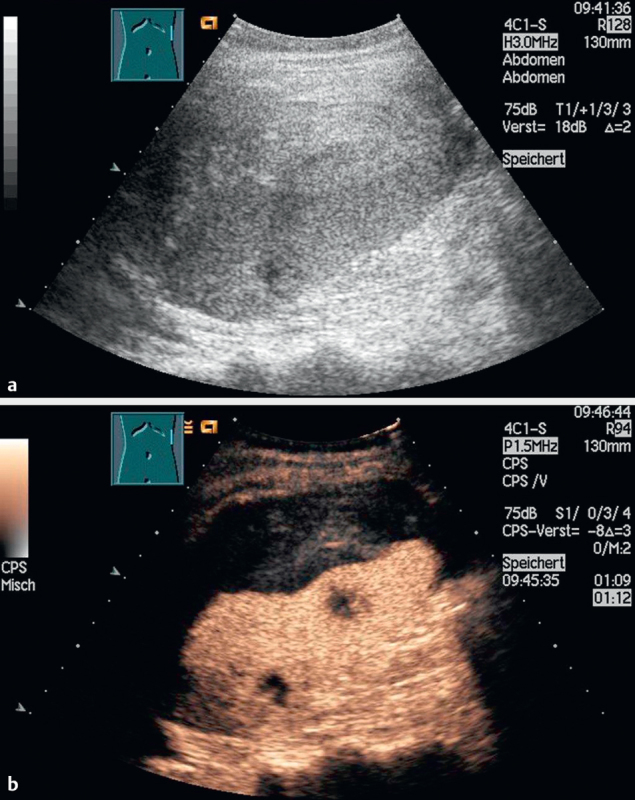
Patients with SSR were significantly older than patients with TSR (62 years vs. 44 years; p=0.01). The 4-week mortality was significantly higher in SSR than in TSR (36% vs. 0%; p=0.001). No differences between the grading of TSR and SSR could be shown in B-mode or in CEUS. Notably, CEUS was significantly superior to B-mode with respect to the grading of splenic ruptures (p=0.01). Therefore, therapeutic management was influenced by CEUS.
There are differences between SSR and TSR, especially concerning clinical data (age, course of disease and mortality). Regarding the sonographic pattern, SSR and TSR show identical grading. When splenic rupture is suspected, CEUS should always be performed to identify patients at risk who require interventional procedures.
B 型超声和超声造影(CEUS)在诊断创伤性脾破裂(TSR)时都是成熟的检查方法。迄今为止,尚无关于自发性脾破裂(SSR)的 CEUS 表现的数据。TSR 和 SSR 在临床特征、B 型超声及 CEUS 特征方面是否存在差异仍不清楚。
2003 年 12 月至 2010 年 2 月期间,在一家三级转诊中心诊断出 33 例 SSR 和 29 例 TSR。所有患者均接受了 B 型超声和 CEUS 检查,并对临床数据及结果进行了回顾性分析。
SSR 患者的年龄显著大于 TSR 患者(62 岁对 44 岁;p = 0.01)。SSR 的 4 周死亡率显著高于 TSR(36%对 0%;p = 0.001)。在 B 型超声或 CEUS 检查中,TSR 和 SSR 的分级未见差异。值得注意的是,在脾破裂分级方面,CEUS 显著优于 B 型超声(p = 0.01)。因此,治疗管理受到 CEUS 的影响。
SSR 和 TSR 之间存在差异,尤其是在临床数据(年龄、病程和死亡率)方面。在超声表现方面,SSR 和 TSR 分级相同。当怀疑脾破裂时,应始终进行 CEUS 检查,以识别需要进行介入治疗的高危患者。