Department of Internal Medicine, Healthcare Research Institute, Seoul National University Hospital Healthcare System Gangnam Center, Seoul, Korea.
Department of Internal Medicine, Liver Research Institute, Seoul National University College of Medicine, Seoul, Korea.
J Korean Med Sci. 2018 Apr 9;33(15):e117. doi: 10.3346/jkms.2018.33.e117.
Endoscopic diagnosis of atrophic gastritis can contribute to risk stratification and thereby tailored screening for gastric cancer. We aimed to evaluate the effect of training on inter-observer agreement in diagnosis and grading of endoscopic atrophic gastritis (EAG) according to the level of endoscopists' experience.
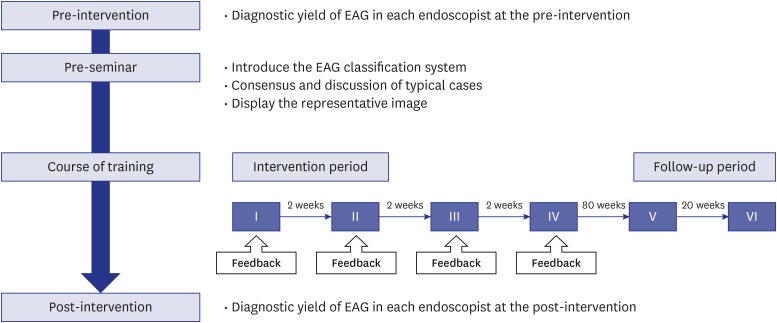
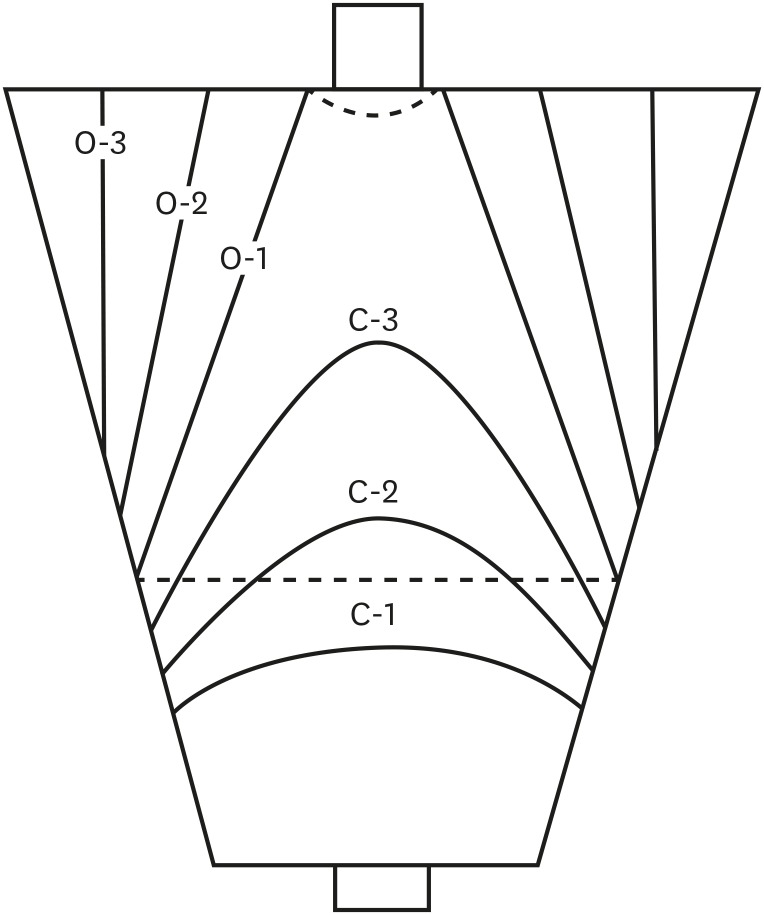
Twelve endoscopists (six less-experienced and six experienced) participated in this prospective study. The training session consisted of 1) four interventions with two-week intervals, and 2) a follow-up period (two follow-up assessments without feedback). EAG was categorized as C1 to O3 according to the Kimura-Takemoto classification. Kappa statistics were used to calculate inter-observer agreement.
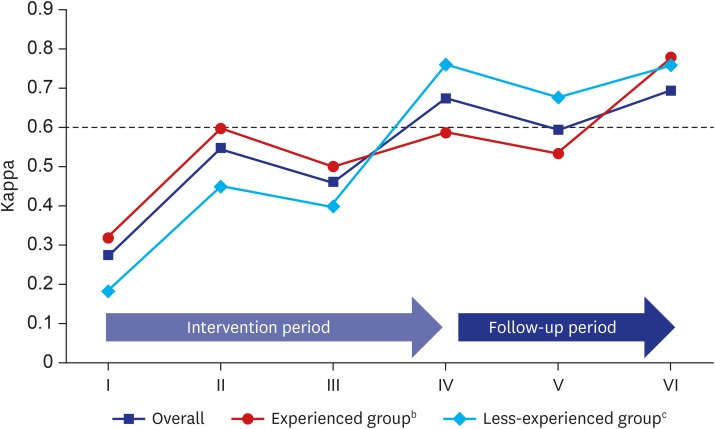
At baseline, kappa indexes were 0.18 in the less-experienced group and 0.32 in the experienced group, respectively. After four interventions with feedback, the kappa index improved in both groups and was sustained during the follow-up period. Overall diagnostic yields of EAG were 43.1% ± 10.7% in pre-intervention and 46.8% ± 5.9% in post-intervention. Variability in the rate of diagnosis of EAG significantly decreased in the less-experienced group (r = 0.04, P = 0.003).
Irrespective of experience level, inter-observer agreement for diagnosis and grading of EAG improved after training and remained stable after intervention.
内镜诊断萎缩性胃炎有助于分层风险,从而针对胃癌进行有针对性的筛查。我们旨在评估根据内镜医生经验水平对内镜萎缩性胃炎(EAG)的诊断和分级进行培训对观察者间一致性的影响。
12 名内镜医生(6 名经验较少的和 6 名经验丰富的)参与了这项前瞻性研究。培训课程包括 1)四次干预,间隔两周,和 2)随访期(两次无反馈的随访评估)。EAG 根据 Kimura-Takemoto 分类分为 C1 至 O3。kappa 统计用于计算观察者间的一致性。
在基线时,经验较少组的kappa 指数分别为 0.18,经验丰富组为 0.32。经过四次带反馈的干预后,两组的kappa 指数均有所提高,并在随访期间保持稳定。EAG 的总体诊断率在干预前为 43.1%±10.7%,干预后为 46.8%±5.9%。经验较少组 EAG 诊断率的变化明显减少(r=0.04,P=0.003)。
无论经验水平如何,经过培训后,EAG 的诊断和分级观察者间一致性均有所提高,干预后保持稳定。