Gladstone Institute of Neurological Disease, San Francisco, CA, USA.
Department of Neurology, University of California, San Francisco, San Francisco, CA, USA.
Nat Med. 2018 May;24(5):647-657. doi: 10.1038/s41591-018-0004-z. Epub 2018 Apr 9.
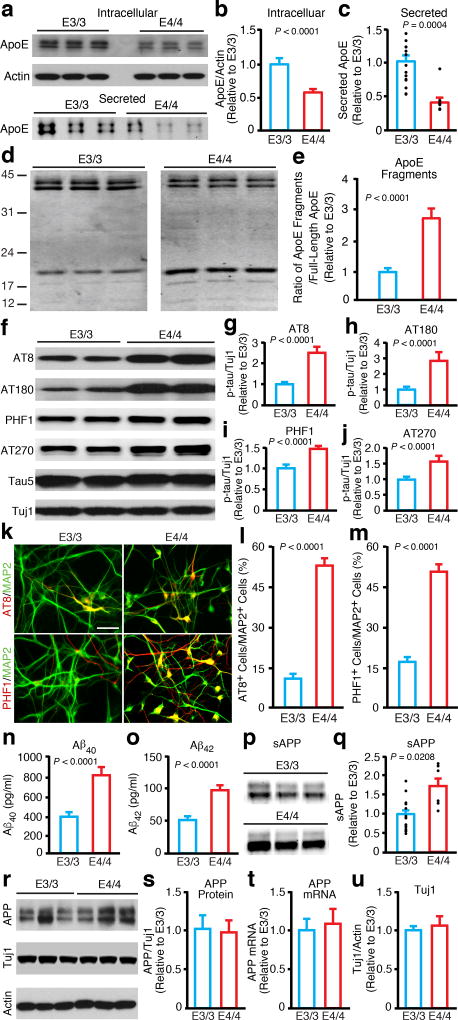
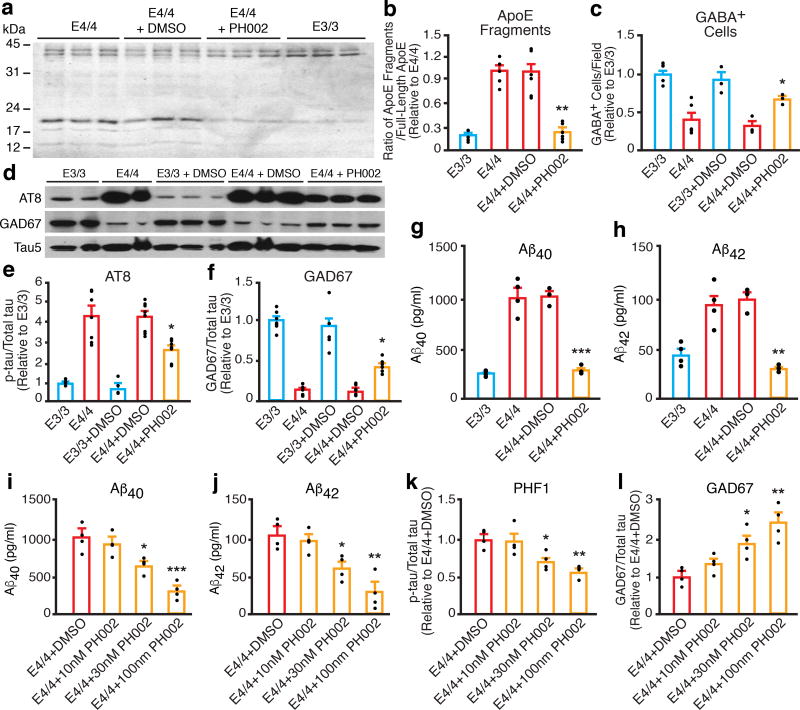
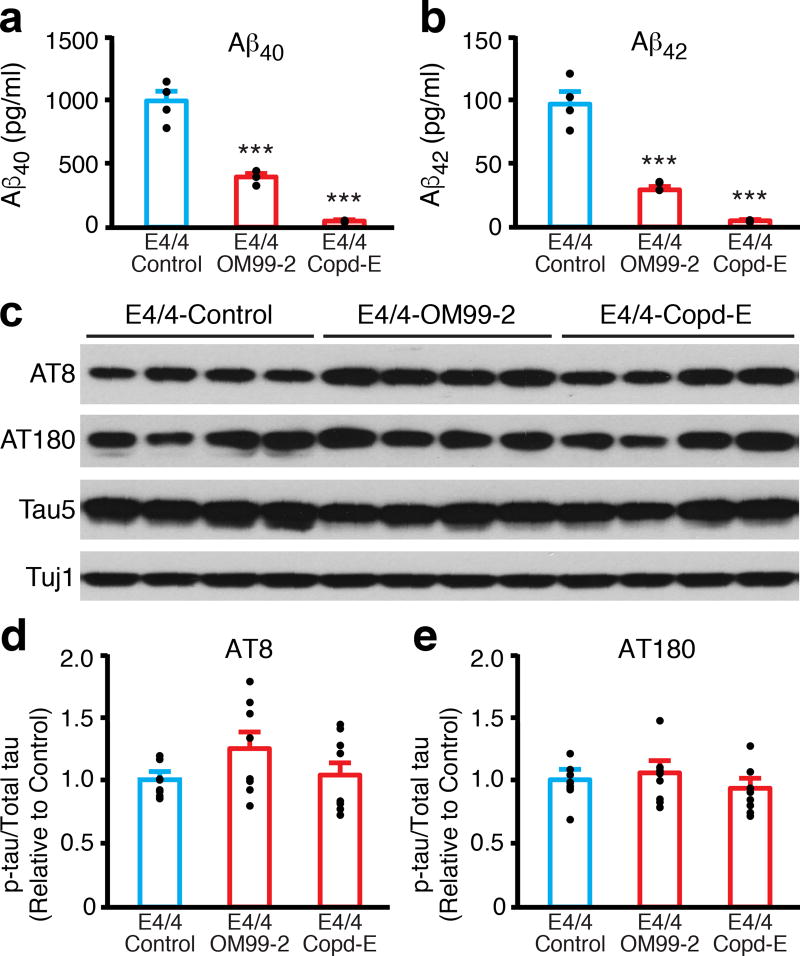
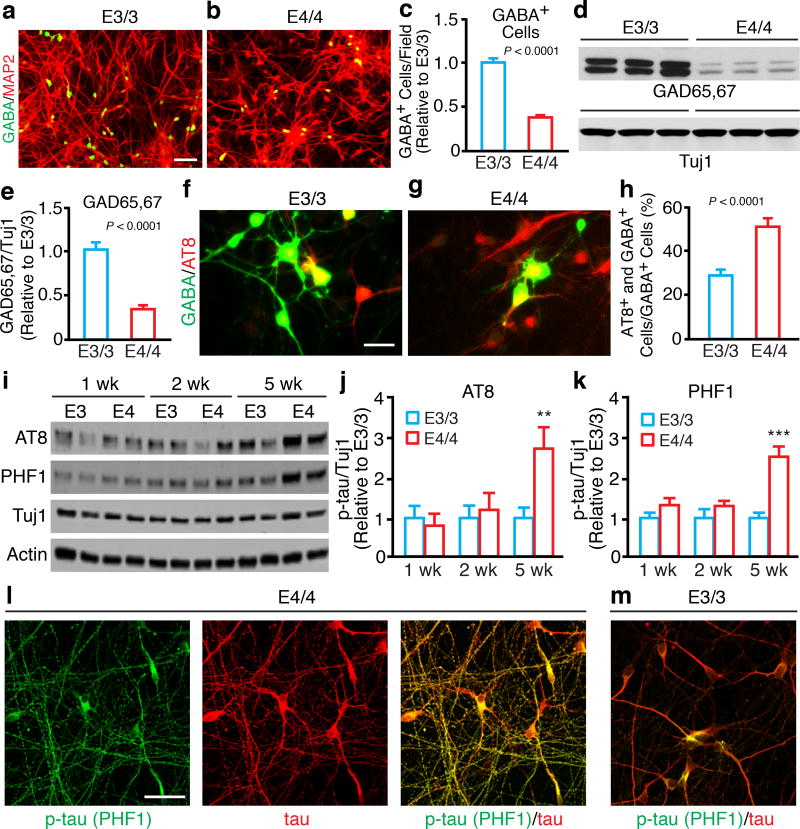
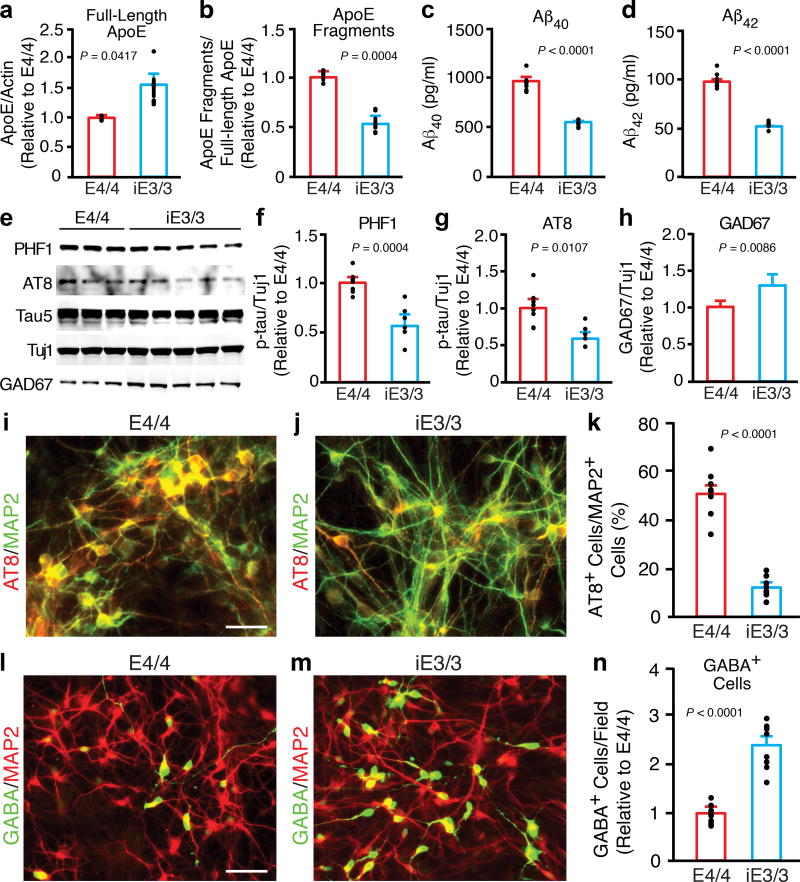
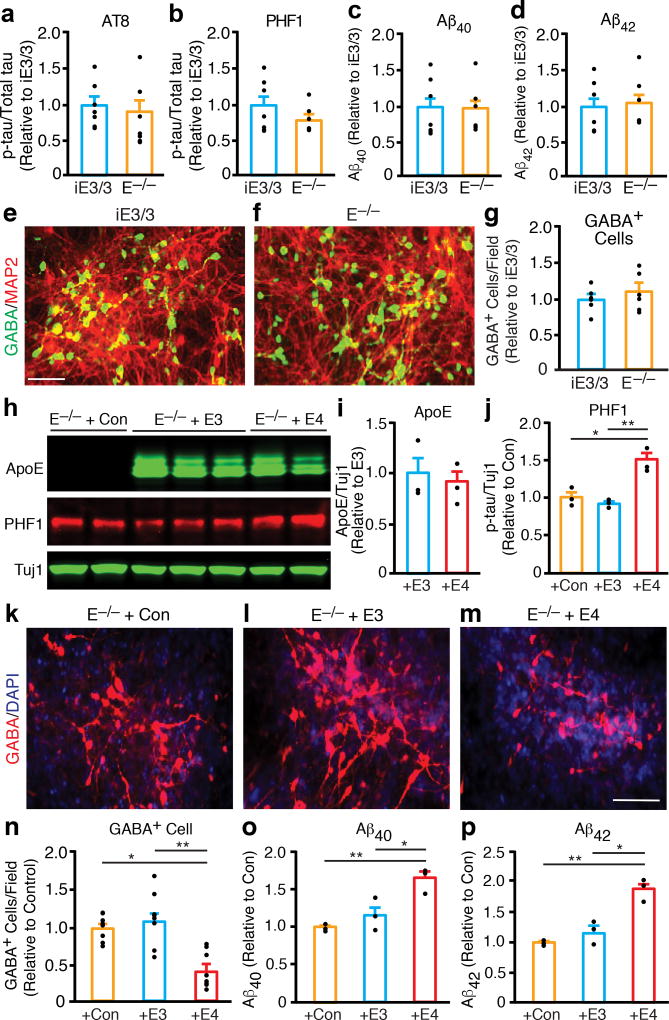
Efforts to develop drugs for Alzheimer's disease (AD) have shown promise in animal studies, only to fail in human trials, suggesting a pressing need to study AD in human model systems. Using human neurons derived from induced pluripotent stem cells that expressed apolipoprotein E4 (ApoE4), a variant of the APOE gene product and the major genetic risk factor for AD, we demonstrated that ApoE4-expressing neurons had higher levels of tau phosphorylation, unrelated to their increased production of amyloid-β (Aβ) peptides, and that they displayed GABAergic neuron degeneration. ApoE4 increased Aβ production in human, but not in mouse, neurons. Converting ApoE4 to ApoE3 by gene editing rescued these phenotypes, indicating the specific effects of ApoE4. Neurons that lacked APOE behaved similarly to those expressing ApoE3, and the introduction of ApoE4 expression recapitulated the pathological phenotypes, suggesting a gain of toxic effects from ApoE4. Treatment of ApoE4-expressing neurons with a small-molecule structure corrector ameliorated the detrimental effects, thus showing that correcting the pathogenic conformation of ApoE4 is a viable therapeutic approach for ApoE4-related AD.
为阿尔茨海默病(AD)开发药物的努力在动物研究中显示出了前景,但在人类临床试验中却失败了,这表明迫切需要在人类模型系统中研究 AD。我们使用源自诱导多能干细胞的表达载脂蛋白 E4(ApoE4)的人类神经元,ApoE4 是 APOE 基因产物的变体,也是 AD 的主要遗传风险因素,证明了表达 ApoE4 的神经元具有更高水平的 tau 磷酸化,与它们增加的淀粉样蛋白-β(Aβ)肽的产生无关,并且它们表现出 GABA 能神经元退化。ApoE4 增加了人类而非小鼠神经元中的 Aβ 产生。通过基因编辑将 ApoE4 转化为 ApoE3 可挽救这些表型,表明 ApoE4 具有特异性作用。缺乏 APOE 的神经元表现与表达 ApoE3 的神经元相似,而表达 ApoE4 的引入再现了病理性表型,表明 ApoE4 具有毒性作用的增益。用小分子结构校正剂治疗表达 ApoE4 的神经元可改善有害影响,从而表明校正 ApoE4 的致病构象是治疗 ApoE4 相关 AD 的可行方法。