Rekers Nicolle H, Olivo Pimentel Veronica, Yaromina Ala, Lieuwes Natasja G, Biemans Rianne, Zegers Catharina M L, Germeraad Wilfred T V, Van Limbergen Evert J, Neri Dario, Dubois Ludwig J, Lambin Philippe
Department of Radiotherapy, The M-Lab group, GROW - School for Oncology and Developmental Biology, Maastricht Comprehensive Cancer Centre, Maastricht University Medical Centre, Maastricht, The Netherlands.
Department of Internal Medicine, Division of Hematology, GROW - School for Oncology and Developmental Biology, Maastricht Comprehensive Cancer Centre, Maastricht University Medical Centre, Maastricht, The Netherlands.
Oncoimmunology. 2018 Jan 16;7(4):e1414119. doi: 10.1080/2162402X.2017.1414119. eCollection 2018.
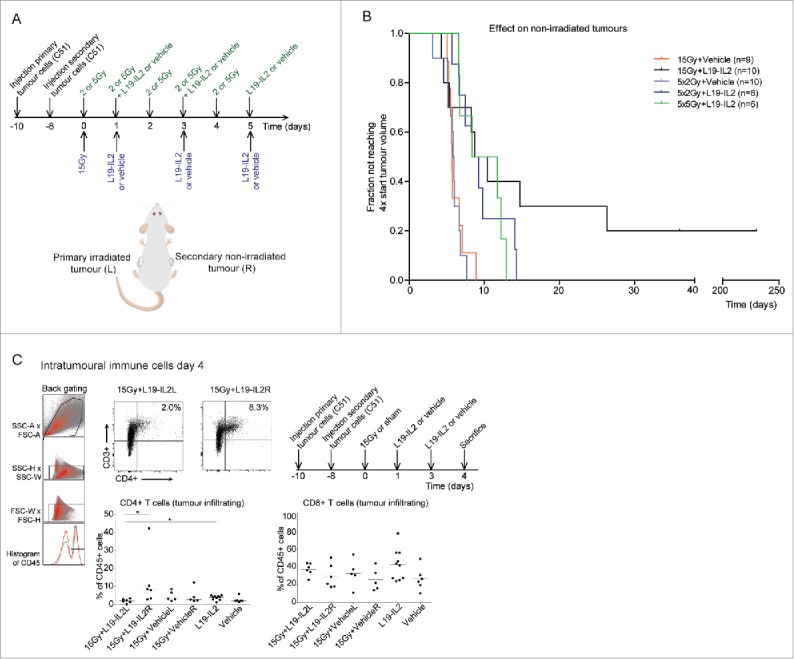
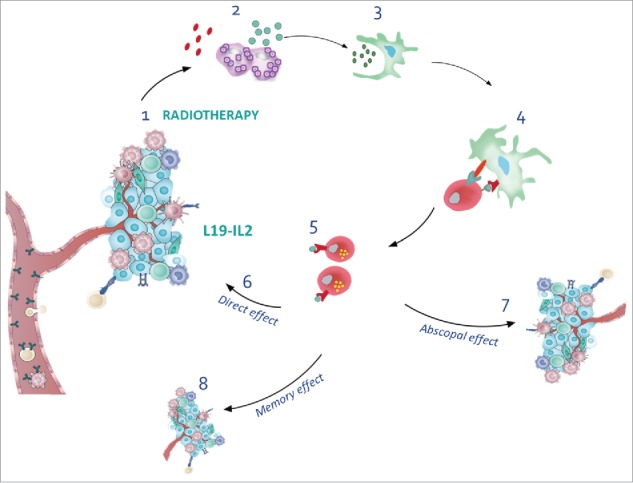
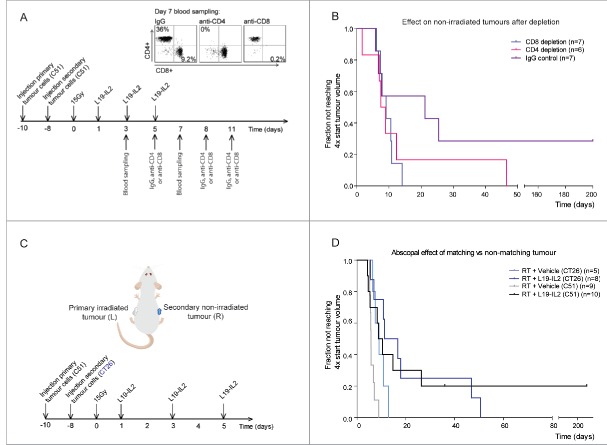
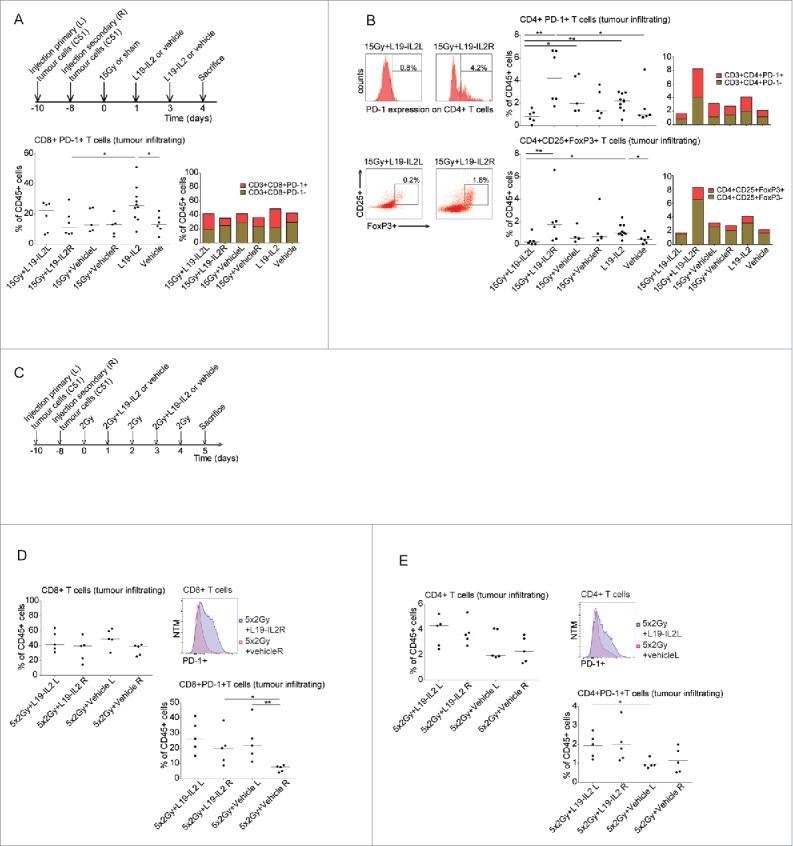
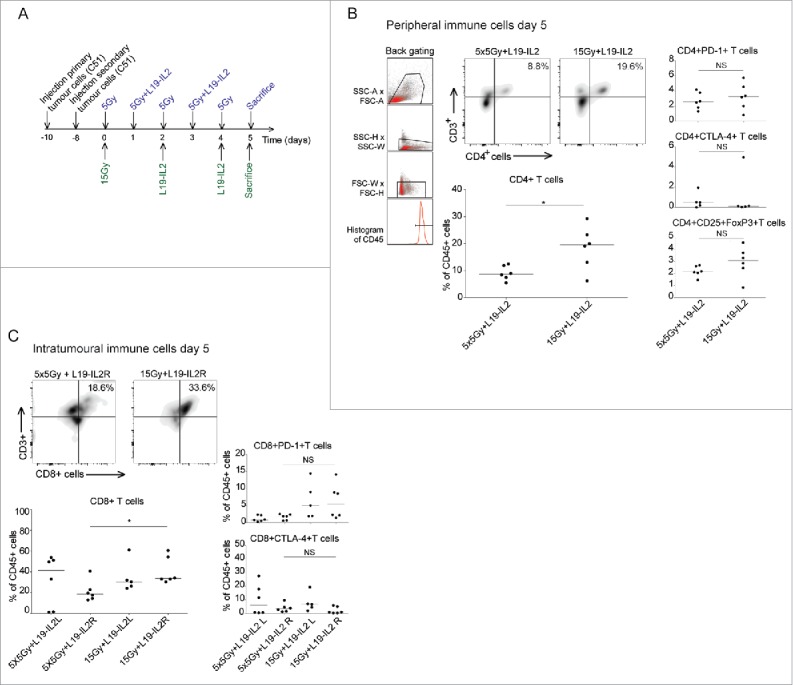
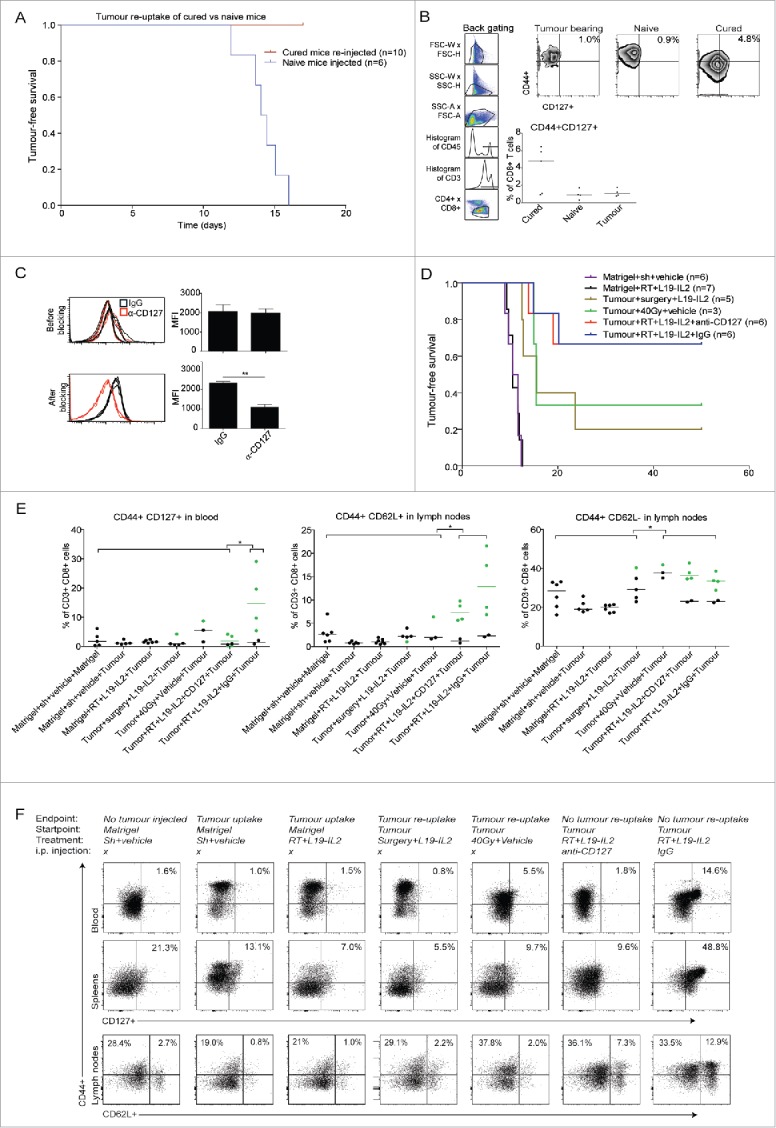
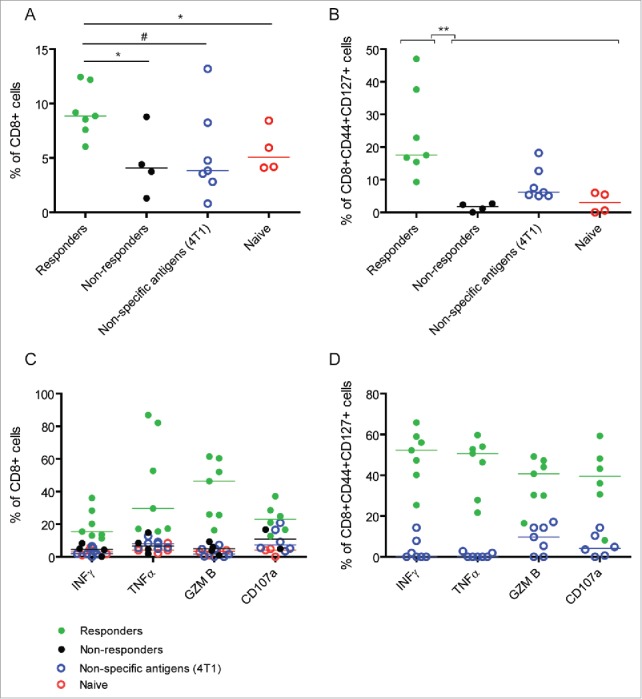
Recently, we have shown that the administration of the tumour-targeted antibody-based immunocytokine L19-IL2 after radiotherapy (RT) resulted in synergistic anti-tumour effect. Here we show that RT and L19-IL2 can activate a curative abscopal effect, with a long-lasting immunological memory. Ionizing radiation (single dose of 15Gy, 5 × 2Gy or 5 × 5Gy) was delivered to primary C51 colon tumour-bearing immunocompetent mice in combination with L19-IL2 and response of secondary non-irradiated C51 or CT26 colon tumours was evaluated. 15Gy + L19-IL2 triggered a curative (20%) abscopal effect, which was T cell dependent. Moreover, 10Gy + L19-IL2 treated and cured mice were re-injected after 150 days with C51 tumour cells and tumour uptake was assessed. Age-matched controls (matrigel injected mice treated with 10Gy + L19-IL2, mice cured after treatment with surgery + L19-IL2 and mice cured after high dose RT 40Gy + vehicle) were included. Several immunological parameters in blood, tumours, lymph nodes and spleens were investigated. Treatment with 10Gy + L19-IL2 resulted in long-lasting immunological memory, associated with CD44CD127 expression on circulating T cells. This combination treatment can induce long-lasting curative abscopal responses, and therefore it has also great potential for treatment of metastatic disease. Preclinical findings have led to the initiation of a phase I clinical trial (NCT02086721) in our institute investigating stereotactic ablative radiotherapy with L19-IL2 in patients with oligometastatic solid tumours.
最近,我们已经表明,放疗(RT)后给予基于肿瘤靶向抗体的免疫细胞因子L19-IL2可产生协同抗肿瘤作用。在此我们表明,放疗和L19-IL2可激活具有持久免疫记忆的治愈性远隔效应。将电离辐射(单次剂量15Gy、5×2Gy或5×5Gy)与L19-IL2联合给予原发性C51结肠癌荷瘤免疫活性小鼠,并评估继发性未受照射的C51或CT26结肠癌肿瘤的反应。15Gy + L19-IL2引发了治愈性(20%)远隔效应,该效应依赖于T细胞。此外,对经10Gy + L19-IL2治疗并治愈的小鼠在150天后重新注射C51肿瘤细胞,并评估肿瘤摄取情况。纳入了年龄匹配的对照组(注射基质胶并用10Gy + L19-IL2治疗的小鼠、手术 + L19-IL2治疗后治愈的小鼠以及高剂量放疗40Gy + 赋形剂治疗后治愈的小鼠)。研究了血液、肿瘤、淋巴结和脾脏中的几个免疫参数。10Gy + L19-IL2治疗导致了持久的免疫记忆,这与循环T细胞上的CD44CD127表达相关。这种联合治疗可诱导持久的治愈性远隔反应,因此它在转移性疾病的治疗中也具有巨大潜力。临床前研究结果已促使我们研究所启动一项I期临床试验(NCT02086721),研究在寡转移性实体瘤患者中使用L19-IL2进行立体定向消融放疗。