Departamento de Biotecnología. INIA, Madrid, Spain.
Grupo de Sanidad y Biotecnología SaBio, Instituto de Investigación en Recursos Cinegéticos IREC, CSIC-UCLM-JCCM, Ciudad Real, Spain.
PLoS Negl Trop Dis. 2018 Apr 10;12(4):e0006394. doi: 10.1371/journal.pntd.0006394. eCollection 2018 Apr.
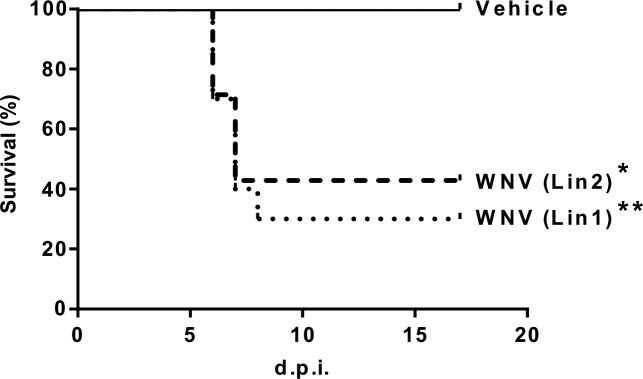
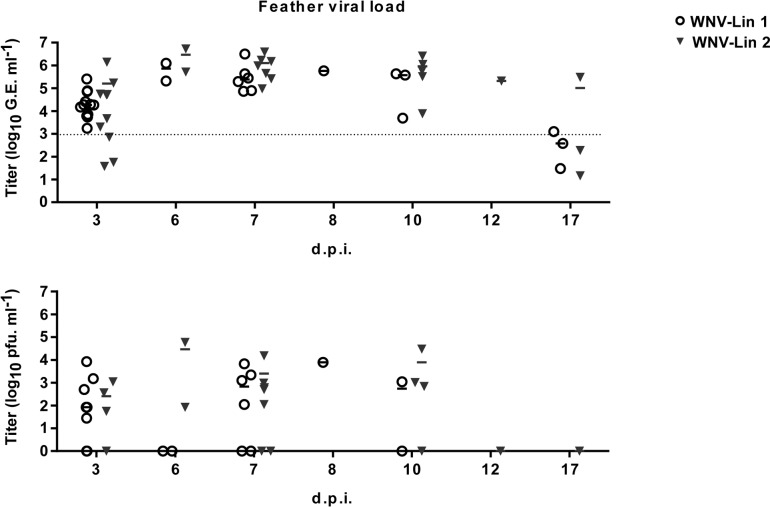
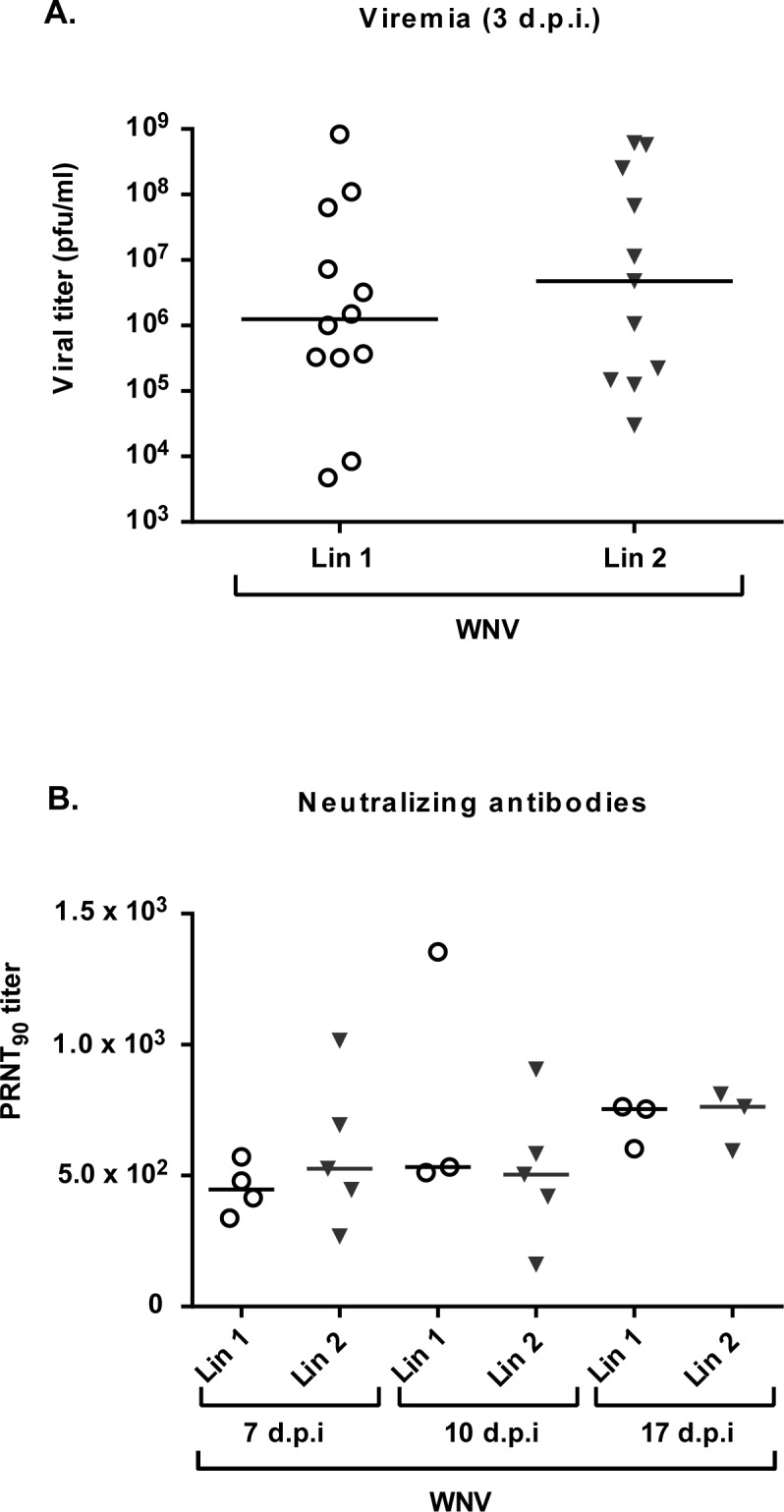
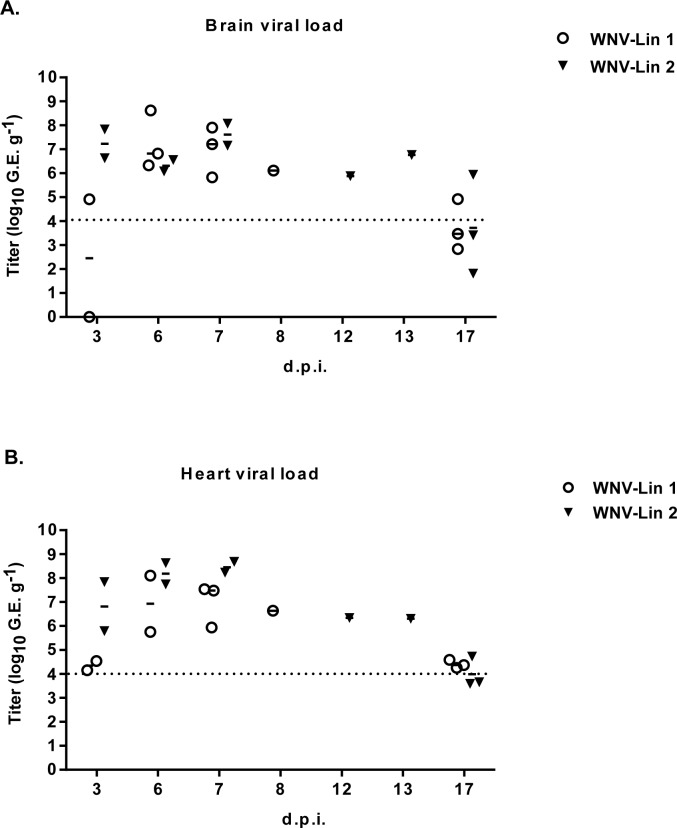
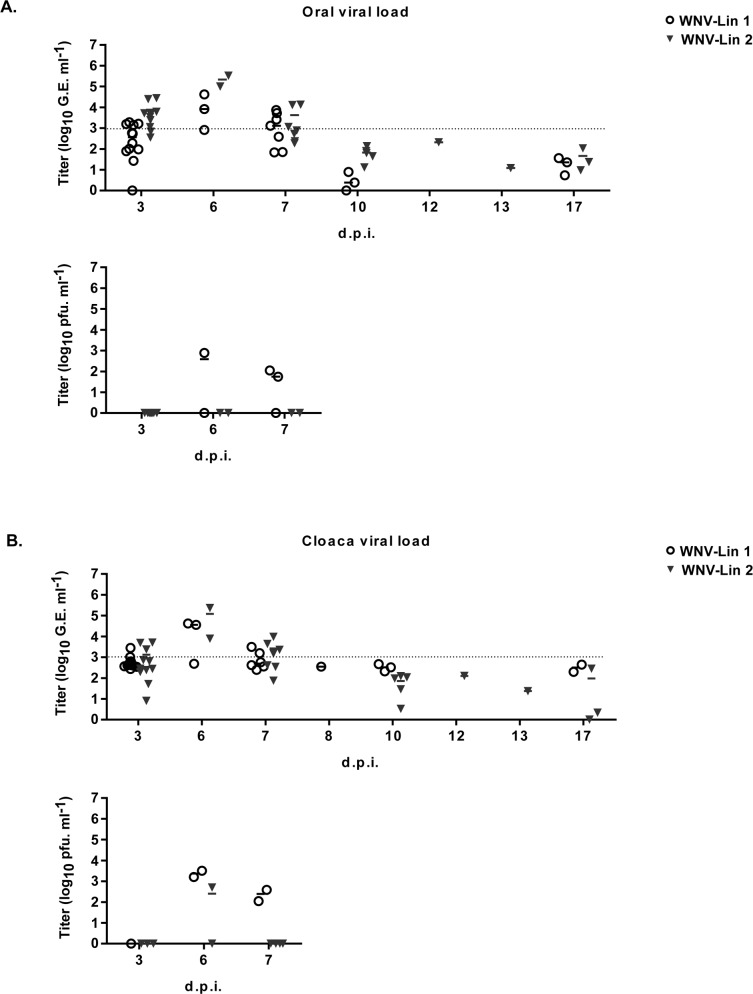
West Nile virus (WNV), a zoonotic pathogen naturally transmitted by mosquitoes whose natural hosts are birds, has spread worldwide during the last few decades. Resident birds play an important role in flavivirus epidemiology, since they can serve as reservoirs and facilitate overwintering of the virus. Herein, we report the first experimental infection of magpie (Pica pica) with two strains of West Nile virus, lineages 1 (NY-99) and 2 (SRB Novi-Sad/12), which are currently circulating in Europe. Magpies were highly susceptible to WNV infection, with similar low survival rates (30% and 42.8%) for both lineages. All infected magpies developed viremia detectable at 3 days post-infection with titers above those necessary for successful transmission of WNV to a mosquito. Neutralizing antibodies were detected at all time points analyzed (from 7 to 17 days post-infection). WNV genome was detected in the brains and hearts of all magpies that succumbed to the infection, and, in some of the surviving birds. WNV-RNA was amplified from swabs (oral and cloacal) at 3, 6 and 7 days post-infection and feather pulps, from 3 to 17 days post-infection, of infected animals. Even more, infectious virus was recovered from swabs up to 7 days post-infection and from feather pulps up to 10 days post infection. Sham-infected control animals were negative for viremia, viral RNA, and antibodies. These results suggest that the magpie, which is one of the most abundant corvid species in Europe, could represent a source of WNV transmission for birds and humans. Our observations shed light on the pathogenesis, transmission, and ecology of WNV and can benefit the implementation of surveillance and control programs.
西尼罗河病毒(WNV)是一种自然通过蚊子传播的人畜共患病病原体,其天然宿主是鸟类。在过去几十年中,该病毒已在全球范围内传播。留鸟在黄病毒病流行病学中起着重要作用,因为它们可以作为病毒的储存宿主,并促进病毒的越冬。在此,我们报告了首例鹊(Pica pica)与两种西尼罗河病毒株(谱系 1(NY-99)和谱系 2(SRB Novi-Sad/12))的实验感染,这两种病毒目前在欧洲流行。鹊对 WNV 感染高度敏感,两种谱系的存活率相似(30%和 42.8%)。所有感染的鹊均在感染后 3 天出现可检测到的病毒血症,病毒滴度高于将 WNV 成功传播给蚊子所需的滴度。在所有分析的时间点(感染后 7 至 17 天)均检测到中和抗体。在所有感染而死亡的鹊的大脑和心脏以及一些幸存的鸟中均检测到 WNV 基因组。在感染动物的 3、6 和 7 天以及感染后 3 至 17 天,从拭子(口腔和泄殖腔)和羽毛髓中扩增到 WNV-RNA。甚至,在感染后 7 天从拭子和感染后 10 天从羽毛髓中回收了传染性病毒。假感染对照动物的病毒血症、病毒 RNA 和抗体均为阴性。这些结果表明,鹊是欧洲最丰富的鸦科物种之一,可能成为鸟类和人类传播 WNV 的来源。我们的观察结果阐明了 WNV 的发病机制、传播和生态学,可为监测和控制计划的实施提供参考。