Division of Medical Oncology, UCSF Helen Diller Comprehensive Cancer Center, San Francisco, California.
Division of Medical Oncology, Department of Medicine, University of Colorado School of Medicine, Aurora, Colorado.
Clin Cancer Res. 2018 Jul 15;24(14):3334-3347. doi: 10.1158/1078-0432.CCR-17-2452. Epub 2018 Apr 10.
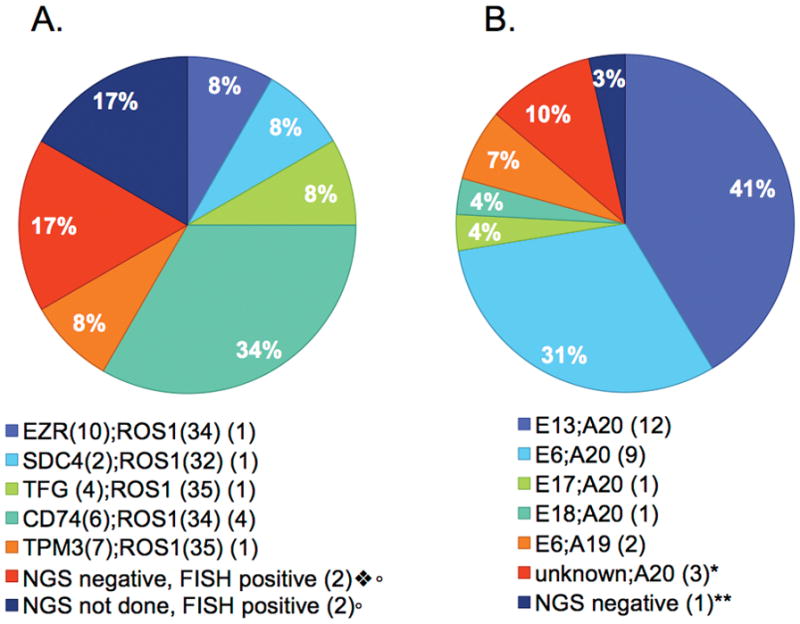
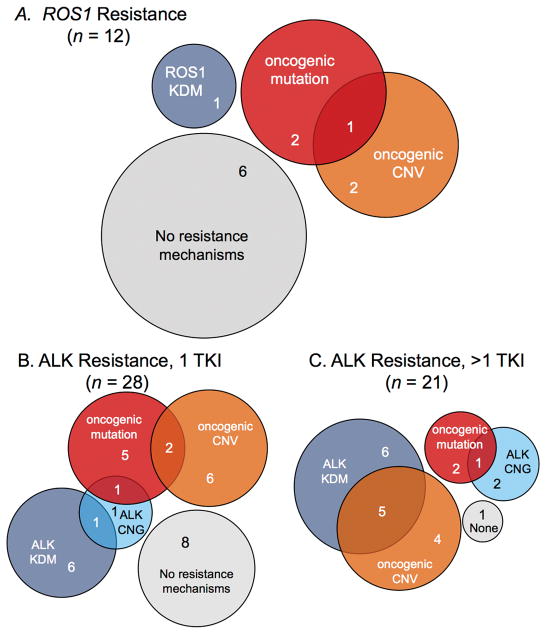
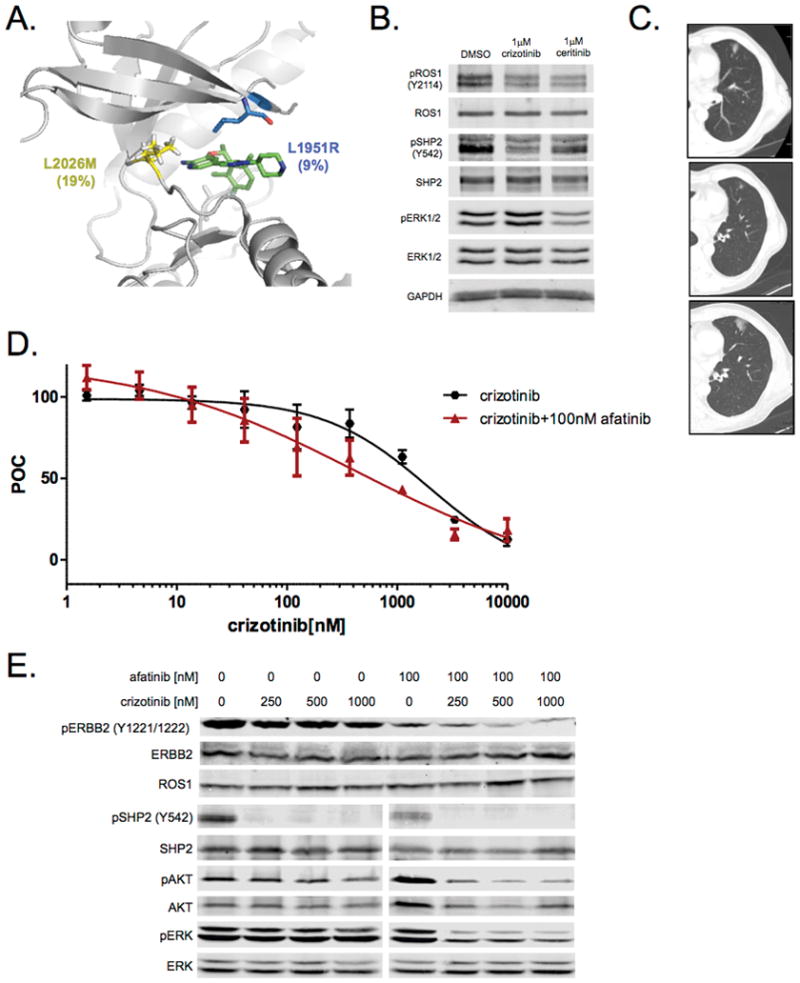
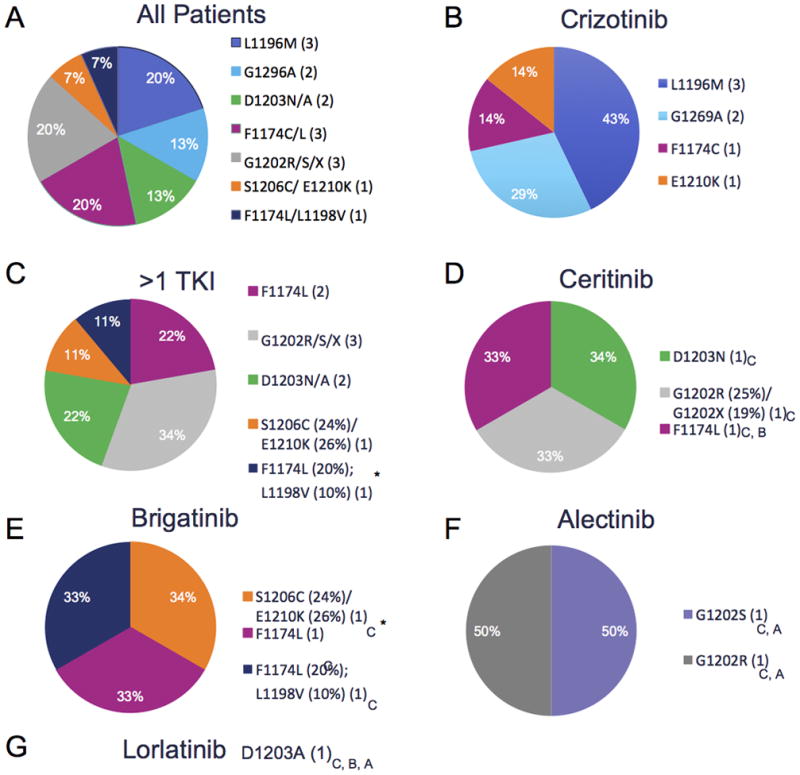
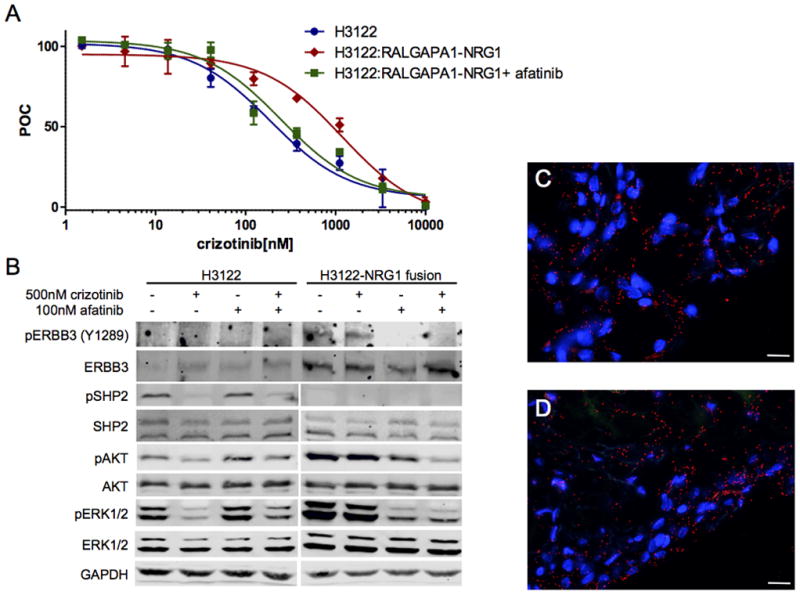
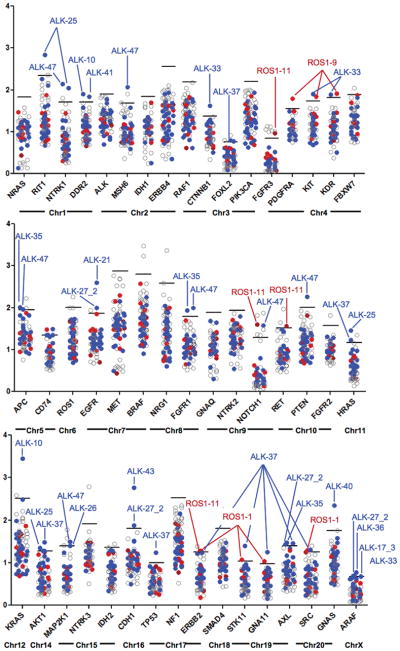
Despite initial benefit from tyrosine kinase inhibitors (TKIs), patients with advanced non-small cell lung cancer (NSCLC) harboring (ALK) and (ROS1) gene fusions ultimately progress. Here, we report on the potential resistance mechanisms in a series of patients with ALK and ROS1 NSCLC progressing on different types and/or lines of -targeted therapy. We used a combination of next-generation sequencing (NGS), multiplex mutation assay, direct DNA sequencing, RT-PCR, and FISH to identify fusion variants/partners and copy-number gain (CNG), kinase domain mutations (KDM), and copy-number variations (CNVs) in other cancer-related genes. We performed testing on 12 and 43 patients. One of 12 ROS1 (8%) and 15 of 43 (35%) ALK patients harbored KDM. In the ROS1 cohort, we identified and β-catenin mutations and HER2-mediated bypass signaling as non-ROS1-dominant resistance mechanisms. In the ALK cohort, we identified a novel gene fusion, a fusion, 2 , and 3 mutations, as well as mutations in , and In addition, we identified CNV in multiple proto-oncogenes genes including and others. We identified a putative TKI resistance mechanism in six of 12 (50%) ROS1 patients and 37 of 43 (86%) ALK patients. Our data suggest that a focus on KDMs will miss most resistance mechanisms; broader gene testing strategies and functional validation is warranted to devise new therapeutic strategies for drug resistance. .
尽管晚期非小细胞肺癌(NSCLC)患者携带 (ALK) 和 (ROS1) 基因融合物最初受益于酪氨酸激酶抑制剂(TKI),但最终仍会出现进展。在这里,我们报告了一系列在不同类型和/或线的靶向治疗中进展的 ALK 和 ROS1 NSCLC 患者的潜在耐药机制。我们使用下一代测序(NGS)、多重突变检测、直接 DNA 测序、RT-PCR 和 FISH 来鉴定融合变体/伙伴和拷贝数增益(CNG)、激酶结构域突变(KDM)以及其他与癌症相关基因的拷贝数变化(CNVs)。我们对 12 名 和 43 名 患者进行了检测。在 12 名 ROS1 患者(8%)和 43 名 ALK 患者(35%)中发现了 1 种 KDM。在 ROS1 队列中,我们鉴定出 和 β-catenin 突变以及 HER2 介导的旁路信号转导作为非 ROS1 优势耐药机制。在 ALK 队列中,我们鉴定出一种新的 基因融合、一个 融合、2 个 和 3 个突变,以及 、 和 中的突变。此外,我们还鉴定出多个原癌基因的 CNV,包括 和其他基因。我们在 12 名 ROS1 患者中的 6 名(50%)和 43 名 ALK 患者中的 37 名(86%)患者中鉴定出可能的 TKI 耐药机制。我们的数据表明,关注 KDM 将错过大多数耐药机制;需要更广泛的基因检测策略和功能验证,以制定新的耐药治疗策略。