Sahin Abdurrahman, Turkoglu Semra, Tunc Nurettin, Duzenci Deccane, Solmaz Ozgen Arslan, Bahcecioglu Ibrahim Halil, Yalniz Mehmet
Medicine Faculty, Department of Gastroenterology, Firat University, Elazig, Turkey.
Department of Nutrition and Dietetics, Health Sciences Faculty, Firat University, Elazig, Turkey.
Ther Clin Risk Manag. 2018 Mar 29;14:627-635. doi: 10.2147/TCRM.S162690. eCollection 2018.
Oxidative stress has been implicated in several disorders, including acute pancreatitis (AP). Ischemia-modified albumin (IMA), which reflects the ability to bind cobalt, has been found to be elevated in conditions of oxidative stress and tissue hypoxia. This study examined IMA and adjusted IMA levels in patients with AP, and examined the associations of IMA and adjusted IMA levels to the severity of AP.
A total of 42 consecutive patients with AP and 43 age- and sex-matched control subjects were enrolled. Serum samples were obtained from patients with AP on admission as well as 48-72 hours after hospitalization, and from the controls, at the time of enrollment. Adjusted IMA was calculated by multiplying the IMA value of each patient with the ratio of the patient's albumin value and the median albumin value of the study population. The severity of AP was assessed according to the modified Atlanta classification, and the patients were divided into 2 groups: mild AP and severe AP.
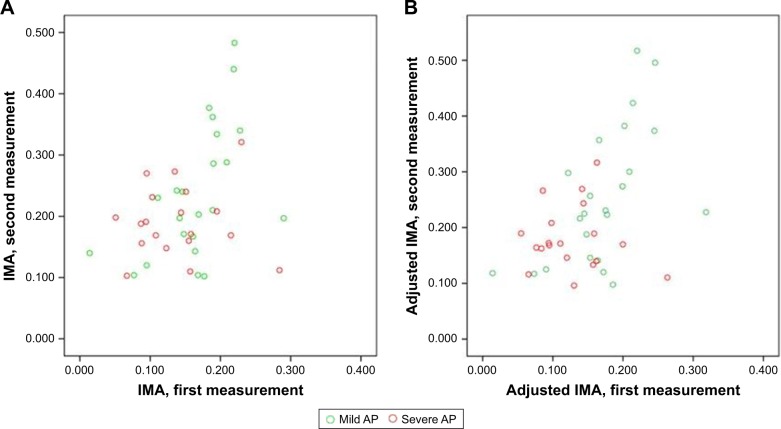
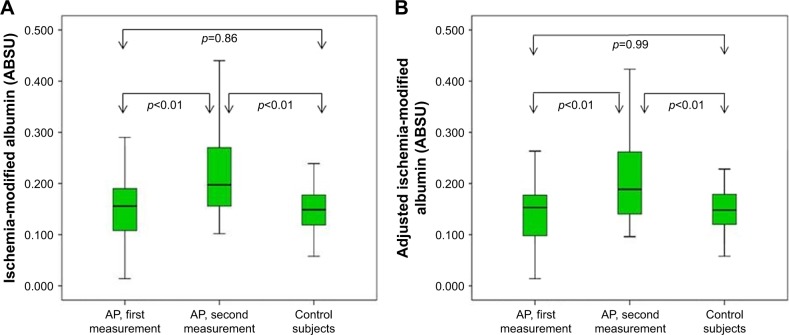
The serum IMA and adjusted IMA values of patients with AP on admission and those of the controls did not differ (=0.86 and =0.99, respectively). The second measurements of IMA and adjusted IMA in the AP group were higher than the first measurements of both the AP group and controls (for all, <0.01). Among the IMA measurements, only adjusted IMA on admission had the ability to predict the severity of AP. Severe AP was correlated with albumin, and the area under the curve of adjusted IMA values on admission was 0.746 for differentiating patients with severe AP from mild AP with statistical significance (=0.005).
It was shown that IMA and adjusted IMA levels rise with the progression of AP. Lower levels of adjusted IMA predict the severity of AP. Further studies with serial measurements of IMA are warranted to explore the indicative role of IMA in the course of AP.
氧化应激与包括急性胰腺炎(AP)在内的多种疾病有关。缺血修饰白蛋白(IMA)反映了结合钴的能力,已发现在氧化应激和组织缺氧情况下其水平会升高。本研究检测了AP患者的IMA及校正后的IMA水平,并探讨了IMA及校正后的IMA水平与AP严重程度的相关性。
共纳入42例连续的AP患者及43例年龄和性别匹配的对照者。在AP患者入院时以及住院48 - 72小时后采集血清样本,对照者在入组时采集血清样本。校正后的IMA通过将每位患者的IMA值乘以该患者白蛋白值与研究人群白蛋白中位数的比值来计算。根据改良的亚特兰大分类法评估AP的严重程度,患者被分为两组:轻度AP和重度AP。
AP患者入院时的血清IMA及校正后的IMA值与对照者无差异(分别为=0.86和=0.99)。AP组IMA及校正后的IMA的第二次测量值高于AP组和对照组的第一次测量值(所有P值均<0.01)。在IMA测量中,仅入院时的校正后IMA有能力预测AP的严重程度。重度AP与白蛋白相关,入院时校正后IMA值的曲线下面积为0.746,用于区分重度AP患者与轻度AP患者具有统计学意义(P = 0.005)。
结果表明,IMA及校正后的IMA水平随AP的进展而升高。较低的校正后IMA水平可预测AP的严重程度。有必要进一步进行IMA的系列测量研究,以探索IMA在AP病程中的指示作用。