Ukubuiwe Azubuike Christian, Olayemi Israel Kayode, Omalu Innocent Chukwuemeka James, Arimoro Francis Ofurum, Baba Bulus Musa, Ukubuiwe Chinenye Catherine
Entomology Unit, Department of Biological Sciences, Federal University of Technology, Minna, Minna, Nigeria.
Parasitology Unit, Department of Biological Sciences, Federal University of Technology, Minna, Minna, Nigeria.
Int J Insect Sci. 2018 Apr 2;10:1179543318767915. doi: 10.1177/1179543318767915. eCollection 2018.
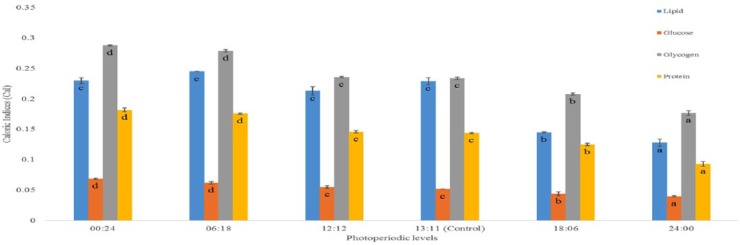
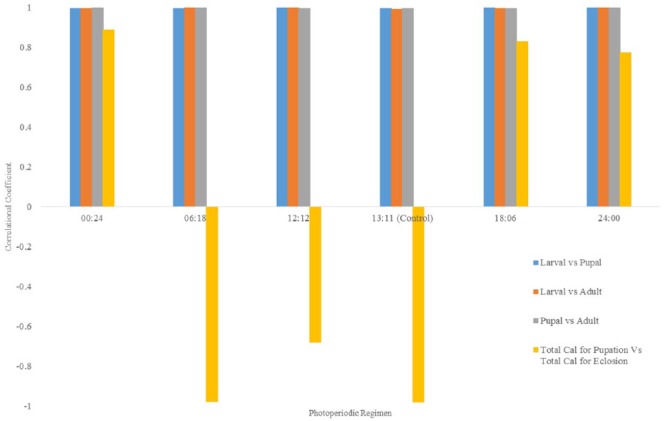
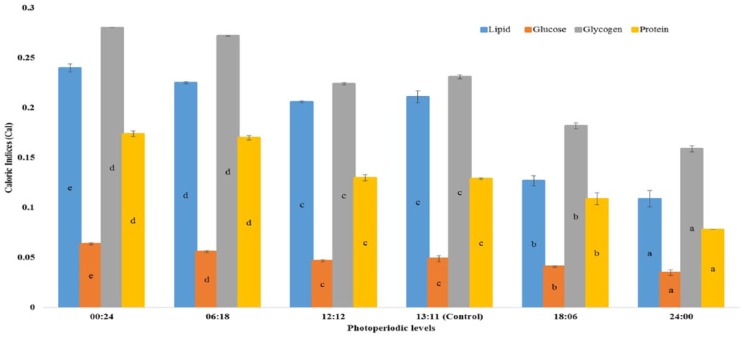
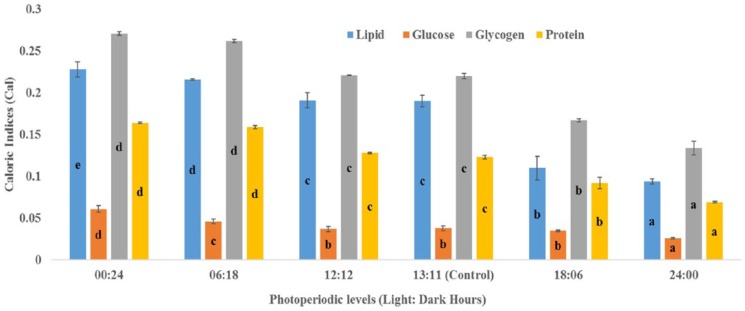
This study investigated the effects of varying photoperiodic conditions on critical life stages' parameters of . To this end, first larval stage was reared under different constant photoperiodic regimens: 0, 6 (short), 12 (equal), 13 (prevailing condition), and 18 and 24 (long) hours of light (hL). Duration of development, survivorship, emergence successes, adult longevity, caloric indices (CIs), and utilisation of teneral reserves for metamorphosis at each regimen were monitored. Analyses revealed significant negative effects of increasing photoperiod on all entomological variables measured. Short photo-phases elicited faster development times, increased life stages' survivorship and number at emergence, adult longevity, and CI for all life stages while increasing teneral components for adult life traits. The information generated in this study is important in understanding the role played by photoperiod in disease transmission and for development of integrated vector control strategies based on environmental manipulation.
本研究调查了不同光周期条件对[具体对象]关键生命阶段参数的影响。为此,将幼虫第一阶段饲养在不同的恒定光周期方案下:0、6(短)、12(相等)、13(当前条件)以及18和24(长)小时光照(hL)。监测了每个方案下的发育持续时间、存活率、羽化成功率、成虫寿命、热量指数(CIs)以及用于变态的初羽储备利用率。分析表明,光周期增加对所有测量的昆虫学变量均有显著负面影响。短光照阶段能使发育时间加快,提高各生命阶段的存活率、羽化数量、成虫寿命以及热量指数,同时增加成虫生命特征的初羽成分。本研究产生的信息对于理解光周期在疾病传播中的作用以及基于环境调控制定综合病媒控制策略具有重要意义。