Department of Physiology, School of Medicine, Faculty of Health Sciences, University of Pretoria, Pretoria 0002, South Africa.
Institute for Cellular and Molecular Medicine, Department of Immunology, South African Medical Research Council (SAMRC) Extramural Unit for Stem Cell Research and Therapy, Faculty of Health Sciences, University of Pretoria, Pretoria 0002, South Africa.
Int J Mol Sci. 2018 Apr 11;19(4):1148. doi: 10.3390/ijms19041148.
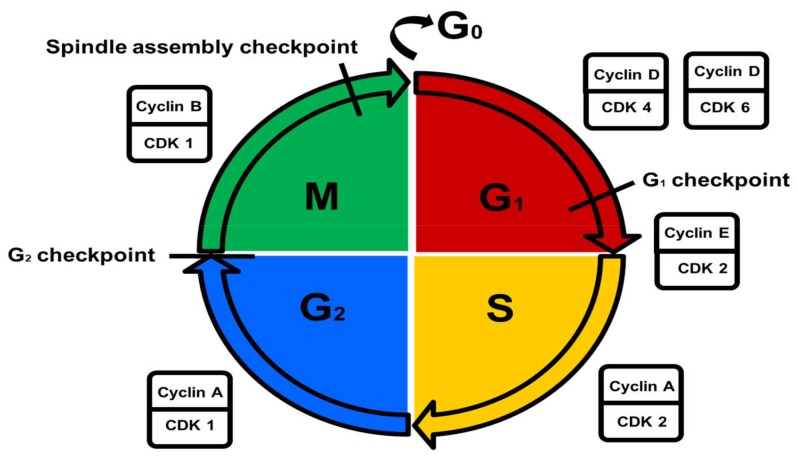
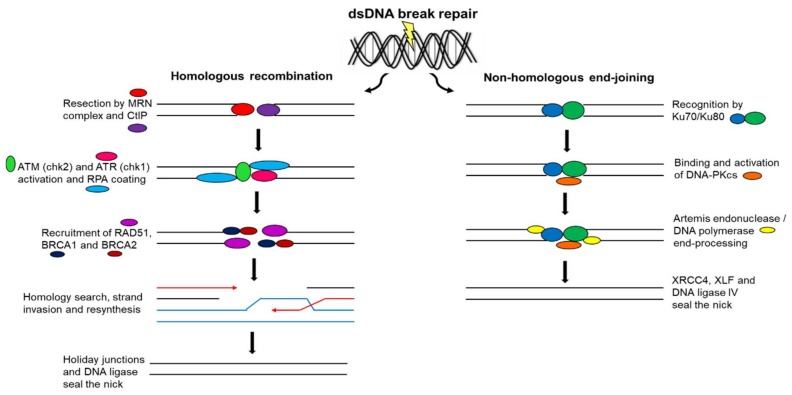
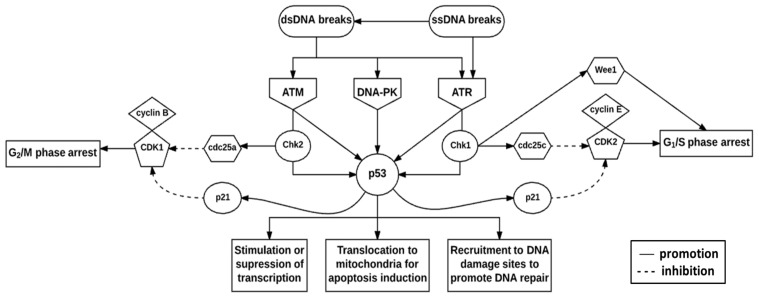
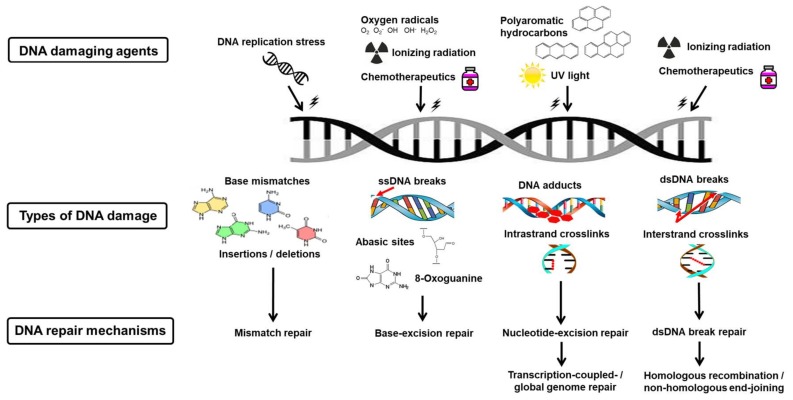
Deoxyribonucleic acid (DNA) is the self-replicating hereditary material that provides a blueprint which, in collaboration with environmental influences, produces a structural and functional phenotype. As DNA coordinates and directs differentiation, growth, survival, and reproduction, it is responsible for life and the continuation of our species. Genome integrity requires the maintenance of DNA stability for the correct preservation of genetic information. This is facilitated by accurate DNA replication and precise DNA repair. DNA damage may arise from a wide range of both endogenous and exogenous sources but may be repaired through highly specific mechanisms. The most common mechanisms include mismatch, base excision, nucleotide excision, and double-strand DNA (dsDNA) break repair. Concurrent with regulation of the cell cycle, these mechanisms are precisely executed to ensure full restoration of damaged DNA. Failure or inaccuracy in DNA repair contributes to genome instability and loss of genetic information which may lead to mutations resulting in disease or loss of life. A detailed understanding of the mechanisms of DNA damage and its repair provides insight into disease pathogeneses and may facilitate diagnosis and the development of targeted therapies.
脱氧核糖核酸(DNA)是自我复制的遗传物质,它提供了一个蓝图,与环境影响合作,产生结构和功能表型。由于 DNA 协调和指导分化、生长、存活和繁殖,它负责生命和我们物种的延续。基因组完整性要求维持 DNA 稳定性,以正确保存遗传信息。这是通过准确的 DNA 复制和精确的 DNA 修复来实现的。DNA 损伤可能来自广泛的内源性和外源性来源,但可以通过高度特异性的机制进行修复。最常见的机制包括碱基错配、碱基切除、核苷酸切除和双链 DNA(dsDNA)断裂修复。这些机制与细胞周期的调控同时进行,以确保受损 DNA 的完全修复。DNA 修复的失败或不准确会导致基因组不稳定和遗传信息丢失,可能导致突变,导致疾病或死亡。对 DNA 损伤及其修复机制的详细了解为疾病发病机制提供了深入的了解,并可能有助于诊断和开发靶向治疗。