Department of Psychiatry and Psychotherapy, Molecular Neurosciences, University of Regensburg, Regensburg, Germany.
Institute of Human Genetics, University of Regensburg, Regensburg, Germany.
PLoS One. 2018 Apr 11;13(4):e0195627. doi: 10.1371/journal.pone.0195627. eCollection 2018.
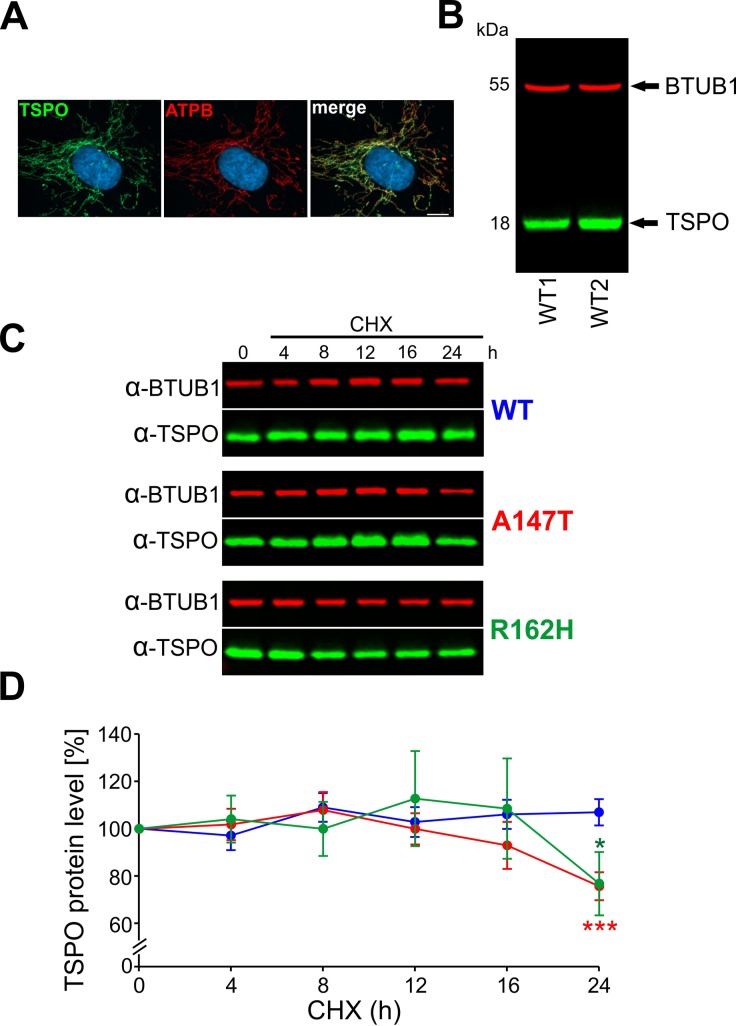
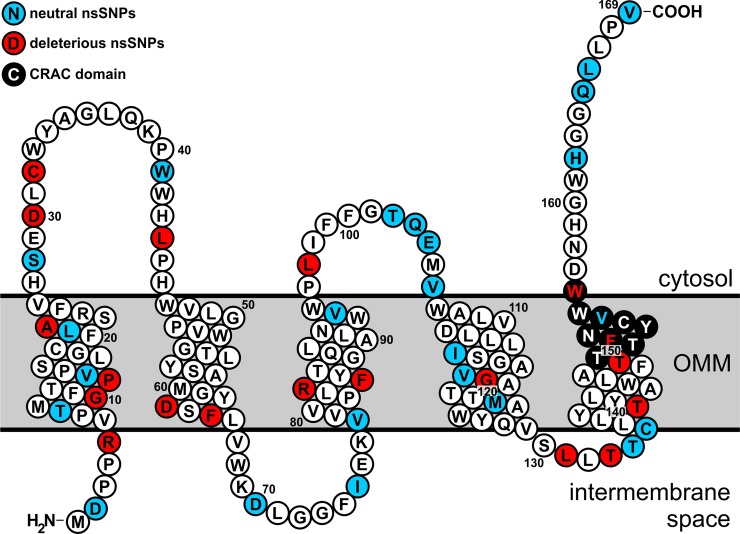
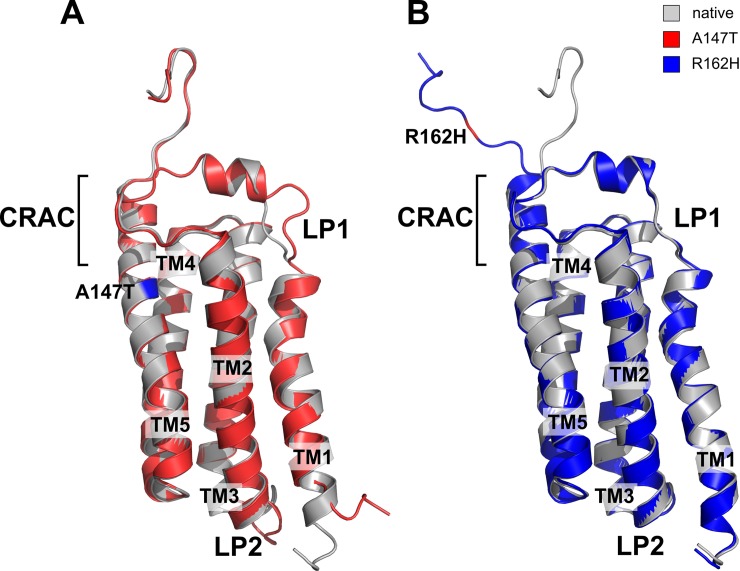
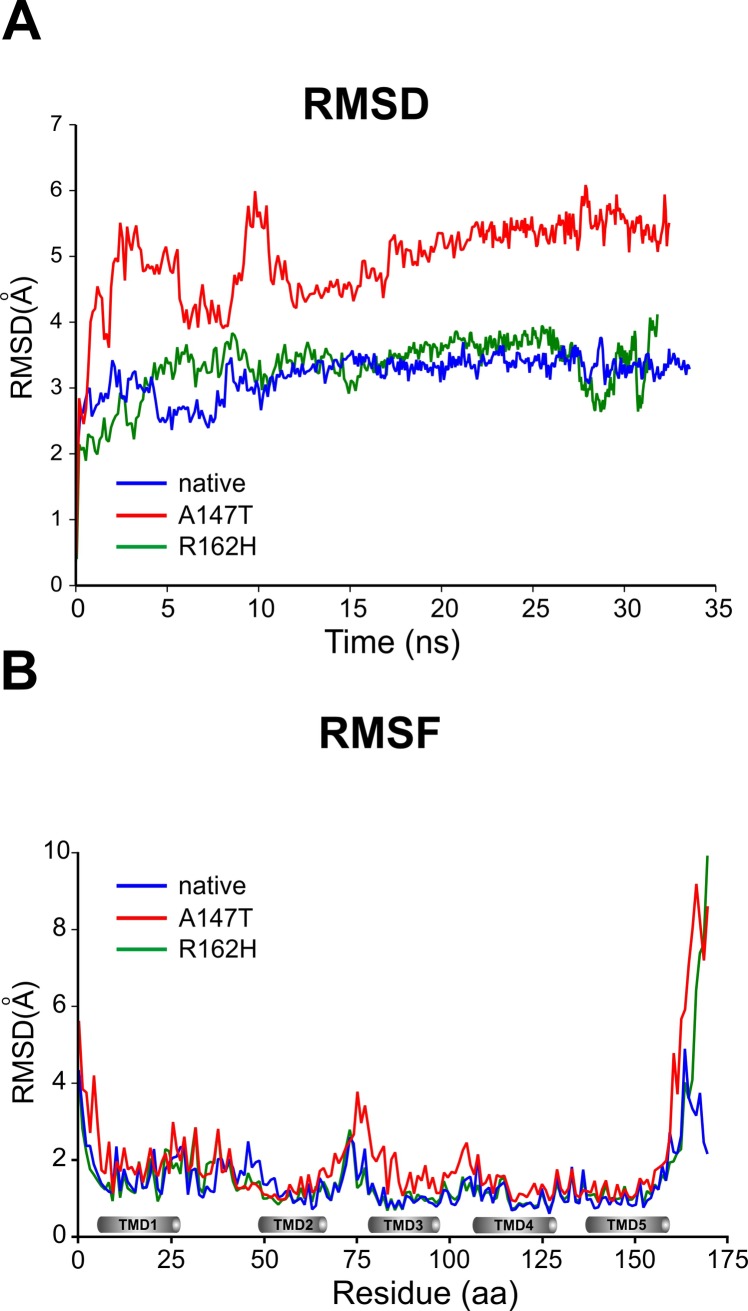
The 18 kDa translocator protein (TSPO) is an evolutionary conserved cholesterol binding protein localized in the outer mitochondrial membrane. Expression of TSPO is upregulated in activated microglia in various neuroinflammatory, neurodegenerative, and neoplastic disorders. Therefore, TSPO radioligands are used as biomarkers in positron emission tomography (PET) studies. In particular, a common A147T polymorphism in the TSPO gene affects binding of several high affinity TSPO radioligands. Given the relevance of TSPO as a diagnostic biomarker in disease processes, we systematically searched for mutations in the human TSPO gene by a wide array of evolution and structure based bioinformatics tools and identified potentially deleterious missense mutations. The two most frequently observed missense mutations A147T and R162H were further analysed in structural models of human wildtype and mutant TSPO proteins. The effects of missense mutations were studied on the atomic level using molecular dynamics simulations. To analyse putative effects of A147T and R162H variants on protein stability we established primary dermal fibroblast cultures from wt and homozygous A147T and R162H donors. Stability of endogenous TSPO protein, which is abundantly expressed in fibroblasts, was studied using cycloheximide protein degradation assay. Our data show that the A147T mutation significantly alters the flexibility and stability of the mutant protein. Furthermore both A147T and R162H mutations decreased the half-life of the mutant proteins by about 25 percent, which could in part explain its effect on reduced pregnenolone production and susceptibility to neuropsychiatric disorders. The present study is the first comprehensive bioinformatic analysis of genetic variants in the TSPO gene, thereby extending the knowledge about the clinical relevance of TSPO nsSNPs.
18kDa 转位蛋白(TSPO)是一种进化上保守的胆固醇结合蛋白,位于线粒体外膜。在各种神经炎症、神经退行性和肿瘤性疾病中,TSPO 在激活的小胶质细胞中表达上调。因此,TSPO 放射性配体被用作正电子发射断层扫描(PET)研究中的生物标志物。特别是,TSPO 基因中的常见 A147T 多态性影响几种高亲和力 TSPO 放射性配体的结合。鉴于 TSPO 作为疾病过程中的诊断生物标志物的相关性,我们通过广泛的进化和结构基于生物信息学工具系统地搜索了人类 TSPO 基因的突变,并鉴定了潜在的有害错义突变。进一步在人野生型和突变 TSPO 蛋白的结构模型中分析了观察到的最常见的两种错义突变 A147T 和 R162H。使用分子动力学模拟在原子水平上研究了错义突变的影响。为了分析 A147T 和 R162H 变体对蛋白质稳定性的潜在影响,我们从 wt 和纯合 A147T 和 R162H 供体中建立了原代皮肤成纤维细胞培养物。使用环己酰亚胺蛋白降解测定研究了在成纤维细胞中大量表达的内源性 TSPO 蛋白的稳定性。我们的数据表明,A147T 突变显著改变了突变蛋白的柔韧性和稳定性。此外,A147T 和 R162H 突变都使突变蛋白的半衰期降低了约 25%,这部分解释了它对降低孕烯醇酮产量和易患神经精神疾病的影响。本研究是对 TSPO 基因遗传变异的首次全面生物信息学分析,从而扩展了 TSPO nsSNP 与临床相关性的知识。