Bioproduction Research Institute, National Institute of Advanced Industrial Science and Technology (AIST), Tsukuba, Ibaraki, Japan.
Department of Computational Biology and Medical Sciences, Graduate School of Frontier Sciences, The University of Tokyo, Kashiwa, Chiba, Japan.
PLoS One. 2018 Apr 11;13(4):e0194090. doi: 10.1371/journal.pone.0194090. eCollection 2018.
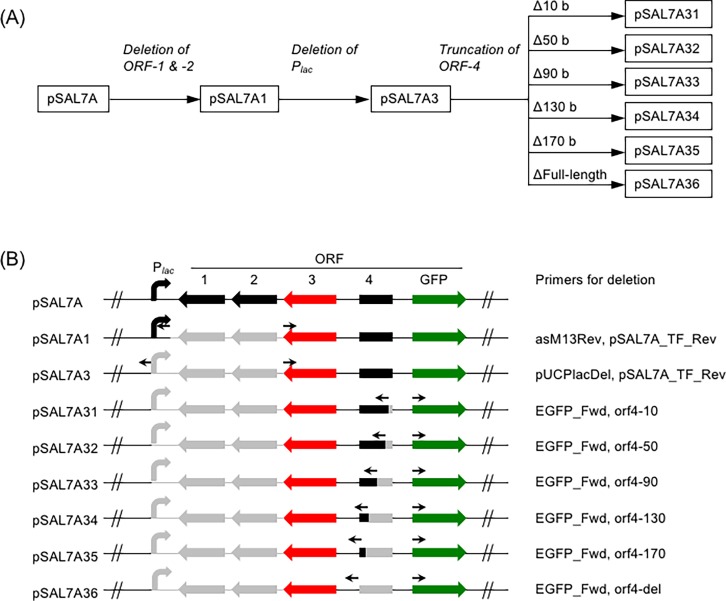
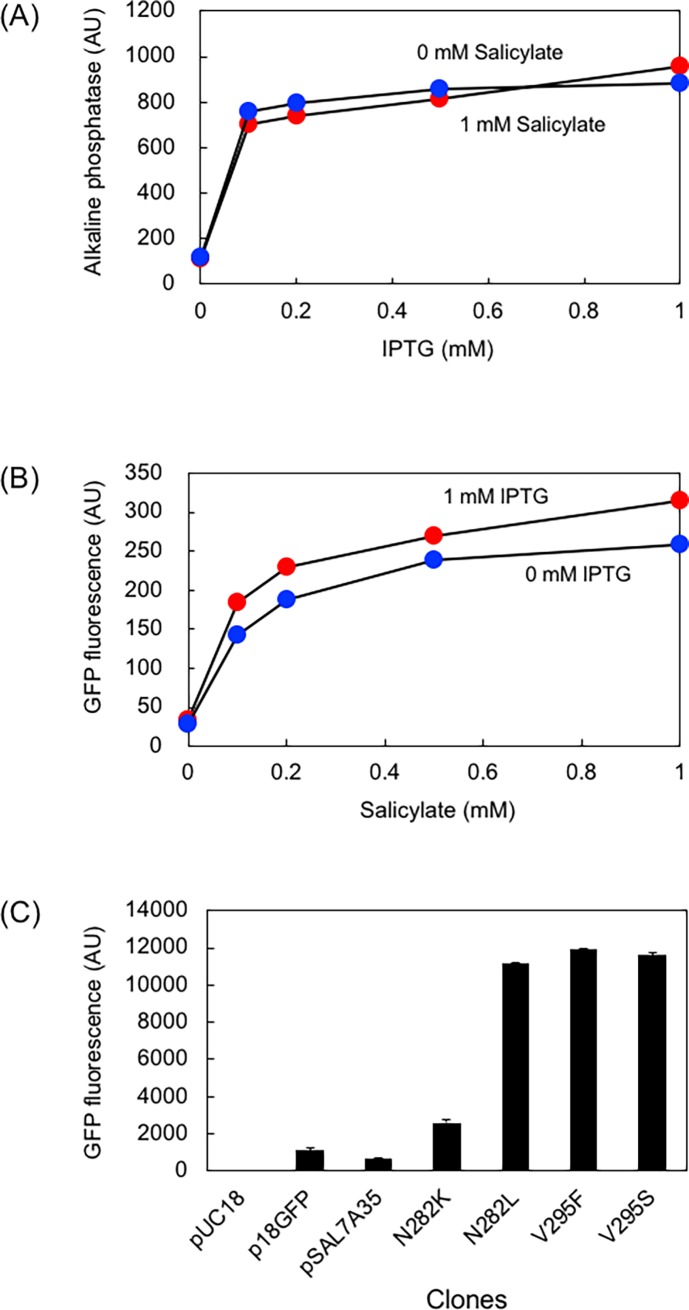
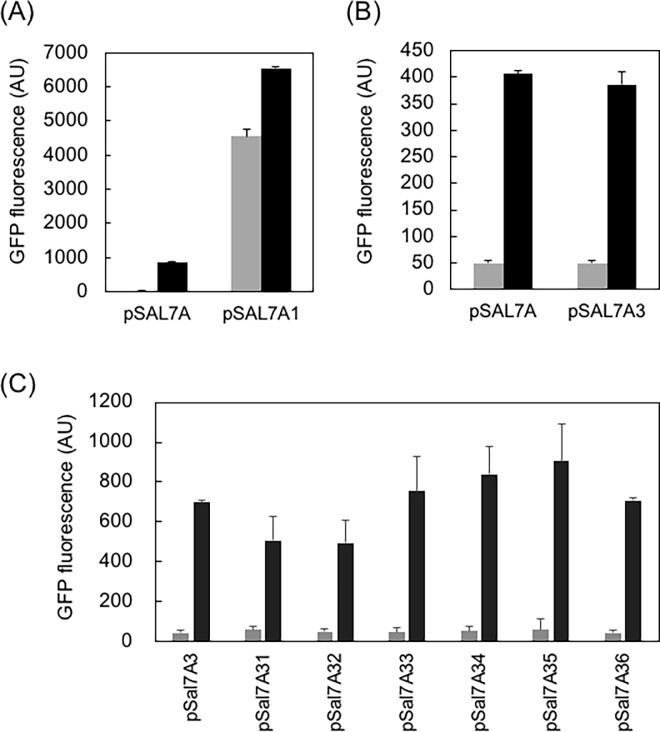
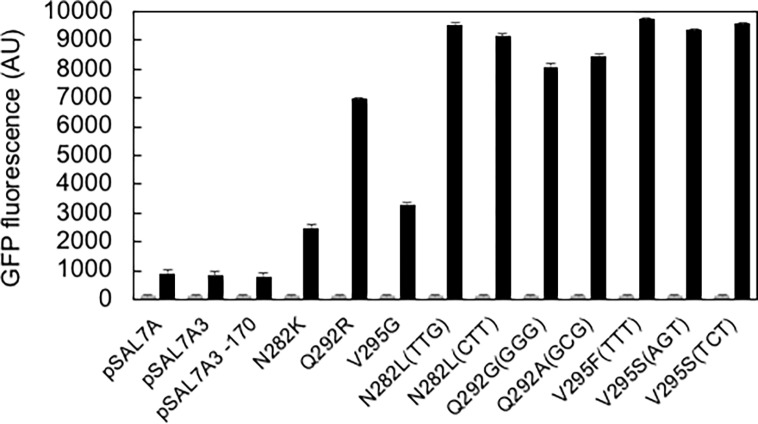
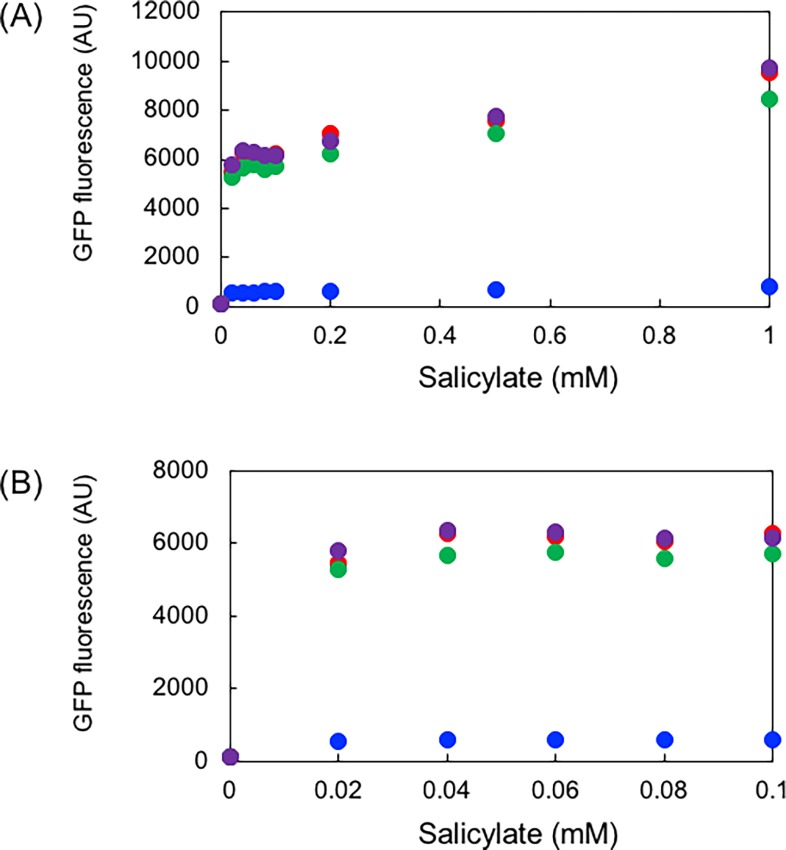
I have previously identified a metagenomic fragment (4 kb) containing the salicylate (2-hydroxybenzoate)-responsive transcriptional regulator Sal7AR. Taking advantage of the inert nature of salicylate to common genetic switches used in Escherichia coli, here I developed a salicylate-inducible high expression system in E. coli. I first applied a deletion analysis to the metagenomic fragment to identify the core region (1 kb) necessary for the salicylate-dependent expression. Sal7AR was subjected to an error-prone PCR, and a library was screened for an enhanced expression of a reporter green fluorescent protein (GFP) gene in the presence of 1 mM salicylate, where virtually no growth inhibition was observed. Three beneficial amino acid substitutions were identified (N282K, Q292R, and V295G), each of which improved the expression of GFP relative to the wildtype by several-fold. The three sites were then completely randomized by saturation mutagenesis either individually or combinatorially to identify three variants carrying a single point mutation, N282L, V295F, or V295S; no further improvements were observed by combining these mutations. Salicylate-dependent expression of these mutants was highly repressed in its absence and escalated in response to ~10 μM salicylate, and gradually increased up to 1 mM salicylate; the induction rate was approximately 15 times greater than that achieved with a lactose promoter. Orthogonality to the lactose-based expression system was also confirmed. This salicylate-based expression system should thus be advantageously used for high-level production of recombinant proteins in combination with common lactose-dependent induction systems.
我之前鉴定了一个包含水杨酸(2-羟基苯甲酸)响应转录调控因子 Sal7AR 的宏基因组片段(4 kb)。利用水杨酸对大肠杆菌中常用遗传开关的惰性,我在此开发了一种水杨酸诱导的大肠杆菌高表达系统。我首先对宏基因组片段进行了缺失分析,以确定水杨酸依赖表达所必需的核心区域(1 kb)。对 Sal7AR 进行易错 PCR,并在 1 mM 水杨酸存在下筛选报告绿色荧光蛋白(GFP)基因表达增强的文库,其中几乎没有观察到生长抑制。鉴定出三个有益的氨基酸取代(N282K、Q292R 和 V295G),每个取代相对于野生型提高 GFP 的表达几倍。然后,通过饱和诱变分别或组合完全随机化这三个位点,以鉴定携带单个点突变的三个变体,N282L、V295F 或 V295S;通过组合这些突变没有观察到进一步的改进。这些突变体的水杨酸依赖性表达在不存在水杨酸时被高度抑制,并在响应约 10 μM 水杨酸时逐渐增加,直到 1 mM 水杨酸;诱导率比乳糖启动子高约 15 倍。与基于乳糖的表达系统的正交性也得到了证实。因此,该水杨酸表达系统应与常用的基于乳糖的诱导系统结合,用于重组蛋白的高水平生产。