Cherobin Ana Carolina Figueiredo Pereira, Wainstein Alberto Julius Alves, Colosimo Enrico Antônio, Goulart Eugênio Marcos Andrade, Bittencourt Flávia Vasques
Department of Dermatology, Hospital das Clínicas, Universidade Federal de Minas Gerais (HC-UFMG) - Belo Horizonte (MG), Brazil.
Institute of Post-graduation, Faculdade de Ciências Médicas de Minas Gerais (FCM-MG) - Belo Horizonte (MG), Brazil.
An Bras Dermatol. 2018 Jan-Feb;93(1):19-26. doi: 10.1590/abd1806-4841.20184779.
Melanoma is a malignant neoplasia that shows high mortality when diagnosed in advanced stages. Early identification of high-risk patients for the development of melanoma metastases is the main strategy to reduce mortality.
To assess the influence of eight epidemiological and histopathologic features on the development of metastases in patients diagnosed with primary cutaneous melanoma.
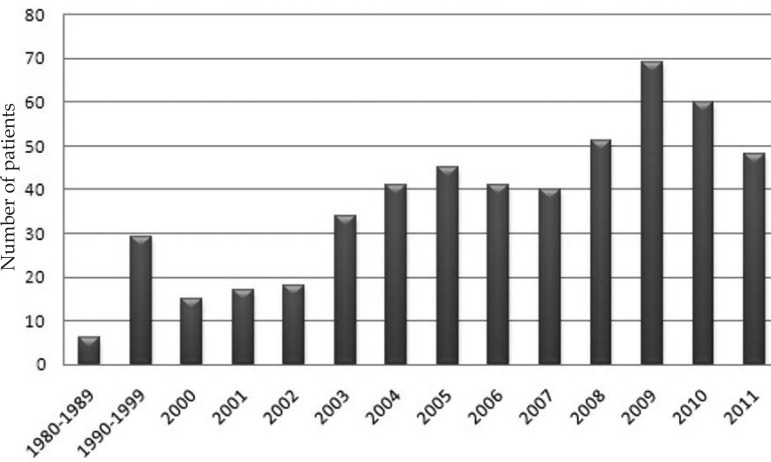
Our historical cohort comprised patients with invasive primary cutaneous melanoma seen between 1995 and 2012 at a public university hospital and a private oncologic surgery institution in Southeastern Brazil. The following variables were analyzed: gender, age, family history of melanoma, site of the primary tumor, clinical and histologic subtype, Breslow thickness, histologic ulceration and the mitotic index. Kaplan-Meier univariate test and multivariate Cox proportional hazard analysis were used to assess factors associated with disease-free survival.
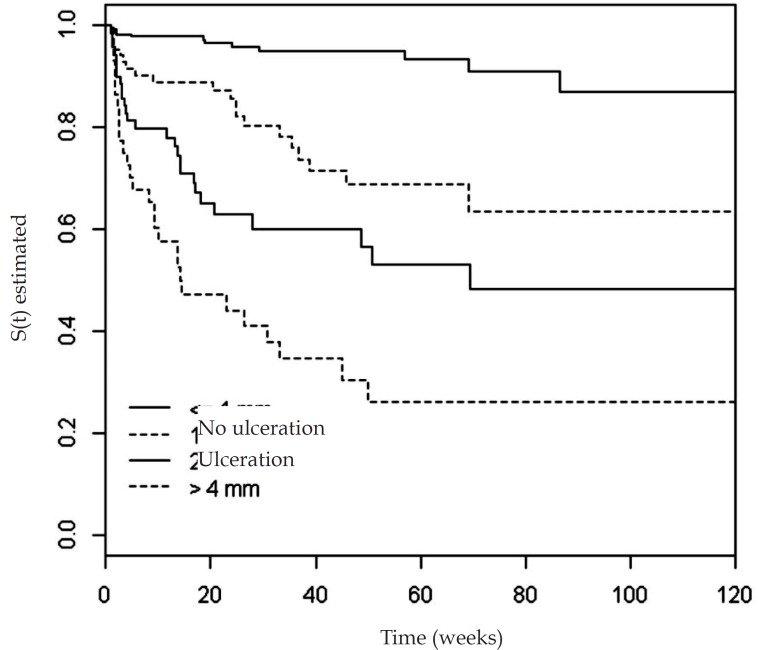
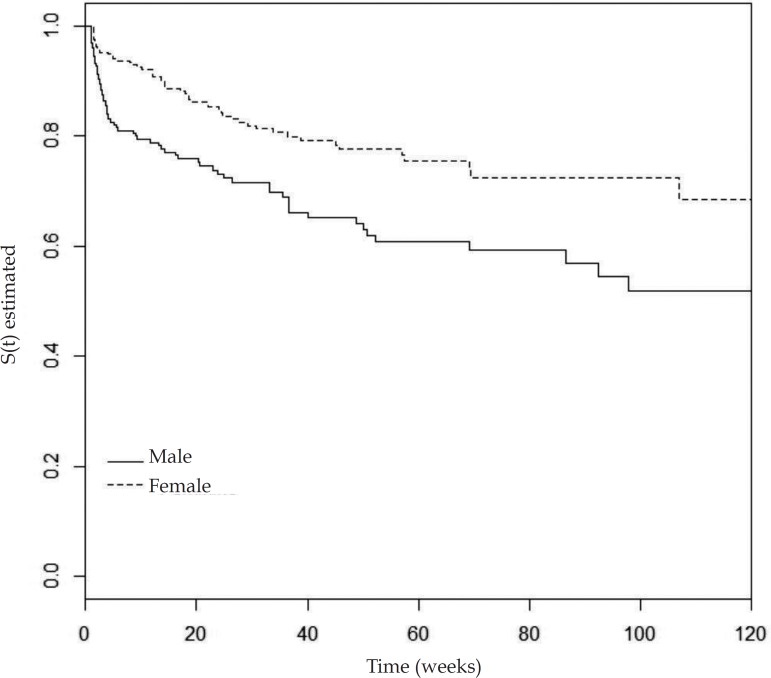
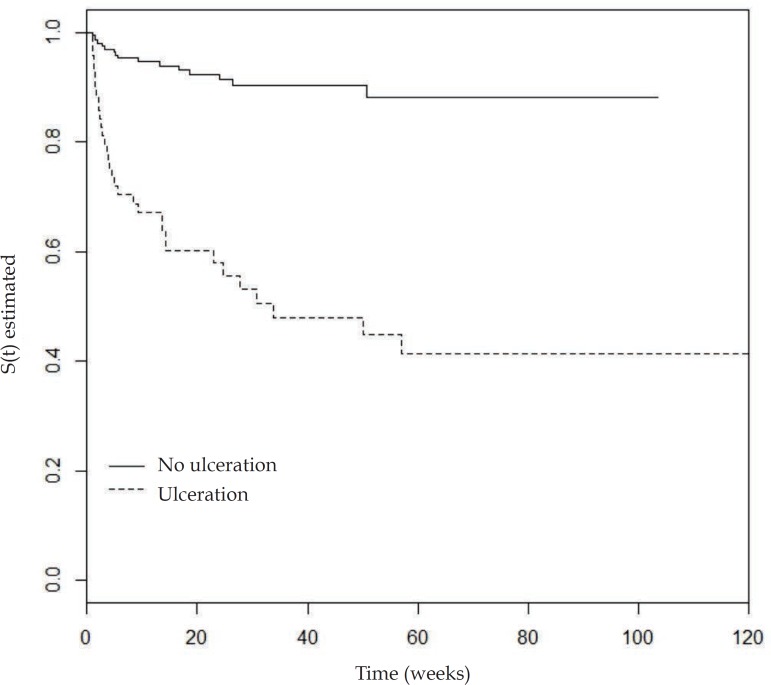
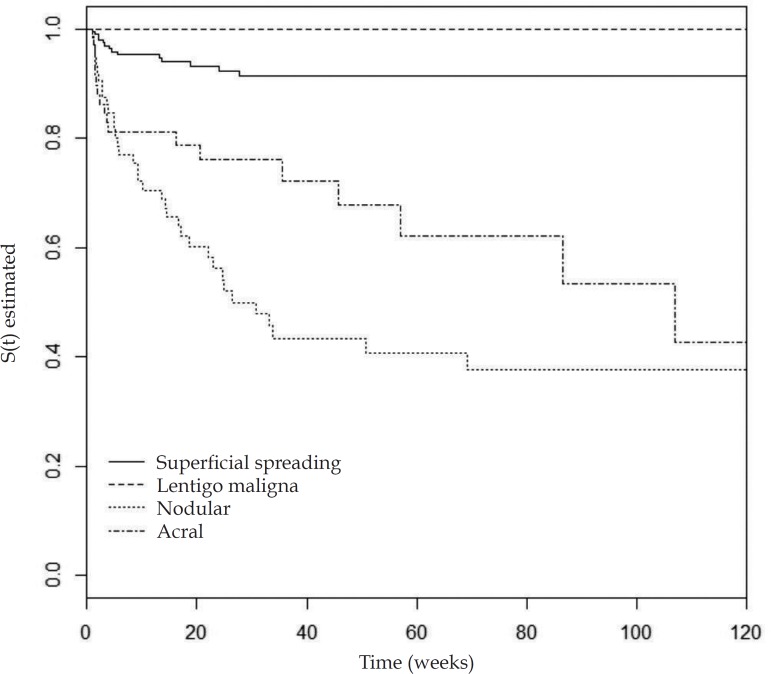
Five hundred and fourteen patients were enrolled. The univariate analysis identified the following significant risk factors: gender, age, site of the tumor, clinical and histologic subtype, Breslow thickness, histologic ulceration and mitotic index. Multivariate analysis included 244 patients and detected four significant prognostic factors: male gender, nodular clinical and histologic subtype, Breslow thickness > 4mm, and histologic ulceration. The mitotic index was not included in this analysis.
Small number of patients in multivariate analysis.
The following prognostic factors to the development of melanoma metastasis were identified in the study: male gender, nodular histologic subtype, Breslow thickness > 4mm and ulceration.
黑色素瘤是一种恶性肿瘤,在晚期诊断时死亡率很高。早期识别黑色素瘤转移的高危患者是降低死亡率的主要策略。
评估八种流行病学和组织病理学特征对原发性皮肤黑色素瘤患者转移发生的影响。
我们的历史队列包括1995年至2012年期间在巴西东南部的一家公立大学医院和一家私立肿瘤外科机构就诊的原发性皮肤浸润性黑色素瘤患者。分析了以下变量:性别、年龄、黑色素瘤家族史、原发性肿瘤部位、临床和组织学亚型、Breslow厚度、组织学溃疡和有丝分裂指数。采用Kaplan-Meier单因素检验和多因素Cox比例风险分析来评估与无病生存相关的因素。
共纳入514例患者。单因素分析确定了以下显著危险因素:性别、年龄、肿瘤部位、临床和组织学亚型、Breslow厚度、组织学溃疡和有丝分裂指数。多因素分析纳入244例患者,检测到四个显著的预后因素:男性、结节状临床和组织学亚型、Breslow厚度>4mm和组织学溃疡。有丝分裂指数未纳入该分析。
多因素分析中的患者数量较少。
本研究确定了以下黑色素瘤转移发生的预后因素:男性、结节状组织学亚型、Breslow厚度>4mm和溃疡。