Whitehead Institute for Biomedical Research, 455 Main Street, Cambridge, MA 02142, USA.
Whitehead Institute for Biomedical Research, 455 Main Street, Cambridge, MA 02142, USA; Department of Biology, Massachusetts Institute of Technology, Cambridge, MA, 02139, USA.
Cell Rep. 2018 Apr 10;23(2):349-360. doi: 10.1016/j.celrep.2018.03.056.
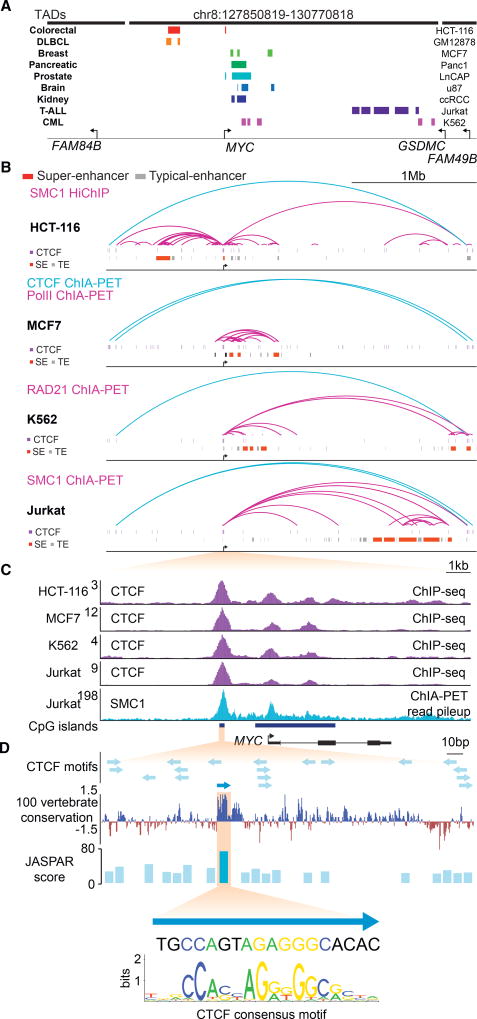
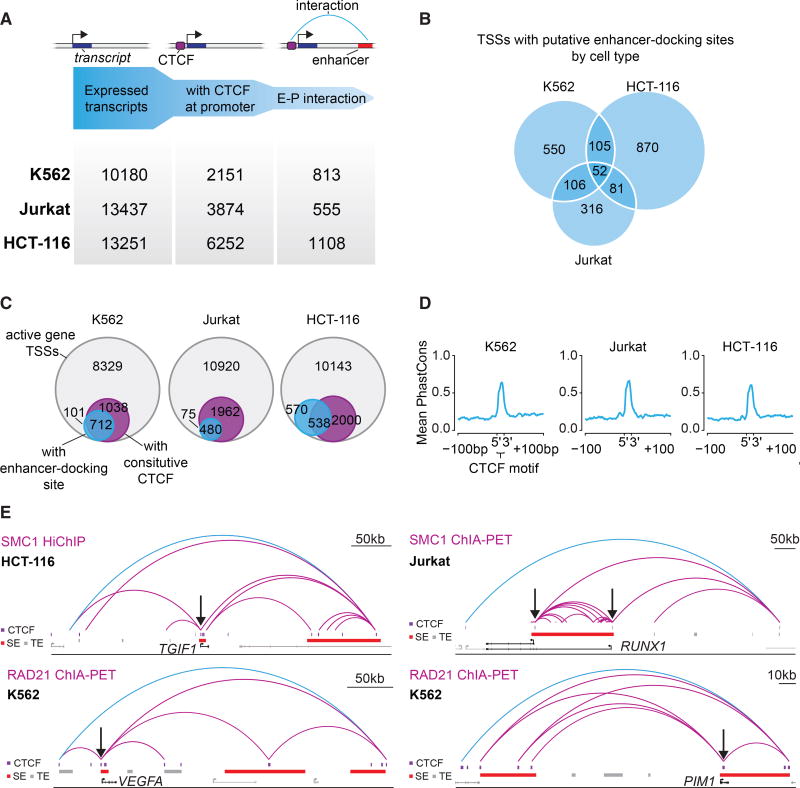
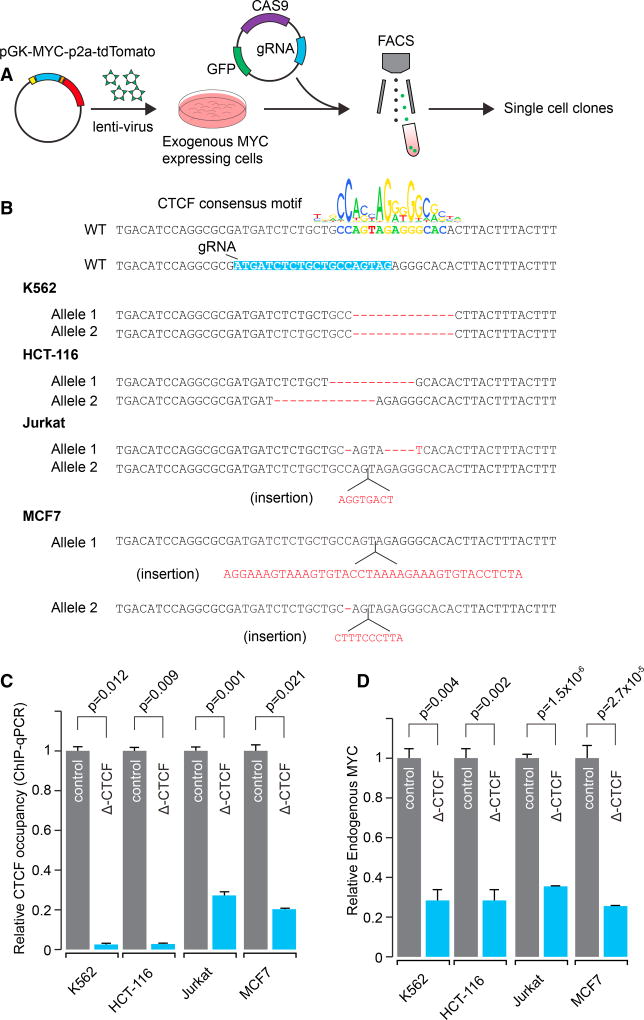
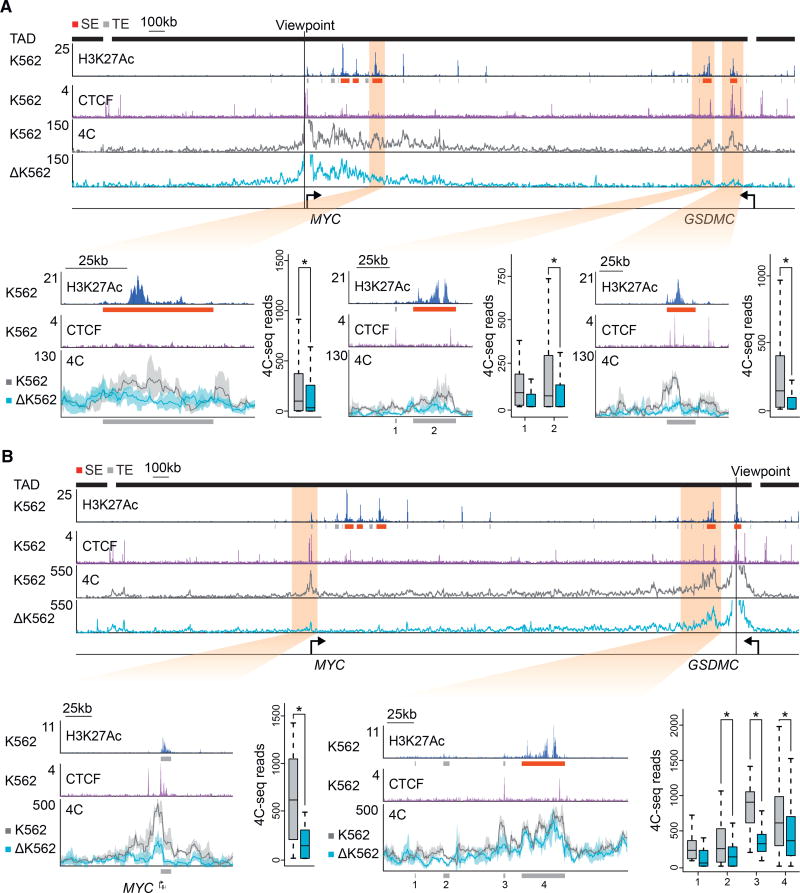
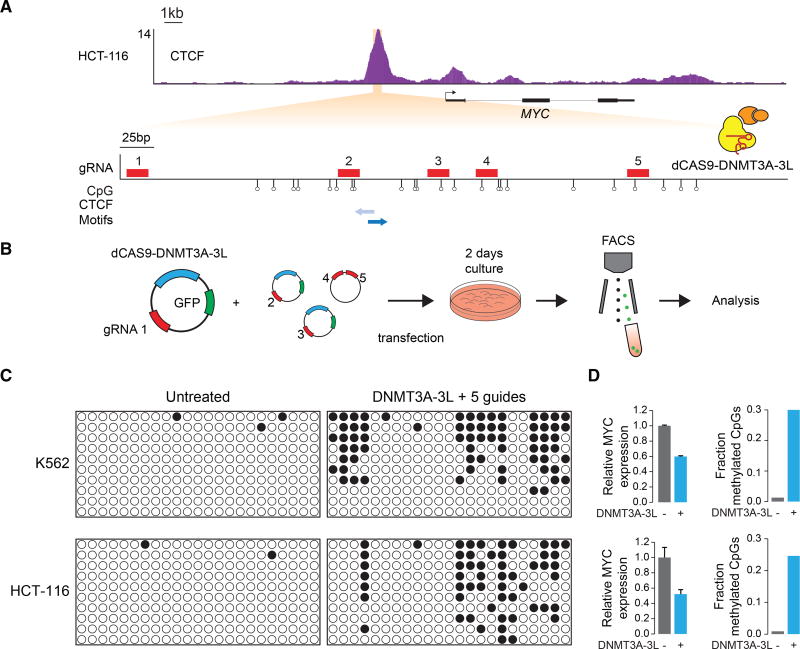
Transcriptional dysregulation of the MYC oncogene is among the most frequent events in aggressive tumor cells, and this is generally accomplished by acquisition of a super-enhancer somewhere within the 2.8 Mb TAD where MYC resides. We find that these diverse cancer-specific super-enhancers, differing in size and location, interact with the MYC gene through a common and conserved CTCF binding site located 2 kb upstream of the MYC promoter. Genetic perturbation of this enhancer-docking site in tumor cells reduces CTCF binding, super-enhancer interaction, MYC gene expression, and cell proliferation. CTCF binding is highly sensitive to DNA methylation, and this enhancer-docking site, which is hypomethylated in diverse cancers, can be inactivated through epigenetic editing with dCas9-DNMT. Similar enhancer-docking sites occur at other genes, including genes with prominent roles in multiple cancers, suggesting a mechanism by which tumor cell oncogenes can generally hijack enhancers. These results provide insights into mechanisms that allow a single target gene to be regulated by diverse enhancer elements in different cell types.
MYC 癌基因的转录失调是侵袭性肿瘤细胞中最常见的事件之一,通常是通过在 MYC 所在的 2.8Mb TAD 内的某个位置获得超级增强子来实现的。我们发现,这些不同的癌症特异性超级增强子,在大小和位置上有所不同,通过位于 MYC 启动子上游 2kb 处的一个共同且保守的 CTCF 结合位点与 MYC 基因相互作用。在肿瘤细胞中对这个增强子停泊位点进行遗传干扰会降低 CTCF 结合、超级增强子相互作用、MYC 基因表达和细胞增殖。CTCF 结合对 DNA 甲基化高度敏感,这个在多种癌症中低甲基化的增强子停泊位点可以通过 dCas9-DNMT 的表观遗传编辑来失活。其他基因也存在类似的增强子停泊位点,包括在多种癌症中具有重要作用的基因,这表明了肿瘤细胞癌基因通常可以劫持增强子的机制。这些结果为允许单个靶基因在不同细胞类型中被不同的增强子元件调节的机制提供了深入了解。