Tisch Cancer Institute, Departments of Medicine, Hematology and Medical Oncology, Icahn School of Medicine at Mount Sinai, New York, NY, USA; Department of Oncological Sciences and Department of Pathology, Icahn School of Medicine at Mount Sinai, New York, NY, USA.
Tisch Cancer Institute, Departments of Medicine, Hematology and Medical Oncology, Icahn School of Medicine at Mount Sinai, New York, NY, USA; Department of Oncological Sciences and Department of Pathology, Icahn School of Medicine at Mount Sinai, New York, NY, USA; Precision Immunology Institute at the Icahn School of Medicine, Icahn School of Medicine at Mount Sinai, New York, NY, USA.
Cell Rep. 2018 Apr 10;23(2):512-521. doi: 10.1016/j.celrep.2018.03.042.
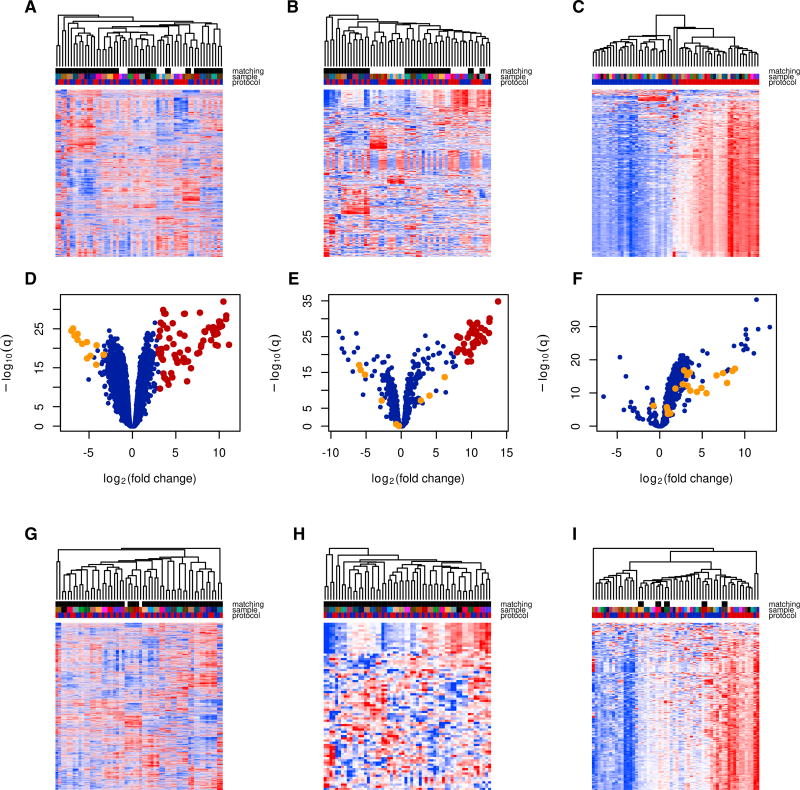
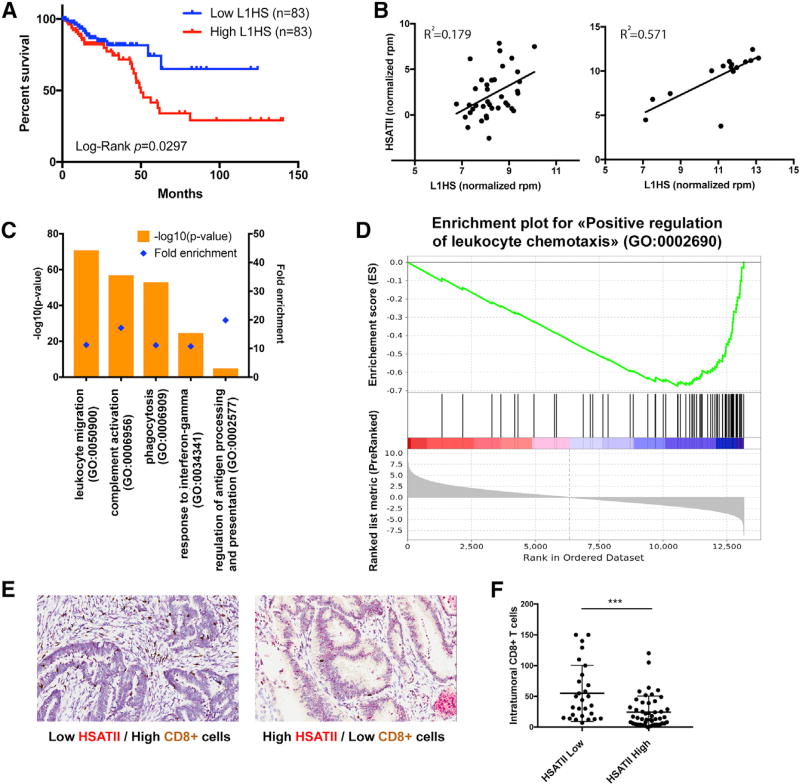
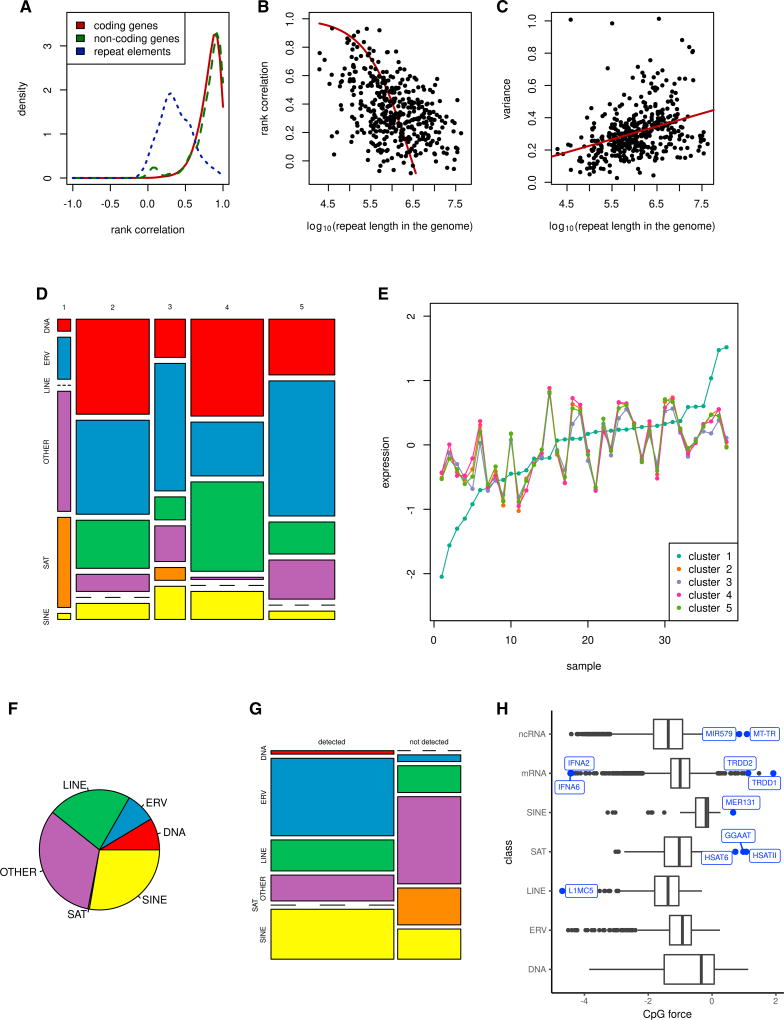
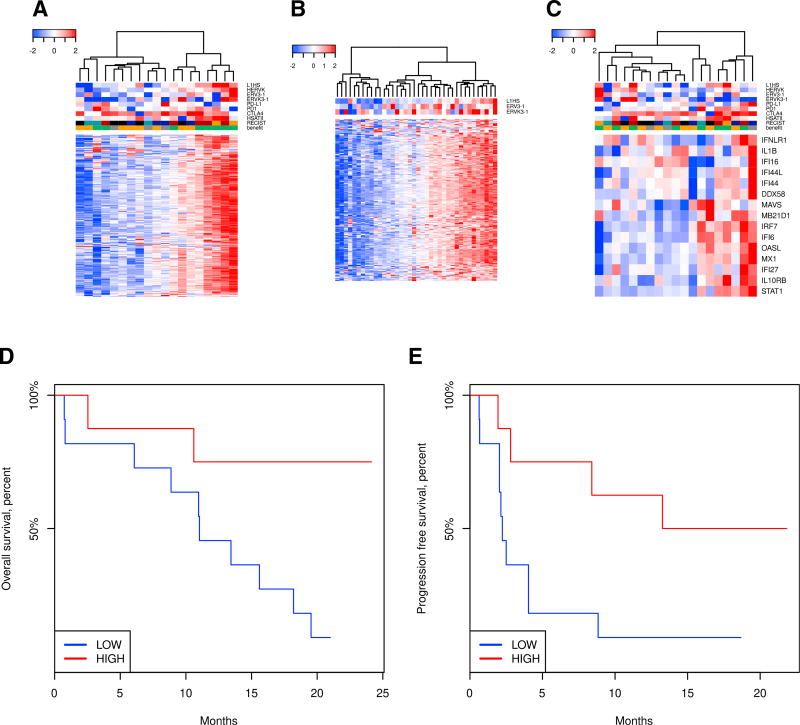
It has been posited that anti-tumoral innate activation is driven by derepression of endogenous repeats. We compared RNA sequencing protocols to assess repeat transcriptomes in The Cancer Genome Atlas (TCGA). Although poly(A) selection efficiently detects coding genes, most non-coding genes, and limited subsets of repeats, it fails to capture overall repeat expression and co-expression. Alternatively, total RNA expression reveals distinct repeat co-expression subgroups and delivers greater dynamic changes, implying they may serve as better biomarkers of clinical outcomes. We show that endogenous retrovirus expression predicts immunotherapy response better than conventional immune signatures in one cohort yet is not predictive in another. Moreover, we find that global repeat derepression, including the HSATII satellite repeat, correlates with an immunosuppressive phenotype in colorectal and pancreatic tumors and validate in situ. In conclusion, we stress the importance of analyzing the full spectrum of repeat transcription to decode their role in tumor immunity.
有人提出,抗肿瘤先天激活是由内源性重复序列去抑制驱动的。我们比较了 RNA 测序方案,以评估癌症基因组图谱(TCGA)中的重复转录组。虽然 poly(A) 选择有效地检测编码基因,但大多数非编码基因和有限的重复序列子集都无法捕获整体重复表达和共表达。相反,总 RNA 表达揭示了不同的重复共表达亚群,并提供了更大的动态变化,这意味着它们可能成为临床结果更好的生物标志物。我们表明,内源性逆转录病毒表达在一个队列中比传统免疫特征更能预测免疫治疗反应,但在另一个队列中则不具有预测性。此外,我们发现包括 HSATII 卫星重复在内的全局重复去抑制与结直肠和胰腺肿瘤的免疫抑制表型相关,并在原位得到验证。总之,我们强调分析重复转录的全谱以解码它们在肿瘤免疫中的作用的重要性。