Hu Hai-Qing, Li Hui-Kai, Xiong Ying, Zhang Xiao-Bin, Zhi Jun-Li, Wang Xiao-Xiao, Ling-Hu En-Qiang
Department of Gastroenterology and Hepatology, Chinese PLA General Hospital, Beijing Department of Gastroenterology and Hepatology, Affiliated Hospital of Inner Mongolia Medical University, Hohhot, Inner Mongolia, China.
Medicine (Baltimore). 2018 Apr;97(15):e0169. doi: 10.1097/MD.0000000000010169.
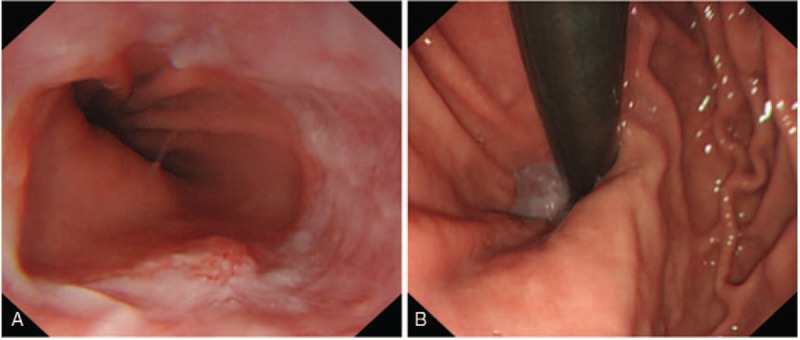
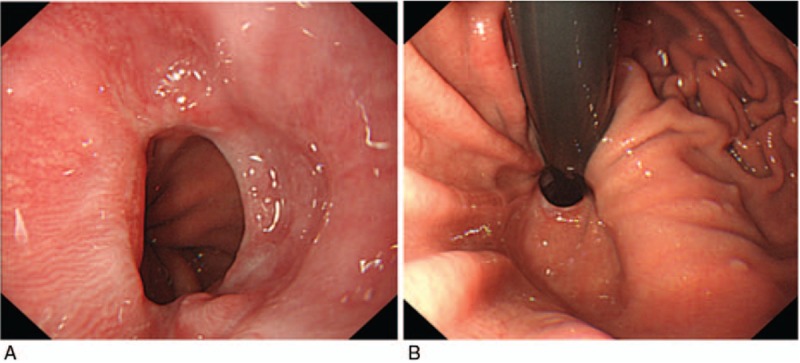
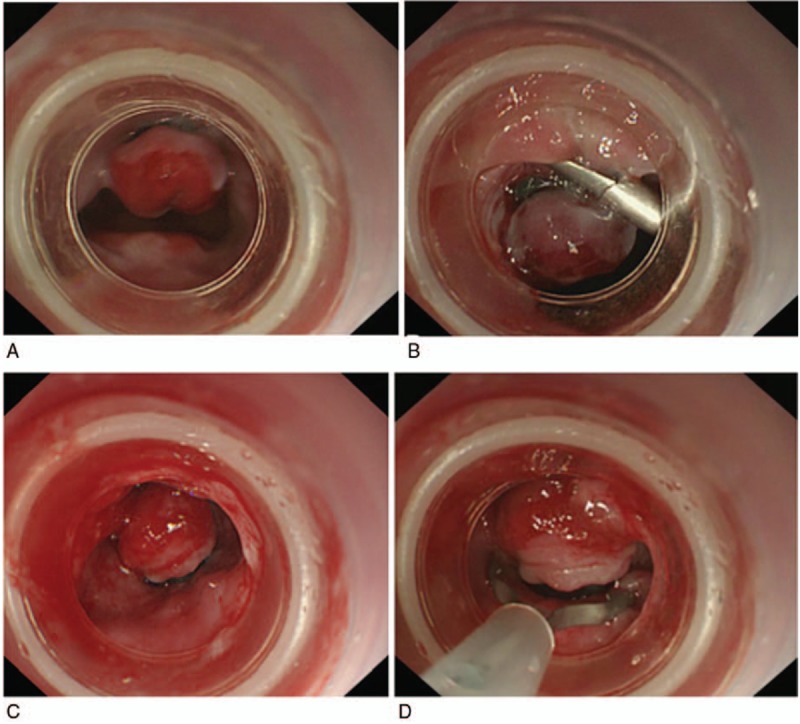
Gastroesophageal reflux disease (GERD) is a major digestive health problem with a high and increasing incidence worldwide. Peroral endoscopic cardial constriction (PECC) was developed by our group to provide a less invasive treatment for GERD.In this preliminary follow-up study, 16 patients were enrolled and 13 patients with GERD were targeted for analysis according to the Los Angeles classification of reflux esophagitis. The GERD health-related quality of life (GERD-HRQL) scale and esophageal pH monitoring were applied to assess clinical efficiency at 3 and 6 months after PECC treatment, respectively.All GERD patients successively received PECC, and no severe treatment-related complication was reported. Before PECC treatment, the GERD-HRQL scale was 19.92 ± 7.89. At 3 and 6 months after treatment, the GERD-HRQL scale was 4.46 ± 4.31 and 5.69 ± 5.07, respectively. DeMeester score was 125.50 ± 89.64 before PECC treatment, and 16.97 ± 12.76 and 20.32 ± 15.22 at 3 and 6 months after PECC treatment. Furthermore, the fraction time of a pH below 4 significantly decreased at 3 and 6 months after PECC treatment. Fraction time at pH <4 was 35.55 ± 26.20 before PECC treatment and 7.96 ± 13.03 and 4.72 ± 3.78 at 3 and 6 months after PECC treatment, respectively. These results suggest that PECC treatment could significantly reduce the GERD-HRQL scale and DeMeester score (P < .01).PECC is a feasible, safe, and effective method to treatment GERD through narrowing the diameter of the cardia and preventing the reflux of stomach contents.
胃食管反流病(GERD)是一个主要的消化健康问题,在全球范围内发病率高且呈上升趋势。我们团队研发了经口内镜贲门缩窄术(PECC),为GERD提供一种侵入性较小的治疗方法。在这项初步随访研究中,纳入了16例患者,并根据反流性食管炎的洛杉矶分类法,将13例GERD患者作为分析对象。分别应用GERD健康相关生活质量(GERD-HRQL)量表和食管pH监测来评估PECC治疗后3个月和6个月的临床疗效。所有GERD患者均依次接受了PECC治疗,未报告严重的治疗相关并发症。在PECC治疗前,GERD-HRQL量表评分为19.92±7.89。治疗后3个月和6个月,GERD-HRQL量表评分分别为4.46±4.31和5.69±5.07。在PECC治疗前,DeMeester评分为125.50±89.64,在PECC治疗后3个月和6个月分别为16.97±12.76和20.32±15.22。此外,在PECC治疗后3个月和6个月,pH值低于4的时间分数显著降低。pH<4的时间分数在PECC治疗前为35.55±26.20,在PECC治疗后3个月和6个月分别为7.96±13.03和4.72±3.78。这些结果表明,PECC治疗可显著降低GERD-HRQL量表评分和DeMeester评分(P<0.01)。PECC是一种通过缩小贲门直径和防止胃内容物反流来治疗GERD的可行、安全且有效的方法。