Program of Physiology and Neuroscience, Department of Biology, Miami University, Oxford, OH 45056, USA.
Program of Bioinformatics, Department of Biology, Miami University, Oxford, OH 45056, USA.
Int J Mol Sci. 2018 Apr 6;19(4):1095. doi: 10.3390/ijms19041095.
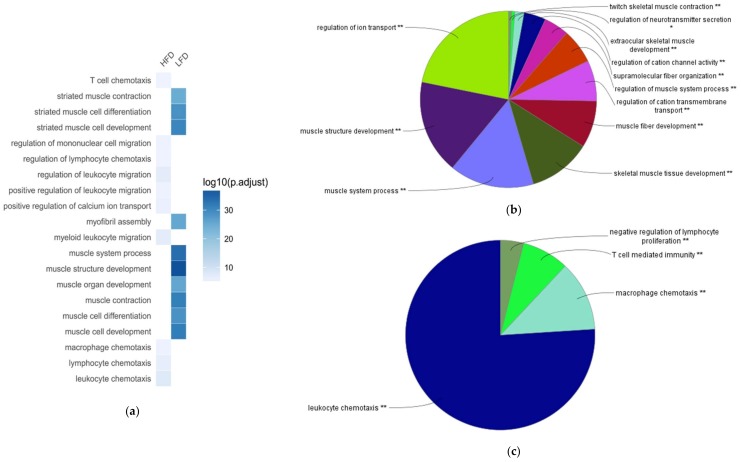
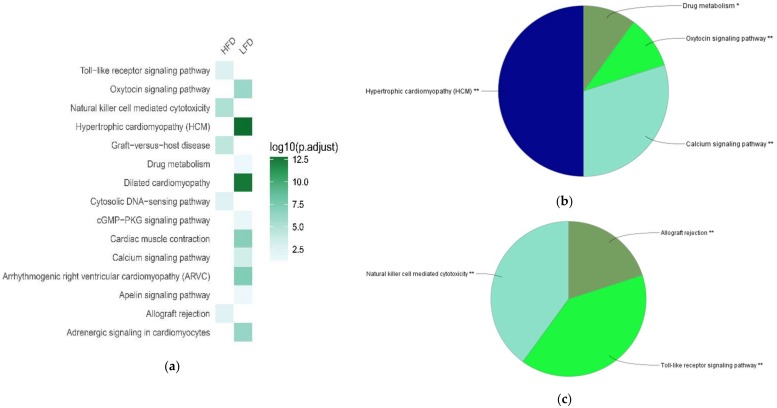
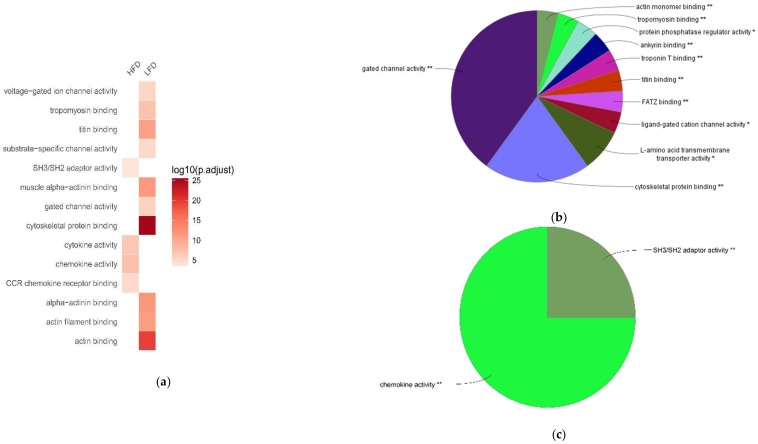
Consumption of a high-fat diet (HFD) promotes the development of obesity, a disease resulting from an imbalance between energy intake and energy expenditure. Brown adipose tissue (BAT) has thermogenic capacity that burns calories to produce heat, and it is a potential target for the treatment and prevention of obesity. There is limited information regarding the impact of HFD on the BAT transcriptome. We hypothesized that HFD-induced obesity would lead to transcriptional regulation of BAT genes. RNA sequencing was used to generate global transcriptome profiles from BAT of lean mice fed with a low-fat diet (LFD) and obese mice fed with a HFD. Gene Ontology (GO) analysis identified increased expression of genes involved in biological processes (BP) related to immune responses, which enhanced molecular function (MF) in chemokine activity; decreased expression of genes involved in BP related to ion transport and muscle structure development, which reduced MF in channel and transporter activity and structural binding. Kyoto Encyclopedia of Genes and Genomes (KEGG) functional pathway analysis indicated that pathways associated with innate immunity were enhanced by HFD, while pathways associated with muscle contraction and calcium signaling were suppressed by HFD. Collectively, these results suggest that diet-induced obesity changes transcriptomic signatures of BAT, leading to dysfunction involving inflammation, calcium signaling, ion transport, and cell structural development.
高脂肪饮食(HFD)的摄入会促进肥胖的发展,这种疾病是由于能量摄入和能量消耗之间的失衡引起的。棕色脂肪组织(BAT)具有产热能力,可以燃烧卡路里产生热量,是治疗和预防肥胖的潜在目标。关于 HFD 对 BAT 转录组的影响的信息有限。我们假设 HFD 诱导的肥胖会导致 BAT 基因的转录调节。我们使用 RNA 测序从低脂饮食(LFD)喂养的瘦鼠和高脂肪饮食(HFD)喂养的肥胖鼠的 BAT 中生成了全局转录组图谱。基因本体论(GO)分析确定了与免疫反应相关的生物学过程(BP)中参与基因的表达增加,增强了趋化因子活性的分子功能(MF);与离子转运和肌肉结构发育相关的 BP 中参与基因的表达减少,降低了通道和转运体活性以及结构结合的 MF。京都基因与基因组百科全书(KEGG)功能途径分析表明,HFD 增强了与先天免疫相关的途径,而 HFD 抑制了与肌肉收缩和钙信号转导相关的途径。总的来说,这些结果表明,饮食诱导的肥胖改变了 BAT 的转录组特征,导致炎症、钙信号转导、离子转运和细胞结构发育等功能障碍。