Department of Dermatology, China Medical University Hospital, Taichung 40402, Taiwan.
School of Medicine, China Medical University, Taichung 404, Taiwan.
Int J Mol Sci. 2018 Apr 7;19(4):1108. doi: 10.3390/ijms19041108.
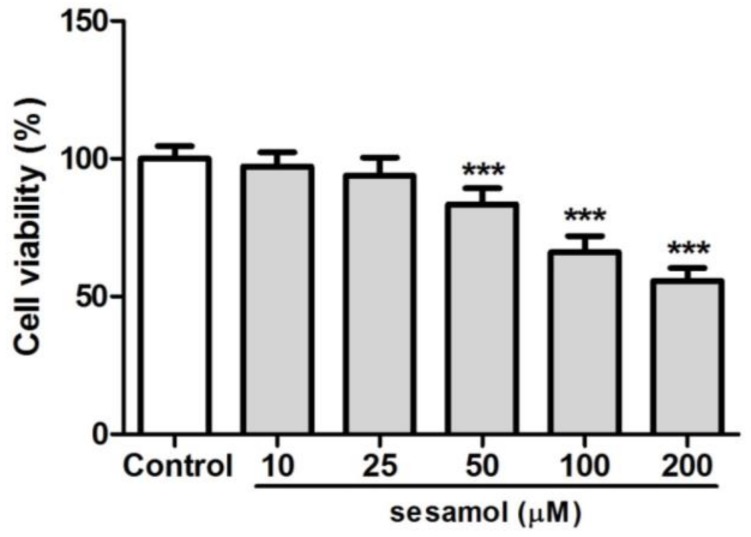
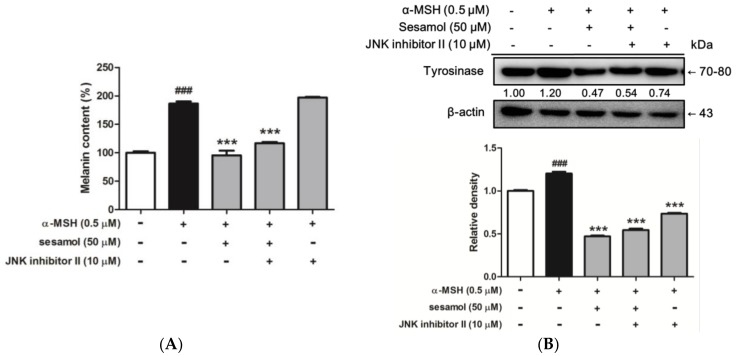
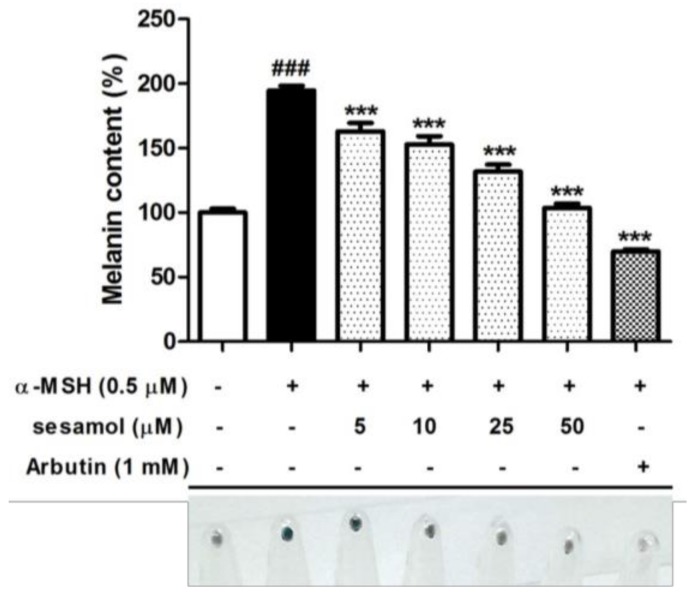
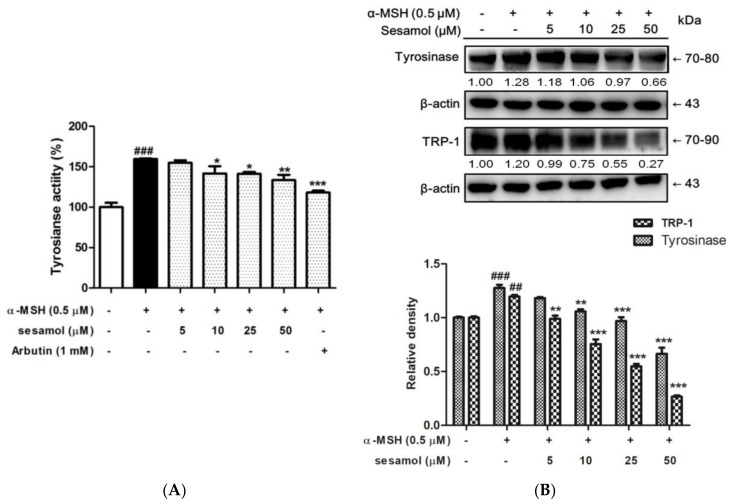
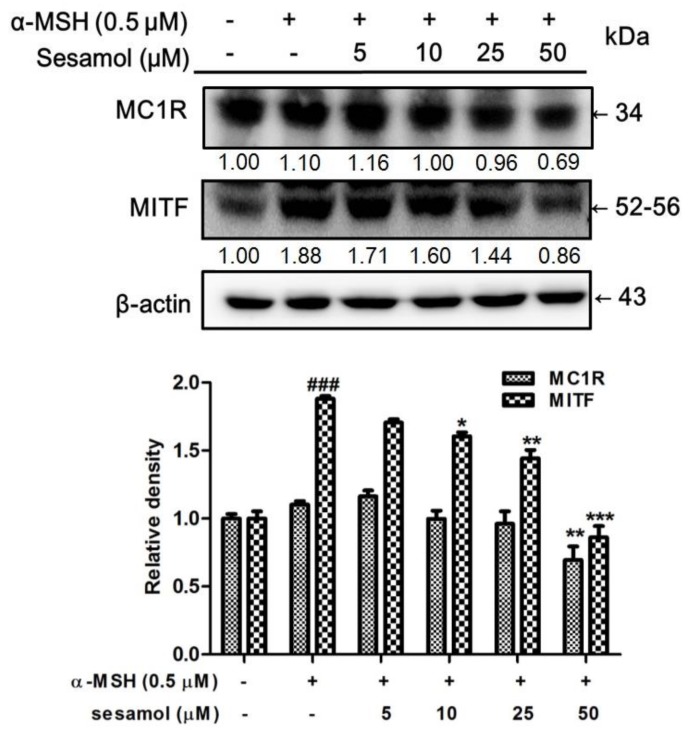
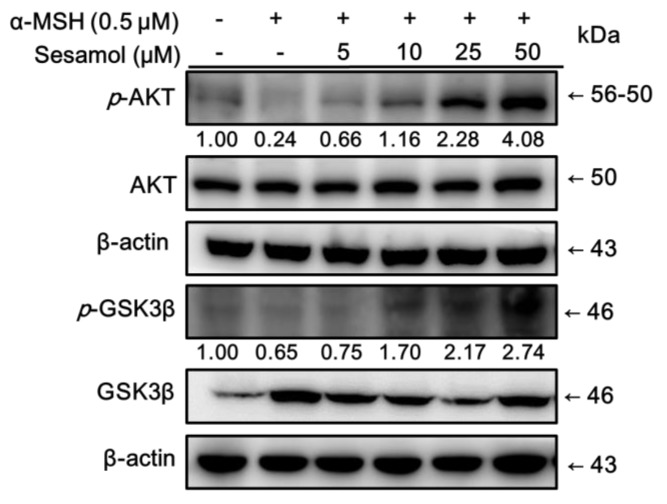
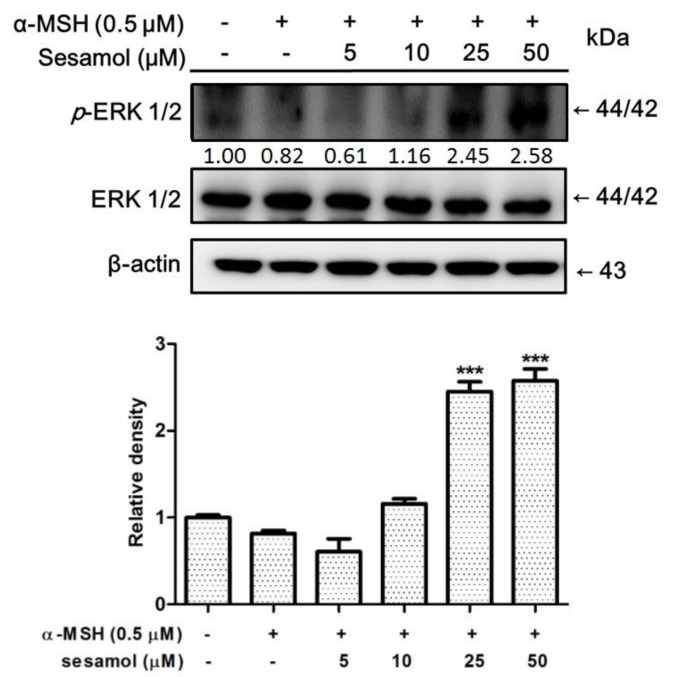
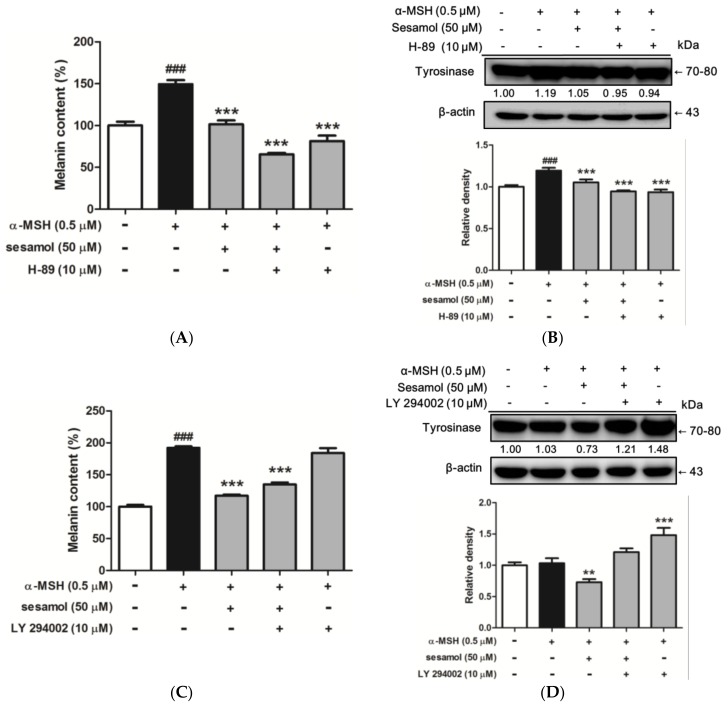
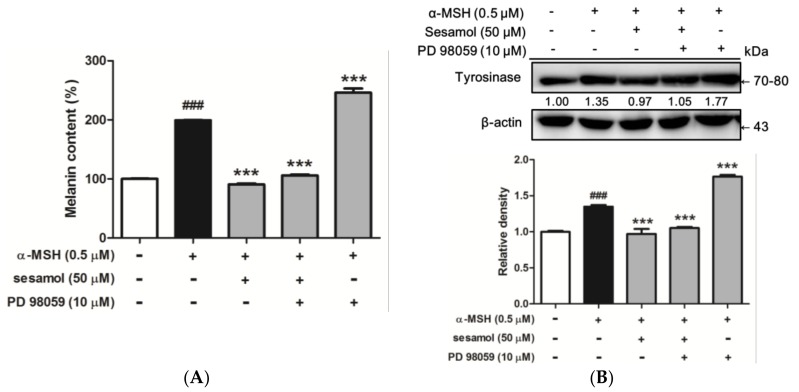
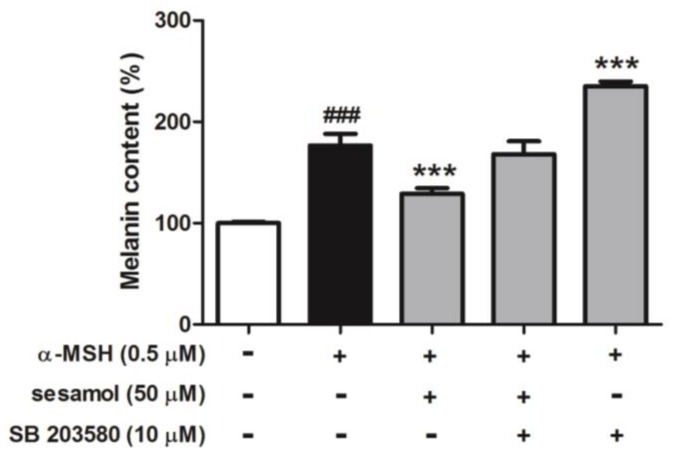
Melanin is synthesized through a series of interactions catalyzed by melanogenic enzymes such as tyrosinase, dopachrome tautomerase (tyrosinase-related protein-2; TRP-2), and tyrosinase-related protein-1 (TRP-1). Tyrosinase plays a key role in catalysing the initial and limiting steps of melanogenesis. The melanin that results from melanogenesis has the protective effect of absorbing ultraviolet radiation. However, overproduction of melanin, in addition to altering the appearance of skin, may lead to skin disorders such as melasma, solar lentigo, and postinflammatory hyperpigmentation. Previous studies have revealed that sesamol is a strong antioxidant and a free radical scavenger. In this study, we investigated the effects of sesamol on the regulation of melanogenesis and related mechanisms in B16F10 cells. The results indicated that sesamol inhibited tyrosinase activity and melanogenesis induced by α-melanocyte-stimulating hormone (α-MSH) in B16F10 melanoma cells. Sesamol decreased the protein level of melanocortin 1 receptor (MC1R), microphthalmia-associated transcription factor (MITF), tyrosinase, and TRP-1 by downregulating cyclic adenosine monophosphate (cAMP)/protein kinase A (PKA) pathways that had been activated by α-MSH. Sesamol increased glycogen synthase kinase 3 beta (GSK3β), protein kinase B (AKT), and extracellular signal-related kinase (ERK) phosphorylation, thus inhibiting the transcription of MITF. Sesamol also inhibited melanin synthesis and tyrosinase expression by modulating ERK, phosphoinositide 3-kinase (PI3K)/AKT, p38, and c-Jun amino-terminal kinase (JNK) signalling pathways. These results indicate that sesamol acted as a potent depigmenting agent.
黑色素是通过一系列由黑素生成酶如酪氨酸酶、多巴色素互变异构酶(酪氨酸酶相关蛋白-2;TRP-2)和酪氨酸酶相关蛋白-1(TRP-1)催化的相互作用合成的。酪氨酸酶在催化黑素生成的初始和限速步骤中起着关键作用。黑素生成产生的黑色素具有吸收紫外线辐射的保护作用。然而,黑色素的过度产生,除了改变皮肤的外观外,还可能导致皮肤疾病,如黄褐斑、太阳黑子和炎症后色素沉着过度。先前的研究表明芝麻酚是一种强抗氧化剂和自由基清除剂。在这项研究中,我们研究了芝麻酚对 B16F10 细胞中黑素生成的调节作用及其相关机制。结果表明,芝麻酚抑制了 B16F10 黑色素瘤细胞中 α-促黑素细胞激素(α-MSH)诱导的酪氨酸酶活性和黑色素生成。芝麻酚通过下调 α-MSH 激活的环腺苷酸(cAMP)/蛋白激酶 A(PKA)途径,降低黑素皮质素 1 受体(MC1R)、小眼畸形相关转录因子(MITF)、酪氨酸酶和 TRP-1 的蛋白水平。芝麻酚增加糖原合酶激酶 3β(GSK3β)、蛋白激酶 B(AKT)和细胞外信号相关激酶(ERK)磷酸化,从而抑制 MITF 的转录。芝麻酚还通过调节 ERK、磷酸肌醇 3-激酶(PI3K)/AKT、p38 和 c-Jun 氨基末端激酶(JNK)信号通路抑制黑色素合成和酪氨酸酶表达。这些结果表明芝麻酚是一种有效的美白剂。