Courtois Gilles, Fauvarque Marie-Odile
INSERM U1038/BGE/BIG, CEA Grenoble, 38054 Grenoble, France.
Biomedicines. 2018 Apr 10;6(2):43. doi: 10.3390/biomedicines6020043.
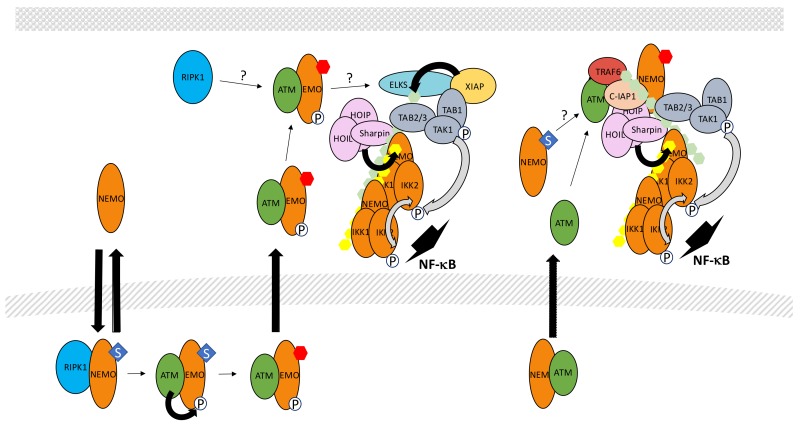
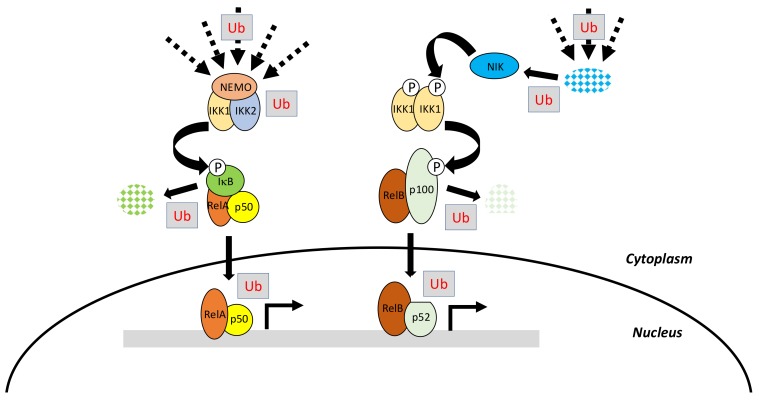
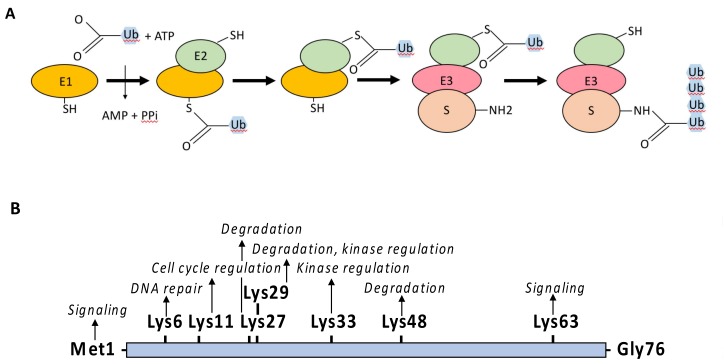
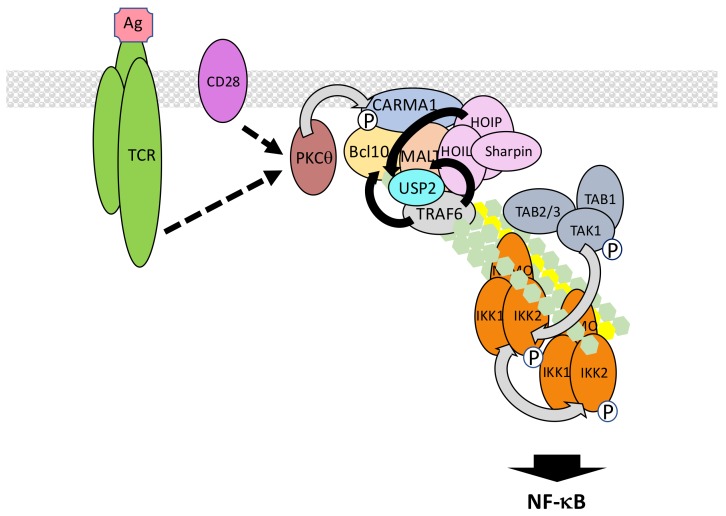
The nuclear factor κB (NF-κB) signaling pathway ubiquitously controls cell growth and survival in basic conditions as well as rapid resetting of cellular functions following environment changes or pathogenic insults. Moreover, its deregulation is frequently observed during cell transformation, chronic inflammation or autoimmunity. Understanding how it is properly regulated therefore is a prerequisite to managing these adverse situations. Over the last years evidence has accumulated showing that ubiquitination is a key process in NF-κB activation and its resolution. Here, we examine the various functions of ubiquitin in NF-κB signaling and more specifically, how it controls signal transduction at the molecular level and impacts in vivo on NF-κB regulated cellular processes.
核因子κB(NF-κB)信号通路在基础条件下普遍控制细胞生长和存活,以及在环境变化或病原体侵袭后细胞功能的快速重置。此外,在细胞转化、慢性炎症或自身免疫过程中经常观察到其失调。因此,了解其如何被正确调节是应对这些不利情况的先决条件。在过去几年中,越来越多的证据表明泛素化是NF-κB激活及其消退的关键过程。在这里,我们研究泛素在NF-κB信号传导中的各种功能,更具体地说,它如何在分子水平上控制信号转导以及在体内对NF-κB调节的细胞过程产生影响。