University of Groningen, University Medical Center Groningen, The department of Cardiology, Groningen, The Netherlands.
University of Groningen, University Medical Center Groningen, The department of Epidemiology, Groningen, The Netherlands.
Sci Rep. 2018 Apr 11;8(1):5817. doi: 10.1038/s41598-018-24002-0.
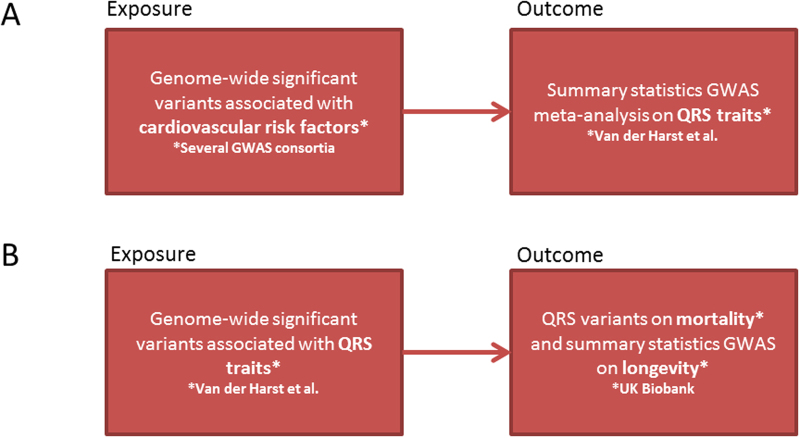
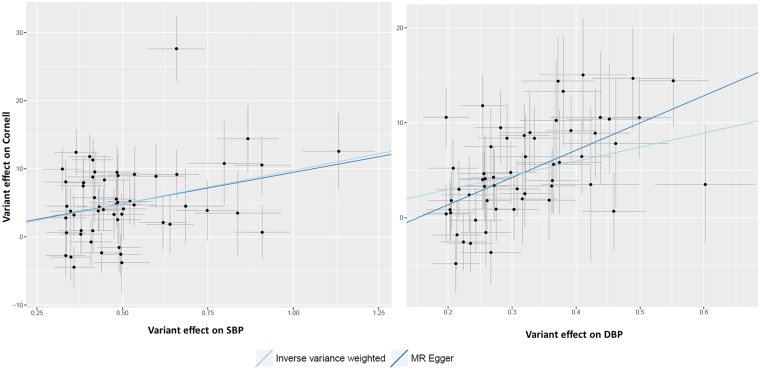
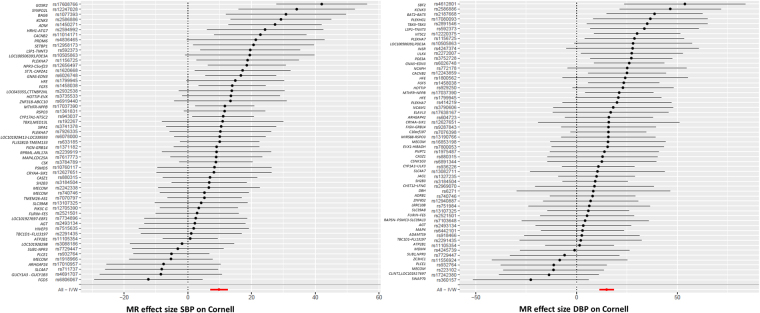
Abnormal QRS duration and amplitudes on the electrocardiogram are indicative of cardiac pathology and are associated with adverse outcomes. The causal nature of these associations remains uncertain and could be due to QRS abnormalities being a symptom of cardiac damage rather than a factor on the causal pathway. By performing Mendelian randomization (MR) analyses using summary statistics of genome wide association study consortia with sample sizes between 20,687 and 339,224 individuals, we aimed to determine which cardiovascular risk factors causally lead to changes in QRS duration and amplitude (Sokolow-Lyon, Cornell and 12-leadsum products). Additionally, we aimed to determine whether QRS traits have a causal relationship with mortality and longevity. We performed inverse-variance weighted MR as main analyses and MR-Egger regression and weighted median estimation as sensitivity analyses. We found evidence for a causal relationship between higher blood pressure and larger QRS amplitudes (systolic blood pressure on Cornell: 55SNPs, causal effect estimate per 1 mmHg = 9.77 millimeters·milliseconds (SE = 1.38,P = 1.20 × 10) and diastolic blood pressure on Cornell: 57SNPs, causal effect estimate per 1 mmHg = 14.89 millimeters·milliseconds (SE = 1.82,P = 3.08 × 10), but not QRS duration. Genetically predicted QRS traits were not associated with longevity, suggesting a more prominent role of acquired factors in explaining the well-known link between QRS abnormalities and outcome.
心电图上异常的 QRS 持续时间和幅度表明存在心脏病理学,并与不良结局相关。这些关联的因果性质尚不确定,可能是因为 QRS 异常是心脏损伤的症状,而不是因果途径上的一个因素。通过使用基因组范围关联研究联盟的汇总统计数据进行孟德尔随机化(MR)分析,样本量在 20687 到 339224 之间,我们旨在确定哪些心血管风险因素会导致 QRS 持续时间和幅度的变化(Sokolow-Lyon、Cornell 和 12 导联总和产品)。此外,我们旨在确定 QRS 特征是否与死亡率和长寿有因果关系。我们进行了逆方差加权 MR 作为主要分析,以及 MR-Egger 回归和加权中位数估计作为敏感性分析。我们发现较高的血压与较大的 QRS 幅度之间存在因果关系(Cornell 上的收缩压:55 个 SNP,每 1mmHg 增加 9.77 毫米·毫秒(SE=1.38,P=1.20×10),Cornell 上的舒张压:57 个 SNP,每 1mmHg 增加 14.89 毫米·毫秒(SE=1.82,P=3.08×10),但 QRS 持续时间没有。遗传预测的 QRS 特征与长寿无关,这表明获得性因素在解释众所周知的 QRS 异常与结局之间的联系方面具有更突出的作用。