Sun Jia-Cen, Liu Bing, Zhang Ru-Wen, Jiao Pei-Lei, Tan Xing, Wang Yang-Kai, Wang Wei-Zhong
Department of Physiology and Center of Polar Medical Research, Second Military Medical University, Shanghai, China.
Front Physiol. 2018 Mar 28;9:297. doi: 10.3389/fphys.2018.00297. eCollection 2018.
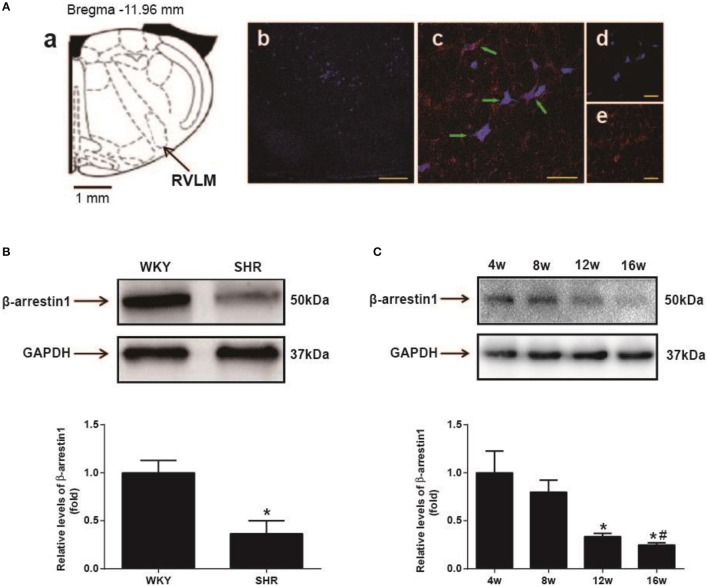
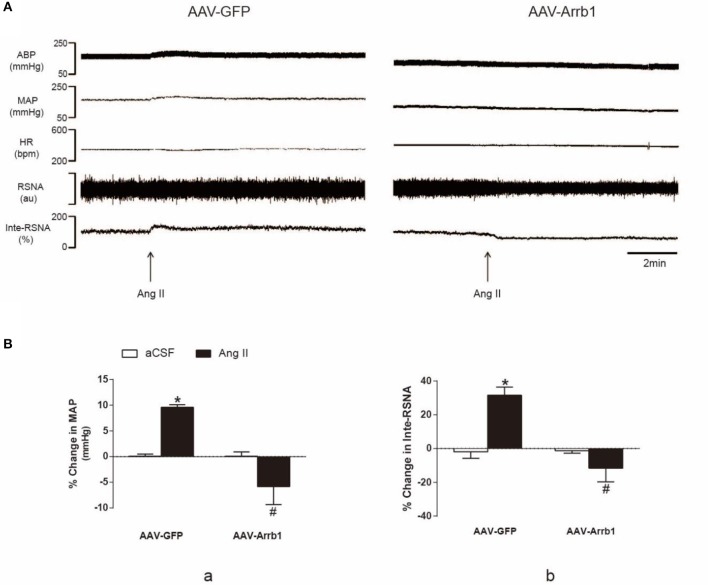
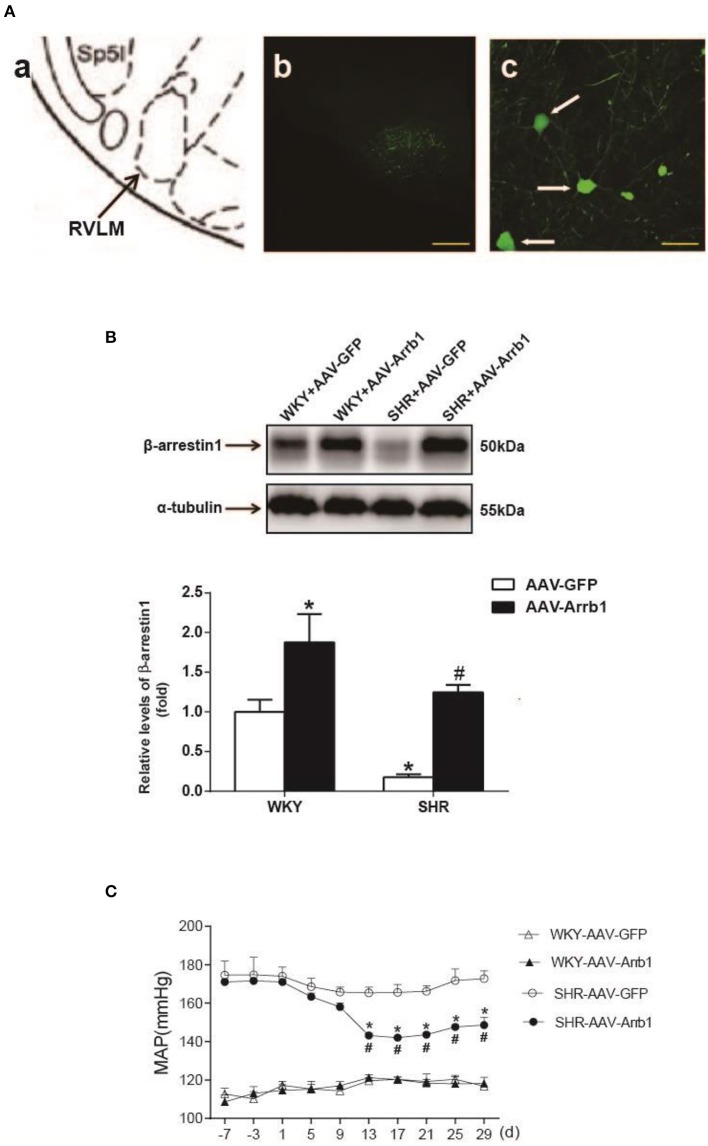
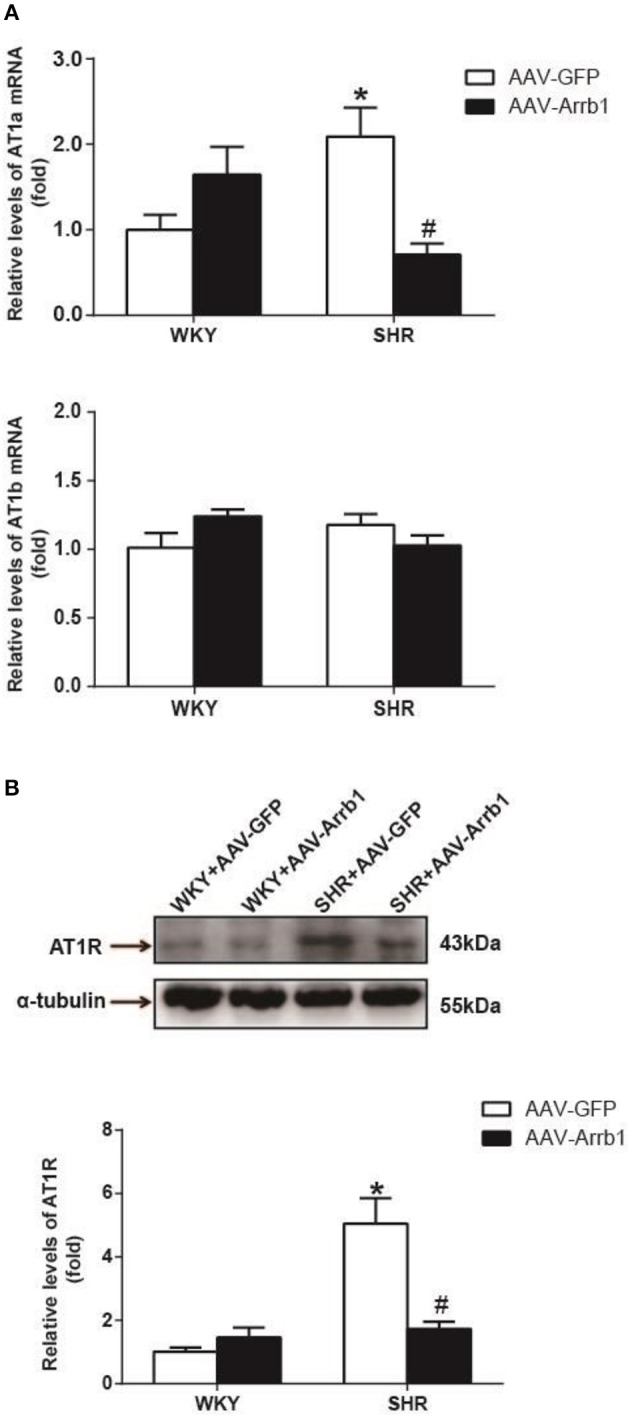
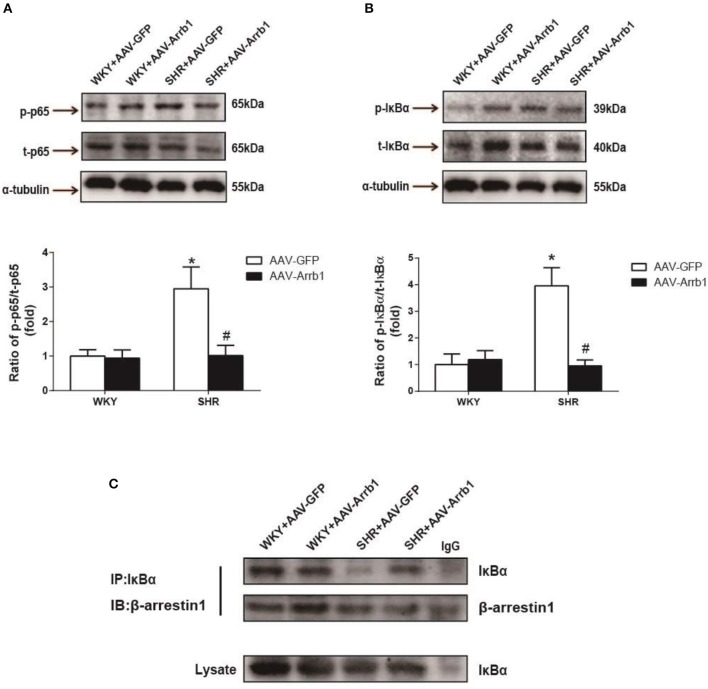
Hypertension is characterized by sympathetic overactivity, which is associated with an enhancement in angiotensin receptor type I (AT1R) in the rostral ventrolateral medulla (RVLM). β-arrestin1, a canonical scaffold protein, has been suggested to show a negative effect on G protein-coupled receptors via its internalization and desensitization and/or the biased signaling pathway. The major objectives of the present study were to observe the effect of β-arrestin1 overexpression in the RVLM on cardiovascular regulation in spontaneously hypertensive rats (SHR), and further determine the effect of β-arrestin1 on AT1R expression in the RVLM. The animal model of β-arrestin1 overexpression was induced by bilateral injection of adeno-associated virus containing Arrb1 gene (AAV-Arrb1) into the RVLM of WKY and SHR. β-arrestin1 was expressed on the pre-sympathetic neurons in the RVLM, and its expression in the RVLM was significantly ( < 0.05) downregulated by an average of 64% in SHR than WKY. Overexpression of β-arrestin1 in SHR significantly decreased baseline levels of blood pressure and renal sympathetic nerve activity, and attenuated cardiovascular effects induced by RVLM injection of angiotensin II (100 pmol). Furthermore, β-arrestin1 overexpression in the RVLM significantly reduced the expression of AT1R by 65% and NF-κB p65 phosphorylation by 66% in SHR. It was confirmed that β-arrestin1 overexpression in the RVLM led to an enhancement of interaction between β-arrestin1 and IκB-α. Overexpression of β-arrestin1 in the RVLM reduces BP and sympathetic outflow in hypertension, which may be associated with NFκB-mediated AT1R downregulation.
高血压的特征是交感神经过度活跃,这与延髓头端腹外侧区(RVLM)中血管紧张素I型受体(AT1R)的增强有关。β-抑制蛋白1是一种典型的支架蛋白,已被证明可通过其内化和脱敏和/或偏向信号通路对G蛋白偶联受体产生负面影响。本研究的主要目的是观察RVLM中β-抑制蛋白1过表达对自发性高血压大鼠(SHR)心血管调节的影响,并进一步确定β-抑制蛋白1对RVLM中AT1R表达的影响。通过向WKY和SHR的RVLM双侧注射含Arrb1基因的腺相关病毒(AAV-Arrb1)诱导β-抑制蛋白1过表达的动物模型。β-抑制蛋白1在RVLM的交感节前神经元上表达,与WKY相比,SHR中其在RVLM的表达显著下调(<0.05),平均下调64%。SHR中β-抑制蛋白1的过表达显著降低了血压和肾交感神经活动的基线水平,并减弱了RVLM注射血管紧张素II(100 pmol)所诱导的心血管效应。此外,RVLM中β-抑制蛋白1的过表达使SHR中AT1R的表达显著降低65%,NF-κB p65磷酸化降低66%。证实RVLM中β-抑制蛋白1的过表达导致β-抑制蛋白1与IκB-α之间的相互作用增强。RVLM中β-抑制蛋白1的过表达降低了高血压中的血压和交感神经输出,这可能与NFκB介导的ATlR下调有关。