Department of Biology, Pittsburg State University, Pittsburg, KS, United States.
Center for Rheumatic Diseases, St. Luke's Hospital, Kansas City, MO, United States.
Front Immunol. 2018 Mar 28;9:611. doi: 10.3389/fimmu.2018.00611. eCollection 2018.
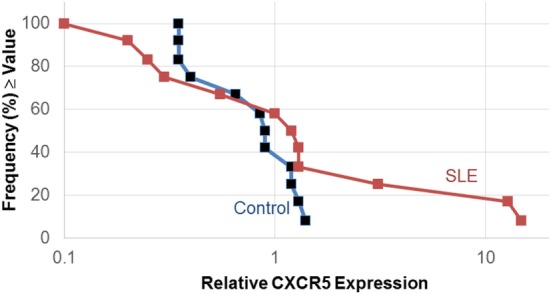
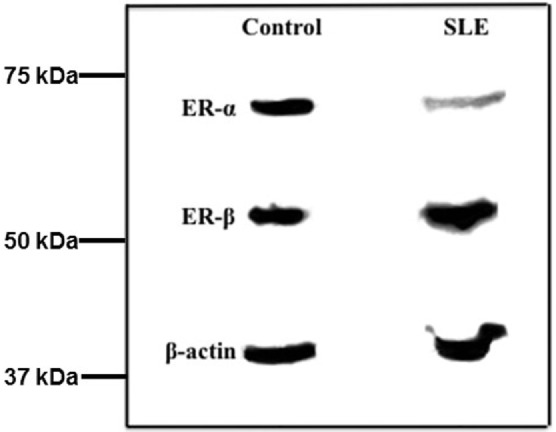
Systemic lupus erythematosus (SLE) is a chronic systemic autoimmune disease resulting from abnormal interactions between T and B cells. The acquisition of SLE is linked to genetic susceptibility, and diverse environmental agents can trigger disease onset in genetically susceptible individuals. However, the strongest risk factor for developing SLE is being female (9:1 female to male ratio). The female sex steroid, estradiol, working through its receptors, contributes to the gender bias in SLE although the mechanisms remain enigmatic. In a small clinical trial, monthly administration of the estrogen receptor (ERα) antagonist, ICI182,780 (fulvestrant), significantly reduced disease indicators in SLE patients. In order to identify changes that could account for improved disease status, the present study utilized fulvestrant (Faslodex) to block ERα action in cultured SLE T cells that were purified from blood samples collected from SLE patients ( = 18, median age 42 years) and healthy control females ( = 25, median age 46 years). The effects of ERα antagonism on estradiol-dependent gene expression and canonical signaling pathways were analyzed. Pathways that were significantly altered by addition of Faslodex included T helper (Th) cell differentiation, steroid receptor signaling [glucocorticoid receptor (GR), ESR1 (ERα)], ubiquitination, and sumoylation pathways. ERα protein expression was significantly lower ( < 0.018) in freshly isolated, resting SLE T cells suggesting ERα turnover is inherently faster in SLE T cells. In contrast, ERα/ERβ mRNA and ERβ protein levels were not significantly different between SLE and normal control T cell samples. Plasma estradiol levels did not differ ( > 0.05) between SLE patients and controls. A previously undetected interaction between GR and ERα signaling pathways suggests posttranslational modification of steroid receptors in SLE T cells may alter ERα/GR actions and contribute to the strong gender bias of this autoimmune disorder.
系统性红斑狼疮(SLE)是一种慢性系统性自身免疫性疾病,是由 T 细胞和 B 细胞之间的异常相互作用引起的。SLE 的发病与遗传易感性有关,多种环境因素可以在遗传易感个体中引发疾病发作。然而,发生 SLE 的最强风险因素是女性(女性与男性的比例为 9:1)。雌激素,作为女性性激素,通过其受体发挥作用,导致 SLE 中存在性别偏向,尽管其机制仍然是个谜。在一项小型临床试验中,每月给予雌激素受体(ERα)拮抗剂,ICI182,780(氟维司群),可显著降低 SLE 患者的疾病指标。为了确定可以解释改善疾病状态的变化,本研究利用氟维司群(Faslodex)阻断从 SLE 患者(n = 18,中位年龄 42 岁)和健康对照女性(n = 25,中位年龄 46 岁)采集的血液样本中纯化的 SLE T 细胞中的 ERα 作用。分析了 ERα 拮抗作用对雌二醇依赖性基因表达和经典信号通路的影响。 Faslodex 加入后显著改变的途径包括辅助性 T 细胞(Th)细胞分化、甾体受体信号转导[糖皮质激素受体(GR)、ESR1(ERα)]、泛素化和 sumoylation 途径。新鲜分离的静止 SLE T 细胞中 ERα 蛋白表达明显降低(<0.018),表明 SLE T 细胞中 ERα 周转率固有较快。相比之下,SLE 和正常对照 T 细胞样本中 ERα/ERβ mRNA 和 ERβ 蛋白水平没有显著差异。SLE 患者和对照组的血浆雌二醇水平没有差异(>0.05)。先前未检测到的 GR 和 ERα 信号通路之间的相互作用表明,SLE T 细胞中甾体受体的翻译后修饰可能改变 ERα/GR 作用,并导致这种自身免疫性疾病的强烈性别偏向。