Department of Medical Sciences, University of Turin School of Medicine & Italian Institute for Genomic Medicine (IIGM), via Nizza, 52, 10126 Torino, Italy.
Int J Mol Sci. 2018 Apr 12;19(4):1167. doi: 10.3390/ijms19041167.
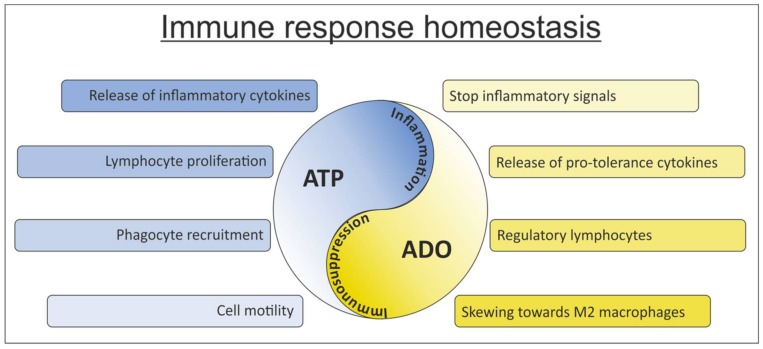
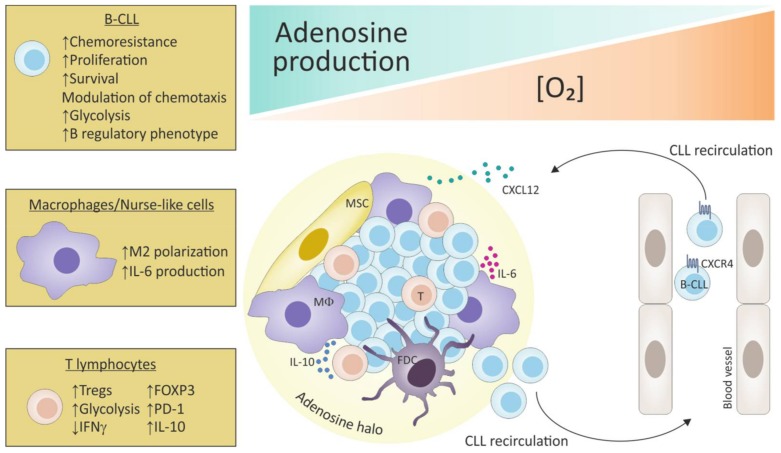
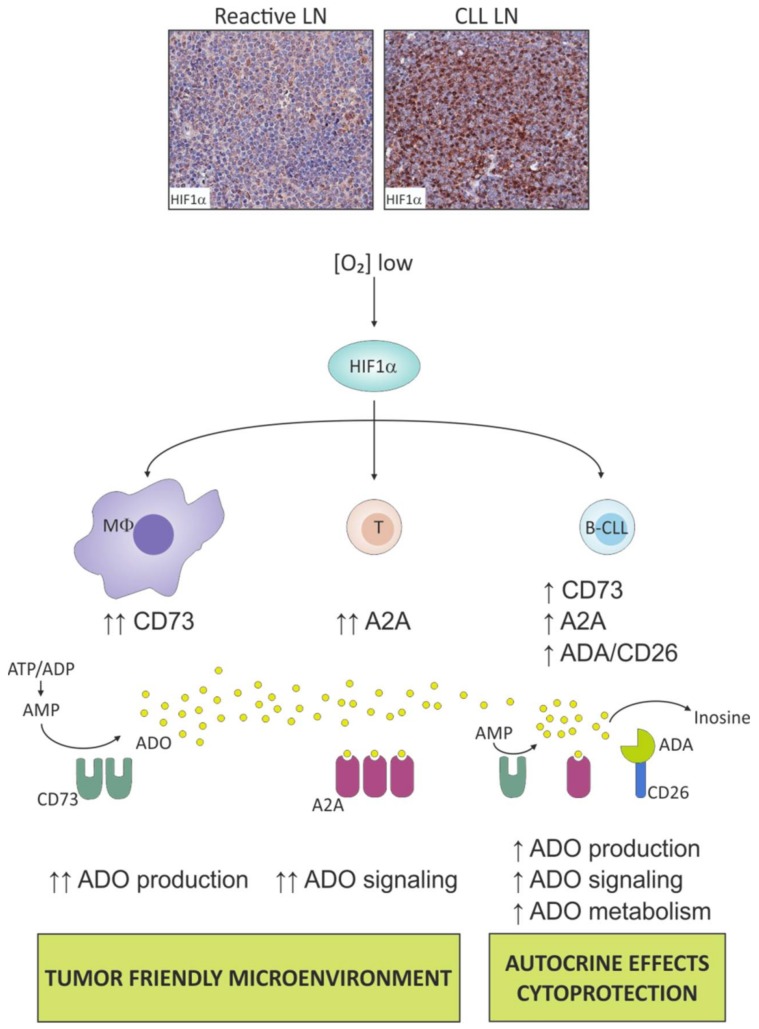
Targeting adenosine triphosphate (ATP) metabolism and adenosinergic signaling in cancer is gaining momentum, as increasing evidence is showing their relevance in tumor immunology and biology. Chronic lymphocytic leukemia (CLL) results from the expansion of a population of mature B cells that progressively occupies the bone marrow (BM), the blood, and peripheral lymphoid organs. Notwithstanding significant progress in the treatment of these patients, the cure remains an unmet clinical need, suggesting that novel drugs or drug combinations are needed. A unique feature of CLL is its reliance on micro-environmental signals for proliferation and cell survival. We and others have shown that the lymphoid niche, an area of intense interactions between leukemic and bystander non-tumor cells, is a typically hypoxic environment. Here adenosine is generated by leukemic cells, as well as by cells of myeloid origin, acting through autocrine and paracrine mechanisms, ultimately affecting tumor growth, limiting drug responses, and skewing the immune cells towards a tolerant phenotype. Hence, understanding the mechanisms through which this complex network of enzymes, receptors, and metabolites functions in CLL, will pave the way to the use of pharmacological agents targeting the system, which, in combination with drugs targeting leukemic cells, may get us one step closer to curing these patients.
针对三磷酸腺苷(ATP)代谢和腺苷能信号在癌症中的作用的研究正在兴起,越来越多的证据表明它们与肿瘤免疫学和生物学有关。慢性淋巴细胞白血病(CLL)是由成熟 B 细胞群体的扩张引起的,这些细胞逐渐占据骨髓(BM)、血液和外周淋巴器官。尽管这些患者的治疗取得了显著进展,但治愈仍然是一个未满足的临床需求,这表明需要新的药物或药物组合。CLL 的一个独特特征是其增殖和细胞存活依赖于微环境信号。我们和其他人已经表明,淋巴样龛位,即白血病细胞与旁观者非肿瘤细胞之间强烈相互作用的区域,是一个典型的低氧环境。在这里,腺苷由白血病细胞以及髓系来源的细胞产生,通过自分泌和旁分泌机制起作用,最终影响肿瘤生长、限制药物反应,并使免疫细胞向耐受表型倾斜。因此,了解这个复杂的酶、受体和代谢物网络在 CLL 中的作用机制,将为使用针对该系统的药理制剂铺平道路,这些制剂与针对白血病细胞的药物联合使用,可能使我们更接近治愈这些患者的目标。