Department of Pathology and Immunology, Washington University School of Medicine, St. Louis, MO 63110, USA.
Department of Microbiology and Immunology, University of Illinois at Chicago College of Medicine, Chicago, IL, USA.
Science. 2018 Apr 13;360(6385):204-208. doi: 10.1126/science.aar3799.
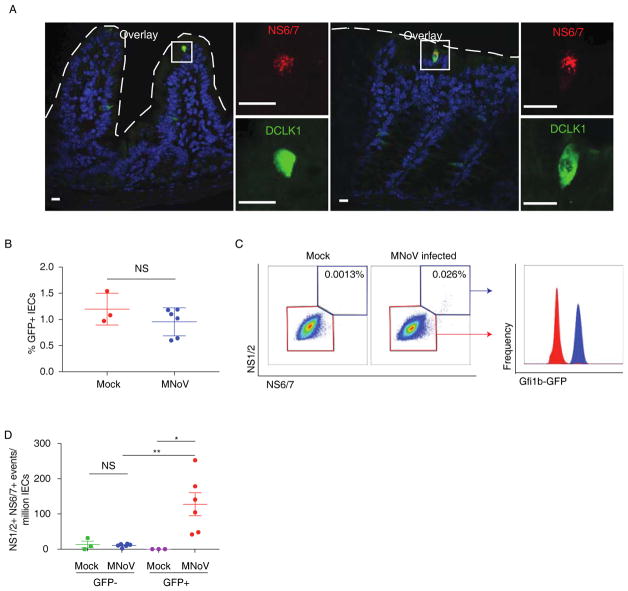
Complex interactions between host immunity and the microbiome regulate norovirus infection. However, the mechanism of host immune promotion of enteric virus infection remains obscure. The cellular tropism of noroviruses is also unknown. Recently, we identified CD300lf as a murine norovirus (MNoV) receptor. In this study, we have shown that tuft cells, a rare type of intestinal epithelial cell, express CD300lf and are the target cell for MNoV in the mouse intestine. We found that type 2 cytokines, which induce tuft cell proliferation, promote MNoV infection in vivo. These cytokines can replace the effect of commensal microbiota in promoting virus infection. Our work thus provides insight into how the immune system and microbes can coordinately promote enteric viral infection.
宿主免疫与微生物组之间的复杂相互作用调节诺如病毒感染。然而,宿主免疫促进肠道病毒感染的机制仍不清楚。诺如病毒的细胞嗜性也未知。最近,我们鉴定出 CD300lf 是一种鼠诺如病毒(MNoV)的受体。在这项研究中,我们表明,类簇细胞(一种罕见的肠道上皮细胞)表达 CD300lf,并且是小鼠肠道中 MNoV 的靶细胞。我们发现,诱导类簇细胞增殖的 2 型细胞因子可促进体内 MNoV 感染。这些细胞因子可以替代共生微生物群促进病毒感染的作用。因此,我们的工作提供了关于免疫系统和微生物如何协调促进肠道病毒感染的见解。