Kang Xiaolan, Song Xue-Zhi, Han Ying, Cao Junkai, Tan Zhenquan
School of Petroleum and Chemical Engineering, Dalian University of Technology, Panjin, 124221, P. R. China.
Sci Rep. 2018 Apr 12;8(1):5904. doi: 10.1038/s41598-018-24353-8.
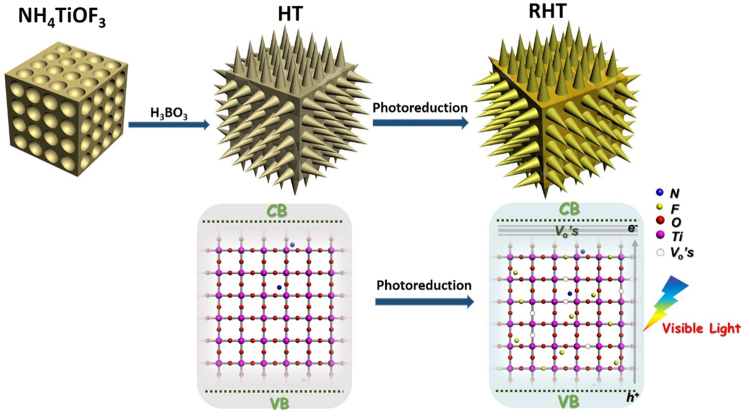
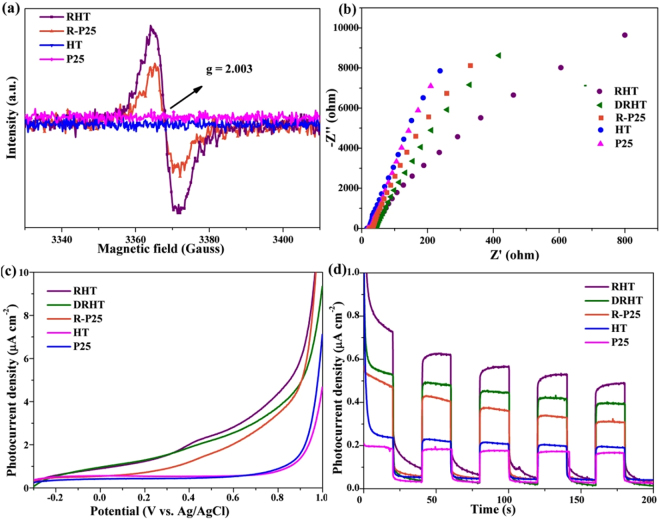
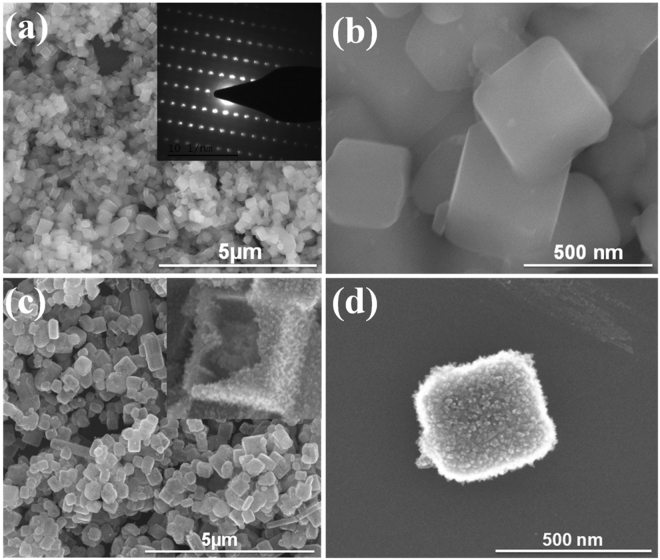
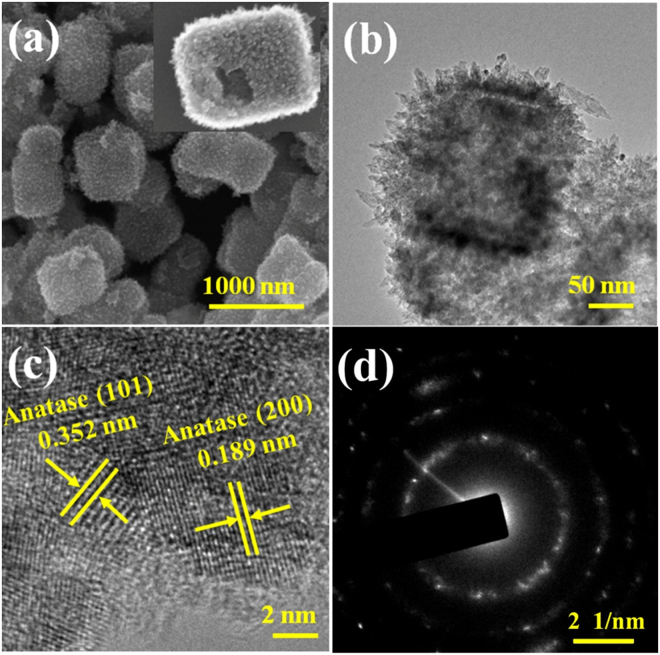
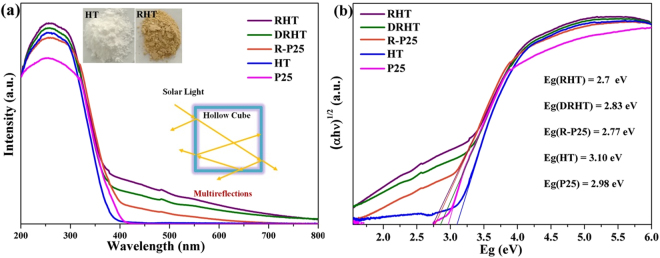
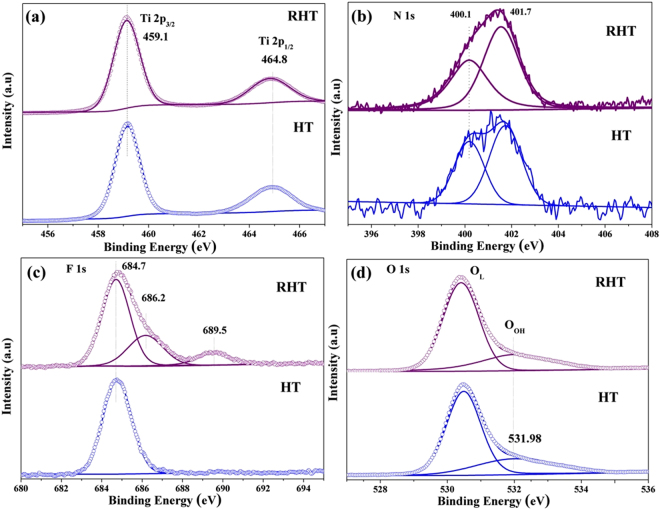
Herein, we mainly report a strategy for the facile synthesis of defect-engineered F-doped well-defined TiO2 hollow spiny nanocubes, constructed from NHTiOF as precursor. The topological transformation of NHTiOF mesocrystal is accompanied with fluorine anion releasing, which can be used as doping source to synthesize F-doped TiO. Our result shows that the introduction of oxygen vacancies (Vo's) and F dopant can be further achieved by a moderate photoreduction process. The as prepared sample is beneficial to improve photocatalystic degradation and Photoelectrochemical (PEC) efficiency under visible light irradiation. And this improvement in photocatalytic and photoelectrocatalytic performance can be ascribed to the significant enhancement of visible light absorption and separation of excited charges resulted from the presence of oxygen vacancies, F ions and hollow structure of TiO.
在此,我们主要报道了一种以NHTiOF为前驱体,简便合成缺陷工程化F掺杂的、结构明确的TiO₂中空刺状纳米立方体的策略。NHTiOF介晶的拓扑转变伴随着氟阴离子的释放,其可作为掺杂源来合成F掺杂的TiO₂。我们的结果表明,通过适度的光还原过程可以进一步实现氧空位(Vo's)和F掺杂剂的引入。所制备的样品有利于提高可见光照射下的光催化降解和光电化学(PEC)效率。这种光催化和光电催化性能的提高可归因于可见光吸收的显著增强以及由于TiO₂中存在氧空位、F离子和中空结构而导致的激发电荷分离。