Commons Robert J, Raby Edward, Athan Eugene, Bhally Hasan, Chen Sharon, Guy Stephen, Ingram Paul R, Lai Katy, Lemoh Chris, Lim Lyn-Li, Manning Laurens, Miyakis Spiros, O'Reilly Mary, Roberts Adam, Sehu Marjoree, Torda Adrienne, Vicaretti Mauro, Lazzarini Peter A
1Global and Tropical Health Division, Menzies School of Health Research and Charles Darwin University, PO Box 41096, Tiwi, Casuarina, Northern Territory Australia.
2Department of Infectious Diseases, Fiona Stanley Hospital, 11 Robin Warren Dr, Murdoch, WA Australia.
J Foot Ankle Res. 2018 Apr 10;11:13. doi: 10.1186/s13047-018-0256-3. eCollection 2018.
Diabetic foot infections (DFI) present a major morbidity, mortality and economic challenge for the tertiary health sector. However, lack of high quality evidence for specific treatment regimens for patients with DFIs may result in inconsistent management. This study aimed to identify DFI caseload proportion and patterns of clinical practice of Infectious Diseases (ID) Physicians and Trainees within Australia and New Zealand.
A cross-sectional online survey of Australian and New Zealand ID Physicians and Trainees was undertaken, to estimate the overall ID caseload devoted to patients with DFIs and assess clinicians' management practices of patients with DFIs.
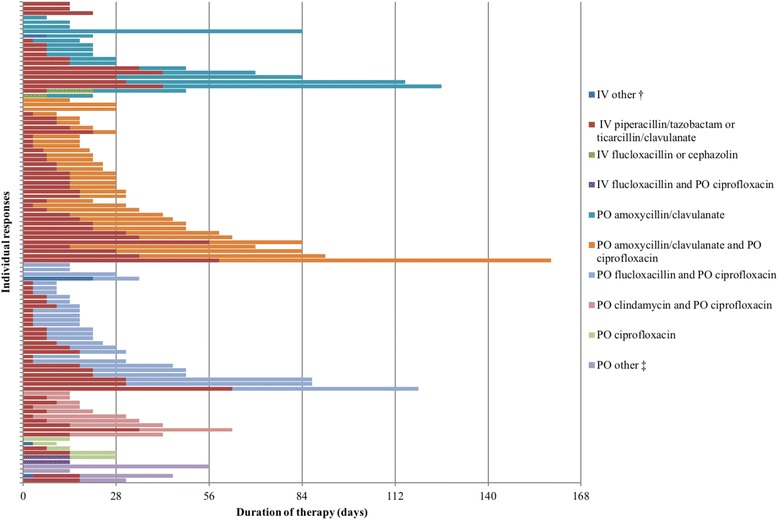
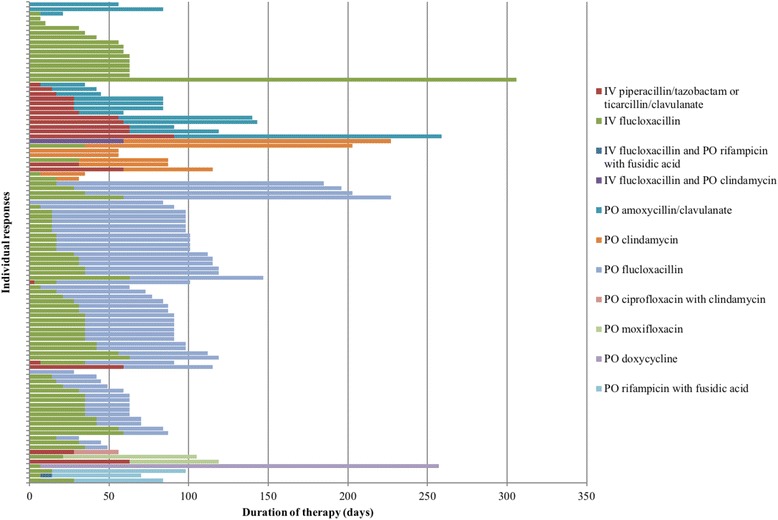
Approximately 28% (142/499) of ID Physicians and Trainees from Australia and New Zealand responded to the survey. DFI made up 19.2% of all ID consultations. Involvement in multidisciplinary teams (MDT) was common as 77.5% (93/120) of those responding indicated their patients had access to an inpatient or outpatient MDT. Significant heterogeneity of antimicrobial treatments was reported, with 82 unique treatment regimens used by 102 respondents in one scenario and 76 unique treatment regimens used by 101 respondents in the second scenario. The duration of therapy and the choice of antibiotics for microorganisms isolated from superficial swabs also varied widely.
Patients with DFIs represent a significant proportion of an ID clinician's caseload. This should be reflected in the ID training program. Large heterogeneity in practice between clinicians reflects a lack of evidence from well-designed clinical trials for patients with DFI and highlights the need for management guidelines informed by future trials.
糖尿病足感染(DFI)对三级医疗部门构成了重大的发病率、死亡率和经济挑战。然而,缺乏针对DFI患者具体治疗方案的高质量证据可能导致管理不一致。本研究旨在确定澳大利亚和新西兰传染病(ID)医生及实习生中DFI病例数的比例以及临床实践模式。
对澳大利亚和新西兰的ID医生及实习生进行了一项横断面在线调查,以估计专门针对DFI患者的ID病例总数,并评估临床医生对DFI患者的管理实践。
来自澳大利亚和新西兰的ID医生及实习生中约28%(142/499)回应了调查。DFI占所有ID会诊的19.2%。参与多学科团队(MDT)很常见,因为77.5%(93/120)的受访者表示他们的患者能够获得住院或门诊MDT服务。报告显示抗菌治疗存在显著异质性,在一种情况下,102名受访者使用了82种独特的治疗方案,在第二种情况下,101名受访者使用了76种独特的治疗方案。从浅表拭子分离出的微生物的治疗持续时间和抗生素选择也有很大差异。
DFI患者占ID临床医生病例总数的很大比例。这一点应在ID培训计划中得到体现。临床医生之间实践的巨大异质性反映出缺乏针对DFI患者的精心设计的临床试验证据,并突出了需要基于未来试验制定管理指南。