Industrial Engineering Department, Pontifícia Universidade Católica do Rio de Janeiro, Rio de Janeiro, Rio de Janeiro, Brazil.
Philips Research Brazil, Barueri, São Paulo, Brazil.
PLoS One. 2018 Apr 13;13(4):e0195873. doi: 10.1371/journal.pone.0195873. eCollection 2018.
Sepsis is considered a major worldwide health burden, with high mortality and associated costs. Health indicators are essential to define strategies to improve the treatment of diseases, and the epidemiology information of sepsis in developing countries is scarce. Thus, the aim of this work is to assess trends in the incidence, lethality, costs, and other indicators of sepsis for Brazilian Unified Health System (SUS-Sistema Único de Saúde) hospitalizations for the period from January 2006 to December 2015.
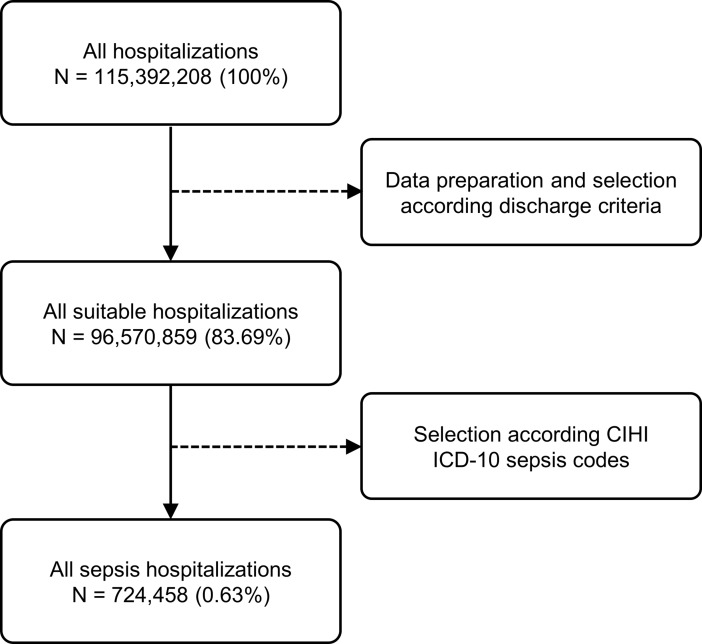
We conducted this study using data from the SUS hospital information system. We selected registries of SUS hospitalizations of patients diagnosed with sepsis (total of 724,458 cases from 4,271 public and private Brazilian hospitals).
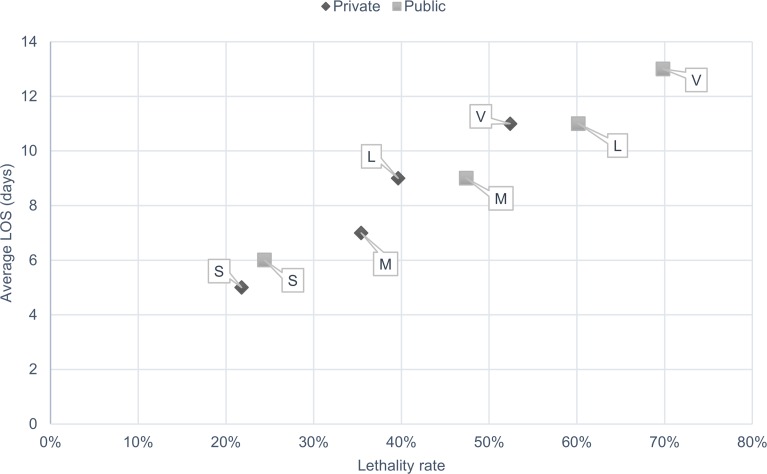
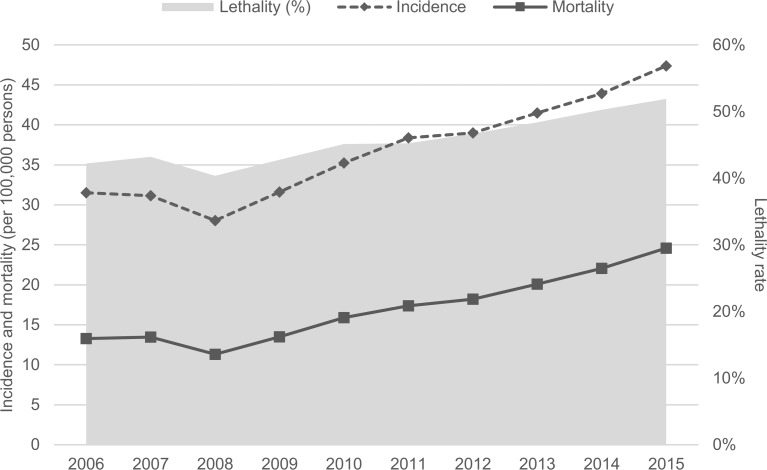
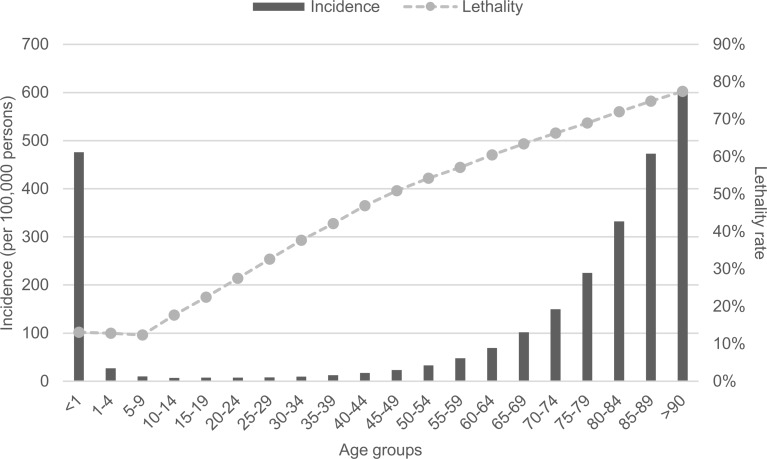
From 2006 to 2015, the annual sepsis incidence increased 50.5% from 31.5/100,000 to 47.4/100,000 persons. The mean hospital length of stay (LOS) was 9.0 days. A total of 29.1% of the hospitalizations had admission to the intensive care unit (ICU) with a mean ICU LOS of 8.0 days. The mean cost per hospitalization was US$624.0 and for hospitalizations requiring intensive care was U$1,708.1. The overall sepsis lethality rate was 46.3%, and for hospitalizations with admission to the ICU, it was 64.5%. During the study period, the lethality rate for children/teenagers decreased 40.1%, but for all other age groups it increased 11.4%. The sepsis lethality rate in public hospitals (55.5%) was higher than private hospitals (37.0%) (p < 0.001). The mean hospitalization LOS for public hospitals (10.3 days) was higher than private hospitals (7.6 days) (p < 0.001).
The incidence and lethality rate of sepsis increased in SUS hospitalizations during the study period. The SUS's low reimbursement to hospitals for treating sepsis may be one of the reasons for the high lethality rate.
败血症被认为是全球范围内的主要健康负担,其死亡率高且相关费用高昂。健康指标对于制定改善疾病治疗策略至关重要,而发展中国家败血症的流行病学信息却很匮乏。因此,本研究旨在评估 2006 年 1 月至 2015 年 12 月间巴西全民健康系统(SUS-Sistema Único de Saúde)败血症住院患者的发病率、病死率、费用和其他指标的变化趋势。
我们使用 SUS 医院信息系统的数据开展了此项研究。我们选择了 SUS 住院患者败血症诊断登记数据(来自巴西 4271 家公立和私立医院共 724458 例患者)。
2006 年至 2015 年,败血症年发病率增加了 50.5%,从 31.5/100000 人增至 47.4/100000 人。平均住院时间(LOS)为 9.0 天。29.1%的住院患者需要入住重症监护病房(ICU),平均 ICU LOS 为 8.0 天。平均每次住院费用为 624.0 美元,需要 ICU 治疗的住院费用为 1708.1 美元。整体败血症病死率为 46.3%,入住 ICU 的患者病死率为 64.5%。研究期间,儿童/青少年败血症病死率下降了 40.1%,但其他年龄段的病死率上升了 11.4%。公立医院(55.5%)败血症病死率高于私立医院(37.0%)(p < 0.001)。公立医院(10.3 天)的平均住院 LOS 高于私立医院(7.6 天)(p < 0.001)。
本研究期间,SUS 败血症住院患者的发病率和病死率均有所上升。SUS 对治疗败血症的医院补偿不足可能是病死率较高的原因之一。