Division of Hematology/Oncology, Boston Children's Hospital, Boston, MA, 02115, USA.
Department of Pediatric Oncology, Dana-Farber Cancer Institute, Boston, MA, 02215, USA.
Leukemia. 2018 Oct;32(10):2126-2137. doi: 10.1038/s41375-018-0097-x. Epub 2018 Mar 20.
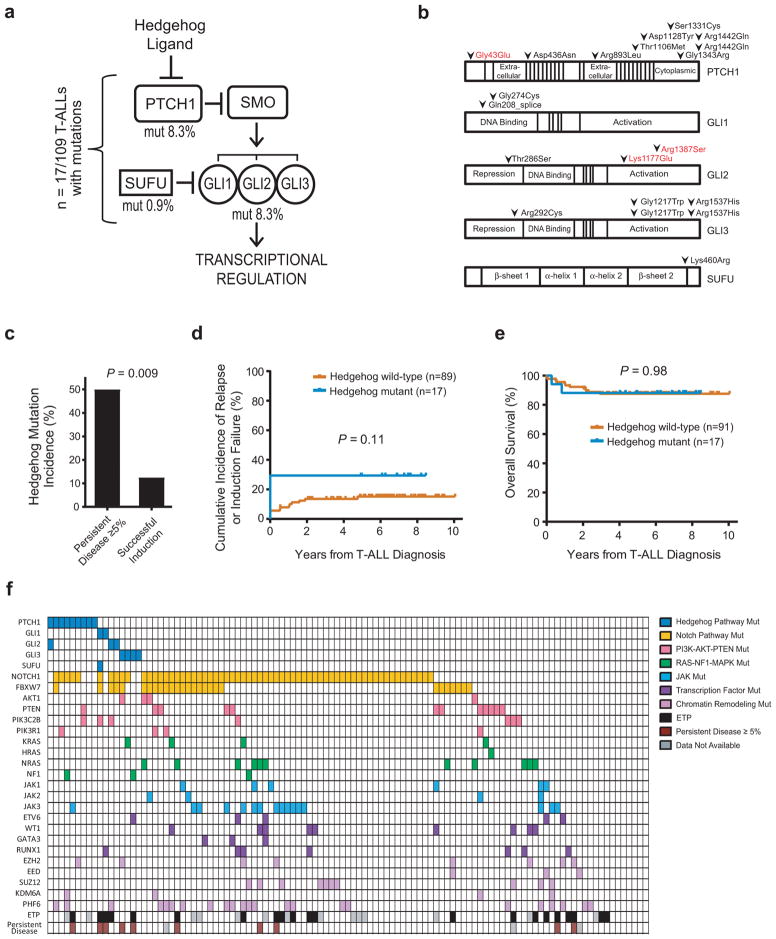
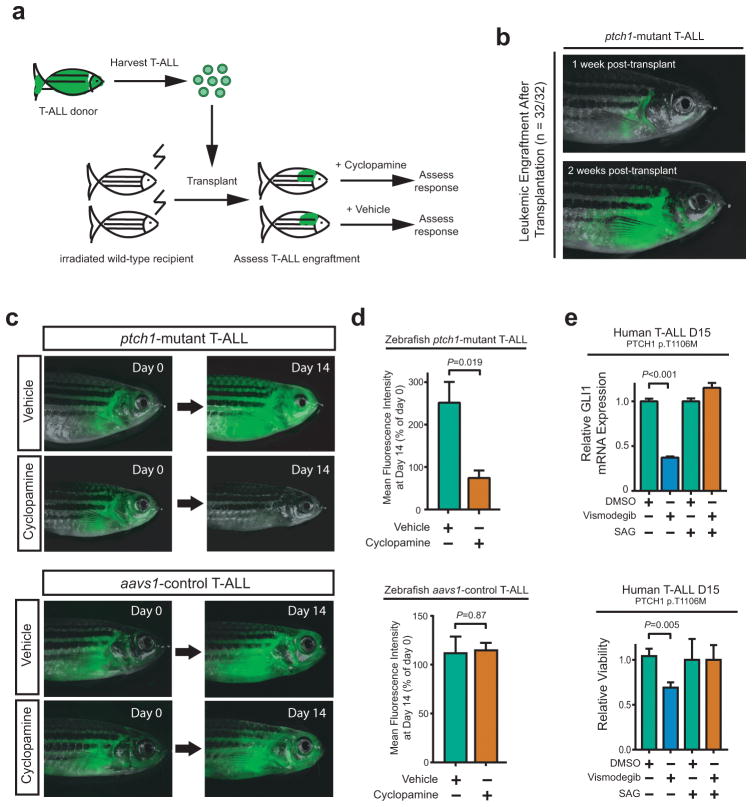
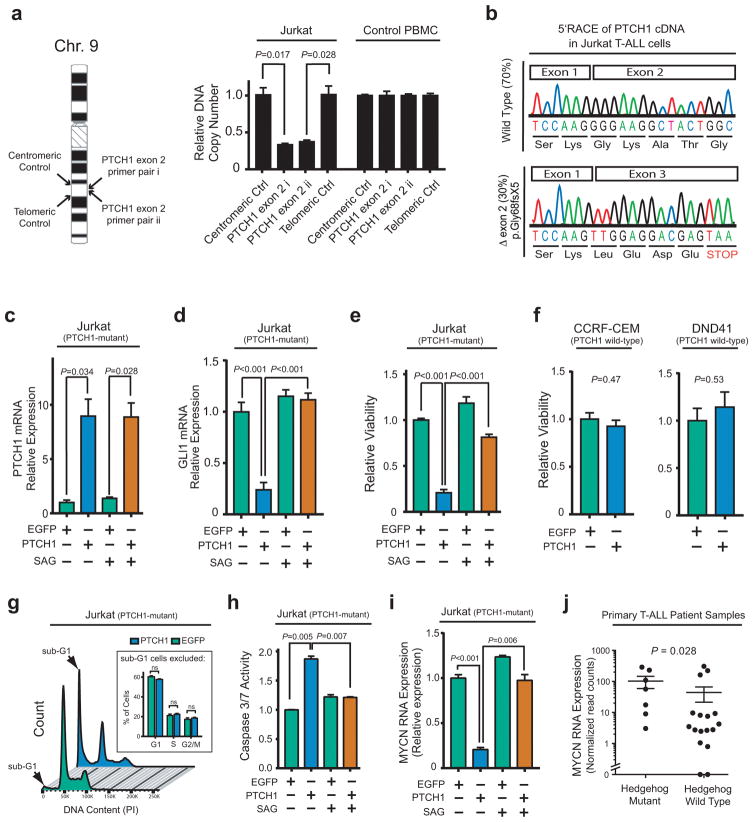
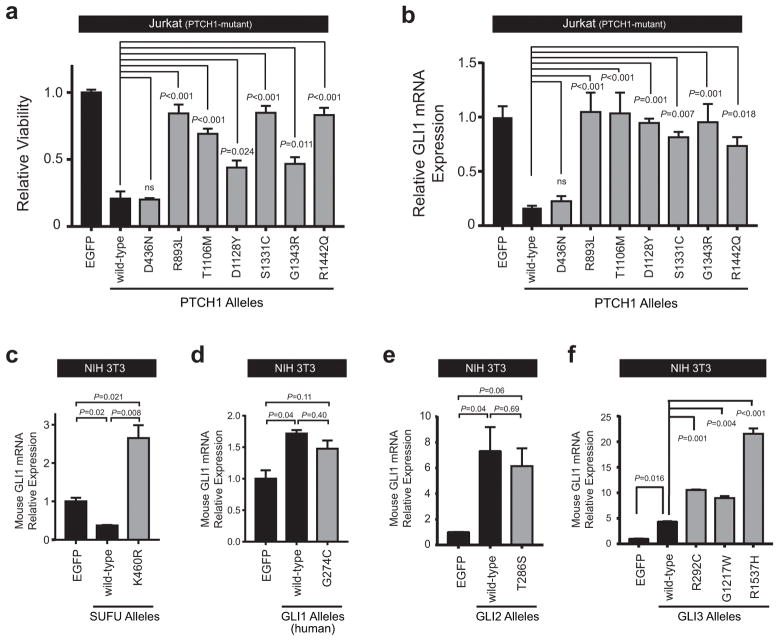
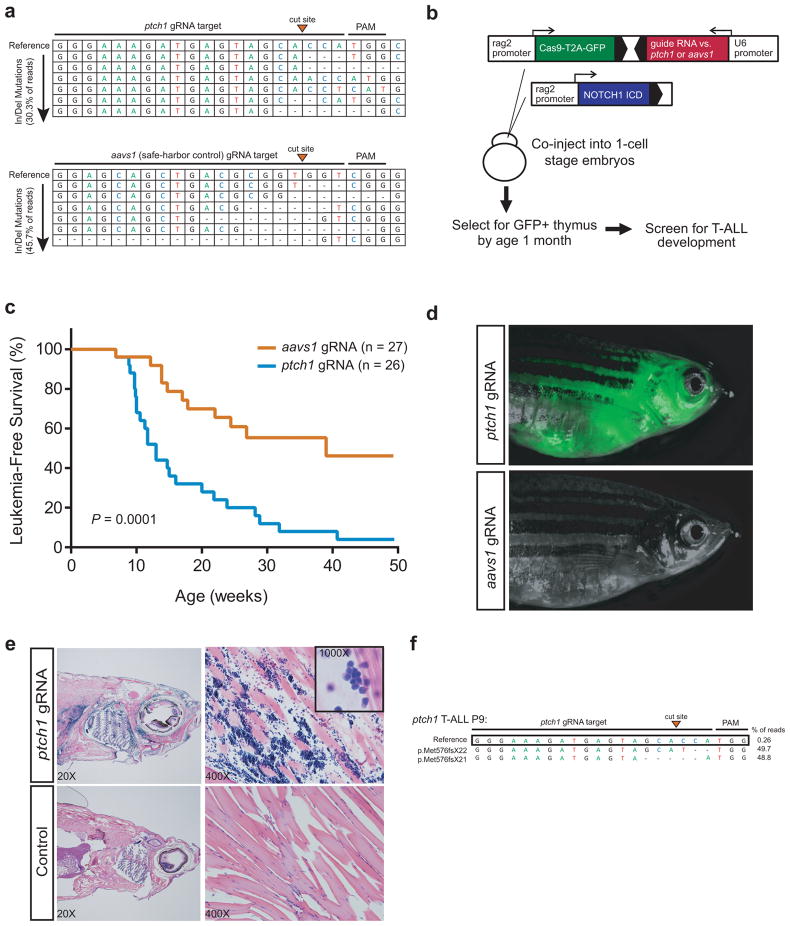
The role of Hedgehog signaling in normal and malignant T-cell development is controversial. Recently, Hedgehog pathway mutations have been described in T-ALL, but whether mutational activation of Hedgehog signaling drives T-cell transformation is unknown, hindering the rationale for therapeutic intervention. Here, we show that Hedgehog pathway mutations predict chemotherapy resistance in human T-ALL, and drive oncogenic transformation in a zebrafish model of the disease. We found Hedgehog pathway mutations in 16% of 109 childhood T-ALL cases, most commonly affecting its negative regulator PTCH1. Hedgehog mutations were associated with resistance to induction chemotherapy (P = 0.009). Transduction of wild-type PTCH1 into PTCH1-mutant T-ALL cells induced apoptosis (P = 0.005), a phenotype that was reversed by downstream Hedgehog pathway activation (P = 0.007). Transduction of most mutant PTCH1, SUFU, and GLI alleles into mammalian cells induced aberrant regulation of Hedgehog signaling, indicating that these mutations are pathogenic. Using a CRISPR/Cas9 system for lineage-restricted gene disruption in transgenic zebrafish, we found that ptch1 mutations accelerated the onset of notch1-induced T-ALL (P = 0.0001), and pharmacologic Hedgehog pathway inhibition had therapeutic activity. Thus, Hedgehog-activating mutations are driver oncogenic alterations in high-risk T-ALL, providing a molecular rationale for targeted therapy in this disease.
Hedgehog 信号通路在正常和恶性 T 细胞发育中的作用存在争议。最近,在 T-ALL 中已描述了 Hedgehog 途径突变,但 Hedgehog 信号转导的突变激活是否驱动 T 细胞转化尚不清楚,这阻碍了治疗干预的合理性。在这里,我们表明 Hedgehog 信号通路突变可预测人类 T-ALL 对化疗的耐药性,并在疾病的斑马鱼模型中驱动致癌转化。我们在 109 例儿童 T-ALL 病例中的 16%发现了 Hedgehog 信号通路突变,最常见的是影响其负调节剂 PTCH1。Hedgehog 突变与诱导化疗耐药相关(P=0.009)。将野生型 PTCH1 转导到 PTCH1 突变的 T-ALL 细胞中会诱导细胞凋亡(P=0.005),而下游 Hedgehog 信号通路的激活可逆转该表型(P=0.007)。大多数突变型 PTCH1、SUFU 和 GLI 等位基因转导到哺乳动物细胞中会导致 Hedgehog 信号的异常调节,表明这些突变是致病性的。使用 CRISPR/Cas9 系统对转基因斑马鱼进行谱系特异性基因敲除,我们发现 ptch1 突变加速了 notch1 诱导的 T-ALL 的发生(P=0.0001),并且 Hedgehog 信号通路抑制具有治疗活性。因此,Hedgehog 激活突变是高危 T-ALL 的驱动致癌改变,为该疾病的靶向治疗提供了分子基础。